빠른 제작과 다양한 마감 옵션을 선택할 수 있는 박물관 수준의 지클레이 및 캔버스 프린트. ( 수작업 채색 복제본 주문하기 디지털 이미지 판매 채널로 전환)





























작품의 원본 비율을 그대로 유지하는 프리셋 사이즈 중에서 선택해 보세요.

특정 프레임이나 공간에 맞춰 직접 치수를 입력하실 수 있습니다. 선택하신 사이즈가 원본 이미지의 비율과 일치하지 않을 경우, 작품을 크롭(자르기)하거나 이미지를 대칭 또는 단색 채우기로 확장하여 제작합니다. 제작 시작 전, 최종 확인을 위해 디지털 목업이 전송됩니다.
화면상의 미리보기는 실제 크롭이나 확장 상태를 반영하지 않으므로, 최종 구도는 오직 목업을 통해서만 정확하게 확인하실 수 있습니다.
맞춤 사이즈 제작도 가능하지만, 원본 비율을 유지하기 위해서는 사전 정의된 목록에서 치수를 선택하시는 것을 권장합니다.

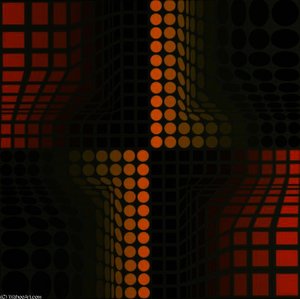
Zebras (orange)
복제본 규격
“Zebras (orange),” a captivating work by Victor Vasarely, transcends the simple depiction of animal forms; it's an immersive exploration of perception and movement, firmly rooted in the principles of Op Art. Painted with a deliberate distortion, the image presents a warped face—a motif that immediately draws the viewer into a world where reality is playfully challenged. The vibrant orange background acts as a dynamic counterpoint to the stark black and white pattern, intensifying the visual impact and creating an almost hallucinatory effect. This piece exemplifies Vasarely’s pioneering work in kinetic art, anticipating the movement and dynamism of later optical illusions.
Born in 1906 in Pécs, Croatia, Victor Vasarely’s artistic trajectory was shaped by a confluence of influences. Initially pursuing medical studies, he abandoned this path for painting in 1927, driven by an innate fascination with visual form and abstraction. His enrollment at the Podolini-Volkmann Academy and subsequent immersion within Sándor Bortnyik’s “Műhely” workshop – profoundly influenced by the Bauhaus movement – proved crucial. The Bauhaus emphasis on functional design, geometric abstraction, and the exploration of optical phenomena provided the theoretical framework for Vasarely's groundbreaking approach. This period established his core belief: that art could be constructed through precise mathematical relationships, creating illusions of movement and depth without relying on traditional representational techniques.
Vasarely’s technique in “Zebras (orange)” is characterized by meticulous layering and the use of flat, unmodulated color. The black and white pattern isn't a naturalistic representation but rather a precisely constructed series of geometric shapes—primarily circles and lines—arranged to create an optical illusion of movement and depth. This deliberate distortion of form is central to Op Art’s goal: to stimulate the viewer’s visual cortex and evoke a sense of dynamic energy. The orange background isn't merely a backdrop; it actively participates in this illusion, amplifying the perceived movement and contributing to the overall captivating effect. The painting demonstrates Vasarely's mastery of color theory and his ability to manipulate perception through carefully calibrated geometric arrangements.
While seemingly a simple depiction of a zebra’s face, “Zebras (orange)” operates on multiple levels. The distorted form can be interpreted as a rejection of traditional representational art, embracing abstraction as a means of exploring the fundamental nature of perception. The animal motif itself—often associated with speed, power, and wildness—is rendered in a controlled, almost sterile manner, highlighting the tension between instinct and intellect. The overall effect is one of intense visual stimulation, provoking a sense of wonder and inviting contemplation on the relationship between art, perception, and reality. This piece resonates with a powerful emotional impact through its manipulation of the viewer’s senses.

1906 - 1997 , 크로아티아

Discover the profound beauty of abstract art. Our expert guide explores geometric abstraction, Op Art, and Expressionism, offering connoisseurs deep insights into collecting and curating powerful, non-representational masterpieces for sophisticated interiors.
Explore the mesmerizing world of Victor Vasarely. Discover how his Bauhaus-inspired Op Art masters the science of perception through geometric abstraction and vibrant color. A sophisticated guide for discerning art collectors seeking to understand the legacy of optical illusion.

Explore the profound spiritual depth of geometric abstraction. From Malevich's Suprematism to modern masters, our expert guide reveals how pure form and color command presence in fine art collections.

 실제 크기로 보기
 보내기
보내기 공유하기
공유하기
 상세 보기
상세 보기 가이드 보기

 이미지 다운로드
 유사 작품 더 보기
 X-레이
X-레이 슬라이드 쇼 보기
 통계 정보
통계 정보

 상세 보기
상세 보기









 유리 옵션은 110cm 미만 크기에서만 선택 가능합니다.