이 페이지에 표시된 작품은 저작권법의 보호를 받으며, 이에 따라 동일한 복제품을 제작하거나 판매하는 것은 법으로 금지되어 있습니다. 이러한 권리 보호는 다음과 같은 국제 협약에 따라 시행됩니다. 베른 협약 또한 다음에서 명시하는 법률을 포함한 국내법에 의해 보호됩니다. 미국 저작권법 제17조.
이 방식은 저작권 보호를 받는 예술 작품을 복제하거나 그대로 재현하는 것이 아니기에 저작권 규정을 완벽히 준수합니다. 대신, 이는 창의적인 재해석의 과정을 거칩니다. 즉, 원작에서 영감을 받되 원작과 동일하지 않은 새로운 회화 작품을 의미합니다.
빠른 제작과 다양한 마감 옵션을 제공하는 박물관 수준의 지클레이 및 캔버스 프린트. ( 수작업 채색 복제본 주문하기 디지털 이미지로 전환)
작품의 원본 비율을 그대로 유지하는 프리셋 사이즈 중에서 선택해 보세요.

액자나 벽면 크기에 맞춰 필요한 가로와 세로 길이를 입력해 주세요. 프린트는 원본 이미지보다 크게 제작할 수 없으며 오직 자르는 것만 가능하므로, 비율이 다른 사이즈를 선택할 경우 이미지의 일부가 잘려 나갈 수 있습니다. 인쇄 작업에 들어가기 전, 최종 확인을 위해 디지털 목업을 보내드립니다. 이 페이지에 표시된 이미지는 실제 잘리는 영역을 나타내지 않으며, 오직 목업을 통해서만 정확한 확인이 가능합니다.
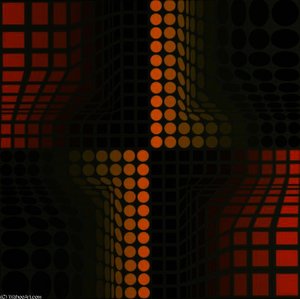
Yvaral
복제본 크기
Victor Vasarely’s Yvaral, completed in 1956, is more than just an image; it’s a carefully constructed illusion, a testament to the burgeoning field of Op Art and a profound exploration of how our eyes perceive space and movement. This striking work, measuring 210 x 200 cm, immediately captivates with its stark contrast – a pristine white background punctuated by precisely arranged black circles that seem to vibrate with an almost unsettling energy. Born in Pécs, Croatia (then Austria-Hungary) in 1906, Vasarely’s artistic trajectory began unexpectedly, initially pursuing medical studies before embracing the visual world with unwavering conviction. His journey, shaped by influences from the Bauhaus movement and his time within Bortnyik's Műhely workshop, culminated in a revolutionary approach to art – one that deliberately manipulated perception through geometric abstraction.
The deliberate restriction of the color palette – solely black and white – is crucial to Yvaral’s impact. This stark dichotomy dramatically enhances the optical illusion, making the circles appear to pulsate and shift with every glance. Vasarely wasn't simply depicting shapes; he was engineering a visual experience, exploiting the way our brains process information. The dominant form, of course, is the circle – repeated countless times – but it’s not merely repetition for its own sake. Vasarely meticulously arranged these circles to create larger geometric forms—squares and quadrants—that contribute to the overall structure while simultaneously disrupting any sense of static stability.
The artwork’s execution suggests a serigraph or screen print, a technique favored by Vasarely for its ability to achieve incredibly precise color application and uniform tonal values. The smooth texture, characteristic of printed media, speaks to this meticulous process. It is likely that the original work was created using this method, ensuring the consistent distribution of ink across the canvas. While a photograph of an original work could also account for the image’s appearance, the level of detail and precision strongly points towards a serigraphic reproduction.
Beyond its purely visual impact, Yvaral evokes deeper symbolic resonances. The dynamic arrangement of circles can be interpreted as representing movement, energy, and perhaps even disorientation – mirroring the very experience of engaging with Op Art. The repetitive patterns might also suggest themes of order and chaos, a fundamental duality that Vasarely consistently explored in his work. This piece isn’t just about seeing; it's about *experiencing* perception itself.

1906 - 1997 , 크로아티아

Master the nuances of Giclée printing with our expert guide. Discover how pigment-based inks and museum-grade substrates create fade-resistant, high-fidelity art reproductions designed for discerning collectors seeking unparalleled quality and longevity.

Embark on a visual journey through the mesmerizing world of Op Art. Discover the masters of optical illusion, explore geometric abstraction, and learn how to curate high-impact kinetic works for your private collection with expert guidance from art professionals.

Explore the profound artistry of black and white photography. From historical mastery to the interplay of light and shadow, discover how monochrome captures timeless emotion and form through a sophisticated lens of art history.
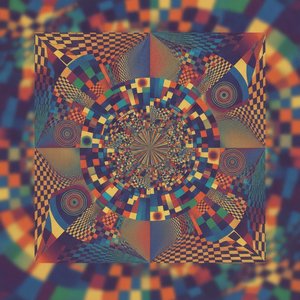
Explore the mesmerizing world of Victor Vasarely. Discover how his Bauhaus-inspired Op Art masters the science of perception through geometric abstraction and vibrant color. A sophisticated guide for discerning art collectors seeking to understand the legacy of optical illusion.
 공유하기
공유하기 공유하기
공유하기
 상세 정보
상세 정보 가이드 보기

 다운로드
다운로드
 유사 작품 더 보기
 슬라이드 쇼 보기
 질의응답
질의응답
 통계 정보
통계 정보

 더 보기
더 보기






































 유리 옵션은 110cm 미만 크기에서만 선택 가능합니다.