이 페이지에 표시된 작품은 저작권법의 보호를 받으며, 이에 따라 동일한 복제품을 제작하거나 판매하는 것은 법으로 금지되어 있습니다. 이러한 권리 보호는 다음과 같은 국제 협약에 따라 시행됩니다. 베른 협약 또한 다음에서 명시하는 법률을 포함한 국내법에 의해 보호됩니다. 미국 저작권법 제17조.
이 방식은 저작권 보호를 받는 예술 작품을 복제하거나 그대로 재현하는 것이 아니기에 저작권 규정을 완벽히 준수합니다. 대신, 이는 창의적인 재해석의 과정을 거칩니다. 즉, 원작에서 영감을 받되 원작과 동일하지 않은 새로운 회화 작품을 의미합니다.
빠른 제작과 다양한 마감 옵션을 선택할 수 있는 박물관 수준의 지클레이 및 캔버스 프린트. ( 수작업 채색 복제본 주문하기 디지털 이미지 판매 채널로 전환)





























작품의 원본 비율을 그대로 유지하는 프리셋 사이즈 중에서 선택해 보세요.

액자나 벽면 크기에 맞춰 필요한 가로와 세로 길이를 입력해 주세요. 프린트는 원본 이미지보다 크게 제작할 수 없으며 오직 자르는 것만 가능하므로, 비율이 다른 사이즈를 선택할 경우 이미지의 일부가 잘려 나갈 수 있습니다. 인쇄 작업에 들어가기 전, 최종 확인을 위해 디지털 목업을 보내드립니다. 이 페이지에 표시된 이미지는 실제 잘리는 영역을 나타내지 않으며, 오직 목업을 통해서만 정확한 확인이 가능합니다.
Versakk
복제본 규격
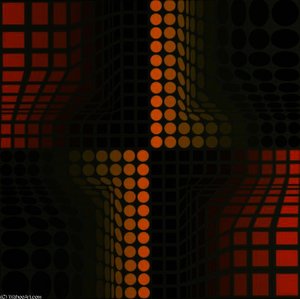
Victor Vasarely's "Versakk" is not merely a painting; it’s an invitation, a carefully constructed illusion that challenges our very perception of space and form. Created by the Hungarian artist, a key figure in the development of Op Art – Optical Art – this work embodies the movement’s core principle: to stimulate visual excitement through controlled patterns and geometric abstraction. The image itself is dominated by a vibrant blue circle, its surface meticulously rendered with a network of smaller dots that create an almost hypnotic effect. Within this central blue field are strategically placed red and white circles, their positions deliberately arranged to generate a dynamic interplay of color and shape. This isn't accidental; Vasarely painstakingly engineered these visual relationships to exploit the way our eyes and brain process information, resulting in a captivating optical illusion.
Understanding “Versakk” requires acknowledging its place within the broader context of 20th-century art. Vasarely’s artistic journey began with an unexpected detour – initially pursuing medical studies before embracing painting in 1927. This shift was profoundly influenced by his enrollment at Sándor Bortnyik’s ‘Műhely,’ a workshop deeply rooted in the principles of functional design and geometric abstraction championed by the Bauhaus movement. The Bauhaus, with its emphasis on reducing form to its essential elements – line, shape, and color – provided Vasarely with a crucial framework for his artistic explorations. He wasn't simply interested in representing reality; he sought to create art that actively engaged the viewer’s visual system, anticipating the rise of kinetic art and exploring how perception itself could be manipulated through controlled optical effects. The meticulous construction of “Versakk” reflects this rigorous approach, a testament to Vasarely’s dedication to scientific precision applied to artistic creation.
“Versakk” is executed in oil paint on canvas, a choice that contributes significantly to the artwork's impact. The artist’s skillful application of the medium creates a rich texture and depth, enhancing the illusionary qualities of the piece. The use of multiple layers of color, combined with the subtle variations in brushstroke, allows light to play across the surface, further intensifying the optical effects. Vasarely’s technique is characterized by its precision and control – each circle, each dot, carefully placed to maximize their visual impact. This attention to detail elevates “Versakk” beyond a simple decorative image; it's a testament to the artist's mastery of oil painting and his ability to harness its properties to create a truly immersive visual experience.
While ostensibly abstract, "Versakk" invites contemplation about order and chaos. The concentric circles evoke notions of movement, dynamism, and perhaps even the underlying structure of the universe. Vasarely’s work isn't about depicting a specific scene or object; it’s about exploring the fundamental principles of visual perception. The piece generates a sense of controlled excitement, a feeling of being drawn into a complex visual puzzle. This inherent ambiguity allows viewers to project their own interpretations and emotions onto the artwork, making “Versakk” a profoundly personal experience. It's a reminder that art can be both intellectually stimulating and emotionally resonant, challenging our assumptions about reality and inviting us to reconsider how we see the world.

1906 - 1997 , 크로아티아

Explore the mesmerizing world of Victor Vasarely. Discover how his Bauhaus-inspired Op Art masters the science of perception through geometric abstraction and vibrant color. A sophisticated guide for discerning art collectors seeking to understand the legacy of optical illusion.

Explore the profound spiritual depth of geometric abstraction. From Malevich's Suprematism to modern masters, our expert guide reveals how pure form and color command presence in fine art collections.

 실제 크기로 보기
 보내기
보내기 공유하기
공유하기
 상세 보기
상세 보기 가이드 보기

 이미지 다운로드
 유사 작품 더 보기
 X-레이
X-레이 슬라이드 쇼 보기
 통계 정보
통계 정보

 상세 보기
상세 보기









 유리 옵션은 110cm 미만 크기에서만 선택 가능합니다.