이 페이지에 표시된 작품은 저작권법의 보호를 받으며, 이에 따라 동일한 복제품을 제작하거나 판매하는 것은 법으로 금지되어 있습니다. 이러한 권리 보호는 다음과 같은 국제 협약에 따라 시행됩니다. 베른 협약 또한 다음에서 명시하는 법률을 포함한 국내법에 의해 보호됩니다. 미국 저작권법 제17조.
이 방식은 저작권 보호를 받는 예술 작품을 복제하거나 그대로 재현하는 것이 아니기에 저작권 규정을 완벽히 준수합니다. 대신, 이는 창의적인 재해석의 과정을 거칩니다. 즉, 원작에서 영감을 받되 원작과 동일하지 않은 새로운 회화 작품을 의미합니다.
빠른 제작과 다양한 마감 옵션을 선택할 수 있는 박물관 수준의 지클레이 및 캔버스 프린트. ( 수작업 채색 복제본 주문하기 디지털 이미지 판매 채널로 전환)





























작품의 원본 비율을 그대로 유지하는 프리셋 사이즈 중에서 선택해 보세요.

액자나 벽면 크기에 맞춰 필요한 가로와 세로 길이를 입력해 주세요. 프린트는 원본 이미지보다 크게 제작할 수 없으며 오직 자르는 것만 가능하므로, 비율이 다른 사이즈를 선택할 경우 이미지의 일부가 잘려 나갈 수 있습니다. 인쇄 작업에 들어가기 전, 최종 확인을 위해 디지털 목업을 보내드립니다. 이 페이지에 표시된 이미지는 실제 잘리는 영역을 나타내지 않으며, 오직 목업을 통해서만 정확한 확인이 가능합니다.
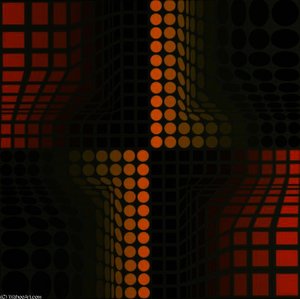
Sreeh
복제본 규격
Victor Vasarely's "Sreeh" is more than just a painting; it’s an invitation into the heart of Op Art, a visual exploration of perception itself. This striking work, dominated by vibrant blues and yellows rendered through meticulously crafted geometric forms, embodies the artist’s pioneering role in creating dynamic illusions on canvas. The sheer density of squares, each subtly differentiated in hue and tone, immediately draws the eye, demanding attention and rewarding prolonged observation. It's a testament to Vasarely’s belief that art could actively engage with the viewer’s senses, challenging their assumptions about space and form.
Born Károly Vaszary in 1906 in Pécs, Croatia – then part of Austria-Hungary – Vasarely's artistic trajectory was remarkably unconventional. Initially drawn to medicine, he ultimately abandoned this path for the burgeoning world of painting in 1927, a decision profoundly shaped by his exposure to the Bauhaus movement and the influence of Sándor Bortnyik’s “Műhely” workshop. This environment fostered an intense interest in functional design and geometric abstraction – principles that would become the bedrock of his artistic practice. "Sreeh," therefore, represents a culmination of this early training, reflecting Vasarely's desire to translate scientific concepts about movement and visual perception into tangible artistic experiences. The painting’s creation aligns perfectly with the broader context of kinetic art emerging in the mid-20th century, where artists sought to capture the illusion of motion through static forms.
Vasarely's technique is characterized by a remarkable precision and control. The painting’s impact isn’t simply due to its color palette; it’s fundamentally rooted in his mastery of optical illusions. Each square is meticulously rendered, creating subtle variations in size, shape, and shading that shift with the viewer’s perspective. This deliberate manipulation of visual cues generates a dynamic effect – an illusion of movement and depth that seems to vibrate before your eyes. The close-up composition further intensifies this effect, allowing for an intimate examination of the intricate details that contribute to the overall optical experience. The artist's use of layering and glazing techniques ensures that the colors retain their vibrancy and intensity, contributing significantly to the painting’s captivating visual impact.
"Sreeh" transcends a mere geometric exercise; it speaks to fundamental human experiences – our perception of space, time, and movement. The repetition of squares, often associated with order and structure, is juxtaposed with the dynamic illusion created by Vasarely’s technique. This tension generates a sense of both stability and instability, inviting contemplation on the nature of reality itself. The bold use of blue and yellow – colors frequently linked to feelings of tranquility and energy respectively – adds another layer of emotional resonance to the work. Ultimately, “Sreeh” is an artwork that stimulates not just the eye but also the mind, prompting a deeper engagement with the complexities of visual perception.

1906 - 1997 , 크로아티아
Explore the mesmerizing world of Victor Vasarely. Discover how his Bauhaus-inspired Op Art masters the science of perception through geometric abstraction and vibrant color. A sophisticated guide for discerning art collectors seeking to understand the legacy of optical illusion.

 실제 크기로 보기
 보내기
보내기 공유하기
공유하기
 상세 보기
상세 보기 가이드 보기

 이미지 다운로드
 유사 작품 더 보기
 X-레이
X-레이 슬라이드 쇼 보기
 Q&A
Q&A 통계 정보
통계 정보

 상세 보기
상세 보기









 유리 옵션은 110cm 미만 크기에서만 선택 가능합니다.