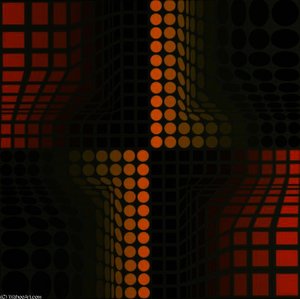
이 페이지에 표시된 작품은 저작권법의 보호를 받으며, 이에 따라 동일한 복제품을 제작하거나 판매하는 것은 법으로 금지되어 있습니다. 이러한 권리 보호는 다음과 같은 국제 협약에 따라 시행됩니다. 베른 협약 또한 다음에서 명시하는 법률을 포함한 국내법에 의해 보호됩니다. 미국 저작권법 제17조.
저희는 존중을 담은 합법적인 대안으로서, 원작에서 영감을 받은 맞춤형 수제 유화 작품을 제공합니다. 저희의 숙련된 전문 화가들은 원작의 스타일, 분위기, 예술적 정수를 면밀히 연구하여, 그 자체로 독창적인 창작물이면서도 원작과 동일한 감동을 불러일으키는 새로운 작품을 만들어냅니다.
이 방식은 저작권 보호를 받는 예술 작품을 복제하거나 그대로 재현하는 것이 아니기에 저작권 규정을 완벽히 준수합니다. 대신, 이는 창의적인 재해석의 과정을 거칩니다. 즉, 원작에서 영감을 받되 원작과 동일하지 않은 새로운 회화 작품을 의미합니다.
작가가 직접 캔버스에 손으로 그린 유화 작품으로, 원하는 크기와 액자로 맞춤 제작해 드립니다. ( 프린트 판매로 전환 디지털 이미지 판매 채널로 전환)





























작품의 원본 비율을 그대로 유지하는 프리셋 사이즈 중에서 선택해 보세요.

특정 프레임이나 공간에 맞춰 원하는 크기를 직접 입력하실 수 있습니다. 선택하신 크기가 원본 이미지의 비율과 일치하지 않을 경우, 작품을 자르거나 추가적인 수작업 요소를 더해 그림을 확장하여 제작합니다. 제작 시작 전, 최종 확인을 위해 디지털 목업을 보내드립니다.
화면상의 미리 보기는 실제 크롭(자르기)이나 확장된 상태를 완벽히 반영하지 않을 수 있습니다. 최종 구도는 오직 목업을 통해서만 정확하게 확인하실 수 있습니다.
맞춤 크기 제작도 가능하지만, 원본의 비율을 그대로 유지하기 위해서는 미리 정의된 목록에서 크기를 선택하시는 것을 권장합니다.
SIR-RIS
복제본 규격
Victor Vasarely’s ‘SIR-RIS,’ a captivating sculpture rendered in meticulous black and white, stands as a cornerstone of Op Art – a movement that fundamentally challenged our understanding of visual perception. This isn't merely a representation of form; it’s an invitation to actively participate in the illusion, a testament to Vasarely’s mastery of manipulating space and light through geometric precision. The photograph captures ‘SIR-RIS’ in all its arresting complexity: a stylized cube, seemingly fractured by intersecting lines that generate a dynamic, almost dizzying effect. The stark contrast between the sculpture's intricate pattern and the clean white pedestal immediately draws the eye, emphasizing the artwork’s deliberate disruption of conventional visual experience.
Vasarely’s approach was rooted in a rigorous exploration of mathematical principles and their application to artistic creation. ‘SIR-RIS’ exemplifies this perfectly. The sculpture's design relies heavily on parallel lines that curve and intersect, creating a powerful sense of movement and distortion. These aren’t random arrangements; they are precisely calculated to exploit the way our eyes perceive depth and distance. The use of black and white amplifies this effect, eliminating color as a distraction and forcing the viewer to focus solely on the interplay of lines and shapes. The polished metal surface, likely chosen for its reflective qualities, further enhances this illusion, creating an almost three-dimensional experience within the two-dimensional image.
Born in 1906 in Pécs, Croatia (then part of Austria-Hungary), Victor Vasarely’s journey began far from the world of abstract art. Initially studying medicine, he was drawn to visual expression, a path solidified by his enrollment in Sándor Bortnyik's workshop – a hub for Bauhaus-influenced design. This formative experience instilled within him a fascination with functional geometry and its potential to create dynamic visual experiences. ‘SIR-RIS’ is a direct descendant of this lineage, echoing the principles of Op Art—a movement that sought to stimulate the eye through optical illusions. Vasarely's work anticipated many developments in kinetic art and influenced generations of designers and artists who explored the relationship between perception and form. The sculpture’s creation involved careful planning and execution, likely utilizing templates or precise tools to ensure the accuracy of the repeating pattern – a testament to the artist’s dedication to his craft.
Beyond its purely visual impact, ‘SIR-RIS’ reflects Vasarely's broader vision for the future. His work often explored themes of urban development and technological advancement, envisioning a world shaped by geometric order and rational design. The sculpture can be interpreted as a representation of a structured, yet dynamic, cityscape – a “city of tomorrow” where form and function are inextricably linked. The deliberate fragmentation and distortion suggest a critical engagement with the complexities of modern life, prompting viewers to question their own perceptions and assumptions about reality. Vasarely’s legacy extends beyond artistic innovation; it represents a profound exploration of how we experience and interpret the world around us.
"SIR-RIS" 작품은 코튼 캔버스 또는 아카이브용 캔버스지에 인쇄된 파인 아트 프린트로 만나보실 수 있습니다. 주문은 현재 페이지에서 원하시는 사이즈를 선택하여 진행하실 수 있습니다.
"SIR-RIS"은(는) 빅터 바사렐리의 다른 작품들과 마찬가지로 Op Art 양식과 더불어 bauhaus influence, geometric exploration, visual perception, kinetic dynamism, op art legacy라는 작가의 반복되는 주제 의식을 공유합니다.
호환 가능한 기기에서 증강 현실(AR) 기능을 사용하면, 작품의 AR 미리보기 페이지를 통해 빅터 바사렐리의 "SIR-RIS"을(를) 고객님의 벽에 미리 배치해 볼 수 있습니다.
Op Art 사조 내에서, "SIR-RIS"은(는) Iconic 정도의 인지도를 보유하고 있습니다.
빅터 바사렐리의 "SIR-RIS"은(는) 분위기가 Calm한 것으로 묘사됩니다. 이러한 분류는 작품을 공간에 맞게 매치하는 데 도움이 될 수 있습니다.
"SIR-RIS"은(는) Acrylic On Canvas 기법을 사용하여 Op Art 양식으로 제작되었습니다.
"SIR-RIS"은 Op Art 운동 내에서 Reflective 정서를 담아내고 있습니다.
"SIR-RIS"은 크로아티아 출신의 빅터 바사렐리가 Op Art 운동의 흐름 속에서 제작한 작품입니다. 작가의 출신 배경은 이 작품을 크로아티아 예술가들이 선보인 Op Art 양식과 연결해 줍니다.

1906 - 1997 , 크로아티아

Explore the profound spiritual depth of geometric abstraction. From Malevich's Suprematism to modern masters, our expert guide reveals how pure form and color command presence in fine art collections.

Discover the profound beauty of abstract art. Our expert guide explores geometric abstraction, Op Art, and Expressionism, offering connoisseurs deep insights into collecting and curating powerful, non-representational masterpieces for sophisticated interiors.

 실제 크기로 보기
 보내기
보내기 공유하기
공유하기
 상세 보기
상세 보기 가이드 보기

 이미지 다운로드
 유사 작품 더 보기
 X-레이
X-레이 슬라이드 쇼 보기
 통계 정보
통계 정보


 상세 보기
상세 보기









 유리 옵션은 110cm 미만 크기에서만 선택 가능합니다.