빠른 제작과 다양한 마감 옵션을 제공하는 박물관 품질의 지클레이 또는 캔버스 프린트. ( 손으로 그린 그림 구매 디지털 이미지로 전환)





























작품의 원본 비율을 유지하는 미리 설정된 크기 중에서 선택하세요.

특정 프레임이나 공간에 맞춰 직접 치수를 입력하실 수 있습니다. 선택하신 사이즈가 원본 이미지의 비율과 일치하지 않을 경우, 작품을 크롭(자르기)하거나 이미지를 대칭 또는 단색 채우기로 확장하여 제작합니다. 제작 시작 전, 최종 확인을 위해 디지털 목업이 전송됩니다.
화면상의 미리보기는 실제 크롭이나 확장 상태를 반영하지 않으므로, 최종 구도는 오직 목업을 통해서만 정확하게 확인하실 수 있습니다.
맞춤 사이즈 제작도 가능하지만, 원본 비율을 유지하기 위해서는 사전 정의된 목록에서 치수를 선택하시는 것을 권장합니다.

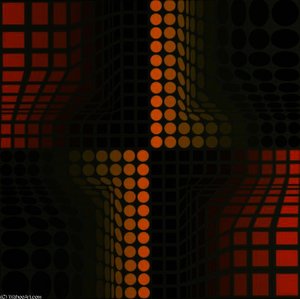
Quasar
복제본 크기
Victor Vasarely's 'Quasar' is not merely a painting; it’s an invitation into the very fabric of perception, a testament to the revolutionary impact of Op Art and the burgeoning field of kinetic art. Created by a mind initially drawn to medicine but ultimately captivated by the visual world, this piece embodies Vasarely’s lifelong dedication to dissecting and reconstructing our understanding of space and movement. The artwork's deceptively simple arrangement – a vibrant blue background punctuated by precisely calibrated squares – belies a profound intellectual and artistic endeavor. It represents a pivotal moment in 20th-century art, reflecting the era’s fascination with scientific advancements, particularly Einstein’s theories of relativity, and their influence on artistic expression.
Born Károly Vaszary in 1906 in Pécs, Croatia – then part of Austria-Hungary – Vasarely's journey began with a formal education in medicine. However, his artistic inclinations soon took hold, leading him to the Podolini-Volkmann Academy and, crucially, Sándor Bortnyik’s ‘Műhely’ workshop. This environment, deeply rooted in the principles of Bauhaus functional design and geometric abstraction, provided the fertile ground for Vasarely's unique vision to flourish. The influence is immediately apparent in 'Quasar': the meticulously arranged squares aren’t randomly placed; they are precisely calculated to create an optical illusion, a deliberate manipulation of the viewer’s perception of depth and movement. This technique, central to Op Art, aimed to evoke a sense of dynamism and vibration within the artwork itself.
'Quasar' transcends a simple geometric exercise; it’s a visual representation of cosmic phenomena, echoing the scientific fascination with quasars – incredibly luminous objects at the edge of the observable universe. The dynamic arrangement of squares can be interpreted as a metaphor for the energy and movement inherent in these celestial bodies. More broadly, the artwork speaks to humanity's innate desire to understand the vastness and complexity of the cosmos. The piece evokes feelings of wonder, curiosity, and perhaps even a sense of awe at the power and beauty of the universe. It’s a reminder that art can be both intellectually stimulating and profoundly moving.

1906 - 1997 , 크로아티아

Embark on a visual journey through the mesmerizing world of Op Art. Discover the masters of optical illusion, explore geometric abstraction, and learn how to curate high-impact kinetic works for your private collection with expert guidance from art professionals.
Explore the mesmerizing world of Victor Vasarely. Discover how his Bauhaus-inspired Op Art masters the science of perception through geometric abstraction and vibrant color. A sophisticated guide for discerning art collectors seeking to understand the legacy of optical illusion.


 미리보기
미리보기
 공유하기
공유하기 공유하기
공유하기
 상세 정보
상세 정보

 다운로드
다운로드
 유사 작품
유사 작품 X-레이
X-레이 슬라이드 쇼
 통계 정보
통계 정보

 더 보기
더 보기









 유리 옵션은 110cm 미만 크기에서만 선택 가능합니다.