x


빠른 제작과 다양한 마감 옵션을 제공하는 박물관 품질의 지클레이 또는 캔버스 프린트. ( 손으로 그린 그림 구매 이미지 구매)





























작품의 원본 비율을 유지하는 미리 설정된 크기 중에서 선택하세요.

특정 프레임이나 공간에 맞춰 직접 치수를 입력하실 수 있습니다. 선택하신 사이즈가 원본 이미지의 비율과 일치하지 않을 경우, 작품을 크롭(자르기)하거나 이미지를 대칭 또는 단색 채우기로 확장하여 제작합니다. 제작 시작 전, 최종 확인을 위해 디지털 목업이 전송됩니다.
화면상의 미리보기는 실제 크롭이나 확장 상태를 반영하지 않으므로, 최종 구도는 오직 목업을 통해서만 정확하게 확인하실 수 있습니다.
맞춤 사이즈 제작도 가능하지만, 원본 비율을 유지하기 위해서는 사전 정의된 목록에서 치수를 선택하시는 것을 권장합니다.

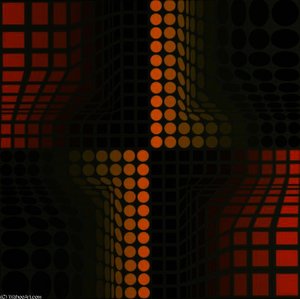
Quadrature
복제본 크기
Victor Vasarely's *Quadrature* isn't merely a painting; it’s an invitation – an invitation to question the very nature of visual reality. Created by a visionary who anticipated the digital age, this work embodies the core tenets of Op Art, a movement that sought to manipulate perception through carefully constructed geometric forms and vibrant color fields. Painted in 1960s, *Quadrature* showcases Vasarely’s mastery of optical illusion, transforming two dynamic spheres into an experience that seems to vibrate with energy before your eyes. The bold use of yellow and orange, punctuated by strategic blue accents, isn't simply decorative; it’s a calculated orchestration designed to disrupt our ingrained assumptions about depth and space.
Vasarely’s artistic journey began far from the canvas. Initially trained as a medical student, his fascination with visual form led him to abandon conventional pursuits in favor of exploring abstraction. This path was profoundly shaped by his time at Sándor Bortnyik’s Műhely workshop, directly influenced by the revolutionary principles of the Bauhaus school. The Bauhaus emphasized functional design and geometric reduction – stripping away extraneous detail to reveal the essential structure of objects. Vasarely absorbed these ideas, translating them into a uniquely personal style characterized by precisely rendered circles, squares, and spheres arranged in dynamic compositions. *Quadrature* stands as a testament to this rigorous training, demonstrating a deep understanding of how our eyes perceive and interpret visual information.
At the heart of *Quadrature* lies the captivating technique that defines Op Art – the creation of an illusion of movement or depth through static imagery. Vasarely meticulously controlled color, scale, and repetition to achieve this effect. The overlapping spheres create a sense of infinite space, drawing the viewer’s eye across the canvas in a perpetual dance. This isn't about depicting a realistic scene; it’s about manipulating our visual system, triggering a neurological response that generates an impression of motion. The painting is a powerful demonstration of how art can actively engage with the viewer’s perception, challenging the boundaries between what is seen and what is felt.
While seemingly abstract, *Quadrature* resonates with profound symbolic weight. The geometric forms themselves represent fundamental building blocks of reality – circles symbolizing wholeness and unity, squares representing stability and order. The dynamic arrangement suggests a constant state of flux, mirroring the ever-changing nature of perception itself. More than just an aesthetic experience, *Quadrature* evokes a sense of wonder and intrigue, prompting contemplation about our relationship with space, time, and visual information. It’s a piece that rewards repeated viewing, revealing new layers of complexity with each encounter.
*Quadrature* represents a pivotal moment in the history of art, solidifying Vasarely's place as a pioneer of Op Art and kinetic art. His influence extends far beyond the 1960s, inspiring generations of artists and designers. Today, reproductions like this one offer an accessible way to experience the brilliance of Vasarely’s vision – a timeless exploration of perception that continues to captivate and challenge viewers worldwide.

1906 - 1997 , 크로아티아
Explore the mesmerizing world of Victor Vasarely. Discover how his Bauhaus-inspired Op Art masters the science of perception through geometric abstraction and vibrant color. A sophisticated guide for discerning art collectors seeking to understand the legacy of optical illusion.

Embark on a visual journey through the mesmerizing world of Op Art. Discover the masters of optical illusion, explore geometric abstraction, and learn how to curate high-impact kinetic works for your private collection with expert guidance from art professionals.

Explore the profound impact of geometric form in art history. From Cubism to Op Art, discover how shape creates movement and emotion in masterpieces, and learn how to curate these powerful compositions for your private collection.


최신 미술 뉴스, 특별 혜택 및 인테리어 아이디어를 가장 먼저 만나보세요.
프로젝트에 대해 알려주시면 저희 미술 전문가들이 맞춤형 아트 제안 3가지를 전달해 드립니다.
당신만을 위한 맞춤형 옵션 3가지를 무료로 추천해 드립니다!


 미리보기
미리보기
 공유하기
공유하기 공유하기
공유하기
 상세 정보
상세 정보

 다운로드
다운로드
 유사 작품
유사 작품 X-레이
X-레이 슬라이드 쇼

 더 보기
더 보기









 유리 옵션은 110cm 미만 크기에서만 선택 가능합니다.