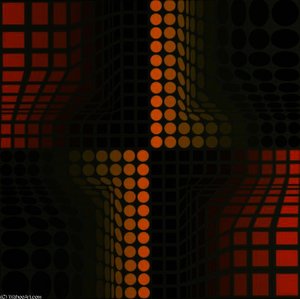
이 페이지에 표시된 작품은 저작권법의 보호를 받으며, 이에 따라 동일한 복제품을 제작하거나 판매하는 것은 법으로 금지되어 있습니다. 이러한 권리 보호는 다음과 같은 국제 협약에 따라 시행됩니다. 베른 협약 또한 다음에서 명시하는 법률을 포함한 국내법에 의해 보호됩니다. 미국 저작권법 제17조.
저희는 존중을 담은 합법적인 대안으로서, 원작에서 영감을 받은 맞춤형 수제 유화 작품을 제공합니다. 저희의 숙련된 전문 화가들은 원작의 스타일, 분위기, 예술적 정수를 면밀히 연구하여, 그 자체로 독창적인 창작물이면서도 원작과 동일한 감동을 불러일으키는 새로운 작품을 만들어냅니다.
이 방식은 저작권 보호를 받는 예술 작품을 복제하거나 그대로 재현하는 것이 아니기에 저작권 규정을 완벽히 준수합니다. 대신, 이는 창의적인 재해석의 과정을 거칩니다. 즉, 원작에서 영감을 받되 원작과 동일하지 않은 새로운 회화 작품을 의미합니다.
작가가 직접 캔버스에 손으로 그린 유화 작품으로, 원하는 크기와 액자로 맞춤 제작해 드립니다. ( 프린트 판매로 전환 디지털 이미지 판매 채널로 전환)





























작품의 원본 비율을 그대로 유지하는 프리셋 사이즈 중에서 선택해 보세요.

액자나 벽면 크기에 맞춰 필요한 가로와 세로 길이를 입력해 주세요. 본 작품은 수작업으로 제작되므로, 요청하신 비율에 따라 작가가 그림의 가장자리를 조금 더 넓게 그리거나 일부를 조정하여 작업할 수 있습니다. 작업 시작 전, 최종 확인을 위해 디지털 목업 이미지를 보내드립니다. 이 페이지에 표시된 이미지는 실제 결과물과 다를 수 있으며, 오직 목업 이미지만이 정확한 결과물을 보여줍니다.
Our
복제본 규격
Victor Vasarely's "Our," created in 1956, isn't merely a painting; it’s an invitation to a perceptual dance. This seminal work from the heart of the Op Art movement embodies a fascination with how our eyes and brains interpret visual information – a captivating exploration of illusion, rhythm, and the very nature of seeing. Born in Pécs, Croatia (then part of Austria-Hungary), Vasarely’s journey into abstraction began unexpectedly, initially pursuing medicine before finding his true calling in the world of art. His relocation to Paris marked a turning point, immersing him within the vibrant circles of post-war European artistic innovation and ultimately leading him to develop his signature style – one deeply rooted in geometric precision and optical stimulation.
"Our" immediately commands attention with its densely packed composition. Interlocking rectangles and trapezoids, rendered in shades of rich red, orange, and punctuated by grounding browns and blacks, create a complex tapestry that seems to shift and shimmer before the viewer’s eyes. The absence of a clear focal point is deliberate; Vasarely wasn't aiming for a singular point of interest but rather to orchestrate an experience of continuous movement across the entire canvas. The subtle gradient effects within each hue add depth, suggesting variations in tone and creating a sense of spatial ambiguity – it’s as if the forms are subtly receding or advancing, playing with our perception of distance.
At its core, “Our” is a quintessential example of Op Art. This movement, pioneered by artists like Bridget Riley and Vasarely himself, sought to evoke an illusion of three-dimensionality through purely two-dimensional means. The crisp, precise lines that define each shape are crucial to this effect; they create a sense of order and control within the seemingly chaotic arrangement. The deliberate irregularities – slight asymmetries and variations in scale – prevent the composition from feeling overly rigid, mirroring the way our visual system actually processes information—not as perfectly ordered but with subtle distortions and shifts.
Vasarely’s meticulous technique is evident in the careful planning and execution of each geometric element. He employed acrylic paint on canvas, a medium that allowed for both vibrant color saturation and a degree of textural subtlety. The grainy texture observed in photographs suggests either an inherent quality of the original surface or the effects of the printing process – a deliberate choice to avoid a sterile, overly smooth appearance. This grain subtly enhances the visual dynamism, preventing the image from feeling static.
While “Our” eschews representational imagery, it’s far from devoid of symbolic meaning. As an Op Art piece, it aims to trigger a visceral response – a sense of energy, rhythm, and perhaps even a touch of disorientation. The repetitive patterns can be interpreted as mirroring the rhythms of our own perception, highlighting how we actively construct reality through our visual processing. The color palette itself contributes to this emotional impact; the warm reds and oranges evoke feelings of excitement and vitality, while the darker browns provide grounding and contrast.
Considering Vasarely’s broader artistic philosophy, “Our” can be seen as an exploration of the relationship between perception and reality. It's a reminder that what we *see* is not necessarily what *is*, but rather a carefully constructed interpretation shaped by our individual visual systems. The work invites contemplation on how art can manipulate our senses and challenge our assumptions about the world around us. Reproductions, meticulously crafted to capture the original’s nuances, offer a remarkable opportunity to experience this captivating illusion firsthand.

1906 - 1997 , 크로아티아

Explore the profound spiritual depth of geometric abstraction. From Malevich's Suprematism to modern masters, our expert guide reveals how pure form and color command presence in fine art collections.
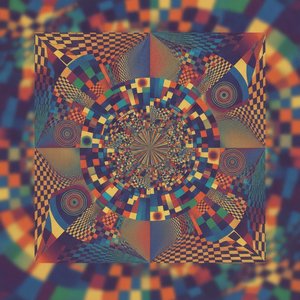
Explore the mesmerizing world of Victor Vasarely. Discover how his Bauhaus-inspired Op Art masters the science of perception through geometric abstraction and vibrant color. A sophisticated guide for discerning art collectors seeking to understand the legacy of optical illusion.

Embark on a visual journey through the mesmerizing world of Op Art. Discover the masters of optical illusion, explore geometric abstraction, and learn how to curate high-impact kinetic works for your private collection with expert guidance from art professionals.

Explore the profound world of optical art and masterpieces that redefine perception. From Vasarely’s geometric illusions to Farndon’s sensory reality, discover how legendary works challenge the eye and transform the viewer's experience through sophisticated abstraction.

Discover the profound beauty of abstract art. Our expert guide explores geometric abstraction, Op Art, and Expressionism, offering connoisseurs deep insights into collecting and curating powerful, non-representational masterpieces for sophisticated interiors.

 실제 크기로 보기
 보내기
보내기 공유하기
공유하기
 상세 보기
상세 보기 가이드 보기

 이미지 다운로드
 유사 작품 더 보기
 X-레이
X-레이 슬라이드 쇼 보기
 통계 정보
통계 정보

 상세 보기
상세 보기









 유리 옵션은 110cm 미만 크기에서만 선택 가능합니다.