원하는 크기와 액자로 주문 제작되는, 작가들이 직접 캔버스에 손으로 그린 유화 작품입니다. ( 프린트 판매로 전환 디지털 이미지로 전환)





























작품의 원본 비율을 유지하는 미리 설정된 크기 중에서 선택하세요.

특정 프레임이나 공간에 맞도록 직접 크기를 입력할 수 있습니다. 선택하신 크기가 원본 이미지의 비율과 일치하지 않는 경우, 작품을 자르거나 추가적인 손으로 그린 요소를 사용하여 그림을 확장합니다. 제작 시작 전 승인을 위해 디지털 목업을 보내드립니다.
화면 미리 보기는 실제 자르기 또는 확장을 반영하지 않습니다. 최종 구성은 목업을 통해서만 정확하게 확인하실 수 있습니다.
맞춤 크기 제작도 가능하지만, 원본 비율을 유지하기 위해 사전 정의된 목록에서 크기를 선택하시는 것을 권장합니다.

ORION-MC
복제본 크기
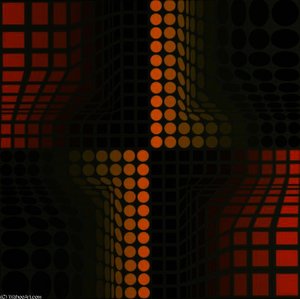
Victor Vasarely's ORION-MC is not merely a painting; it’s an invitation to experience the world through a radically altered lens. This captivating work, rendered in a vibrant palette of red, yellow, green, blue, purple, orange, and black, exemplifies the core tenets of Op Art – Optical Art – pioneered by Vasarely himself. Born Károly Vaszary in 1906 in Pécs, Croatia, his artistic trajectory began with an unexpected detour into medicine before he decisively embraced the power of visual perception. This decision, fueled by his studies at the Podolini-Volkmann Academy and profoundly shaped by Sándor Bortnyik’s “Műhely” workshop – a breeding ground for Bauhaus principles – established him as a key figure in challenging our fundamental understanding of how we see.
The composition of *ORION-MC* is deceptively simple yet profoundly complex. The numerous circles, varying in size and position, create a dynamic visual field that seems to shift and shimmer before your eyes. This effect isn’t accidental; Vasarely meticulously controlled every element to manipulate the viewer's perception. The artist’s skillful use of color intensifies this optical illusion, creating a sense of movement and depth that draws the eye across the canvas. The black elements provide grounding and contrast, further emphasizing the vibrancy of the other colors. It is a carefully constructed visual puzzle designed to challenge our assumptions about reality.
Vasarely’s work emerged during a period of significant artistic and technological change. The rise of industrialization, coupled with advancements in photography and printing, led to a questioning of traditional modes of representation. The Bauhaus movement's emphasis on functional design and geometric abstraction provided a crucial intellectual framework for Vasarely’s explorations. His work can be seen as a direct response to these influences, translating abstract principles into a visually arresting aesthetic. The influence of kinetic art, with its focus on creating illusions of movement, is also evident in *ORION-MC*.
While ostensibly an abstract composition, *ORION-MC* evokes a sense of the cosmos – fittingly named “Orion,” one of the most recognizable constellations. The circles can be interpreted as representing stars or planets, suggesting a connection to the vastness of space and the underlying order of the universe. Beyond this symbolic layer, the painting’s impact lies in its ability to evoke a sense of wonder and contemplation. It invites viewers to slow down, observe carefully, and appreciate the beauty of geometric forms – a timeless invitation to explore the fascinating relationship between art and perception.

1906 - 1997 , 크로아티아

Explore the profound spiritual depth of geometric abstraction. From Malevich's Suprematism to modern masters, our expert guide reveals how pure form and color command presence in fine art collections.

Explore the mesmerizing world of Victor Vasarely. Discover how his Bauhaus-inspired Op Art masters the science of perception through geometric abstraction and vibrant color. A sophisticated guide for discerning art collectors seeking to understand the legacy of optical illusion.


 미리보기
미리보기
 공유하기
공유하기 공유하기
공유하기
 상세 정보
상세 정보 가이드 보기

 다운로드
다운로드
 유사 작품
유사 작품 X-레이
X-레이 슬라이드 쇼
 통계 정보
통계 정보

 더 보기
더 보기









 유리 옵션은 110cm 미만 크기에서만 선택 가능합니다.