빠른 제작과 다양한 마감 옵션을 제공하는 박물관 품질의 지클레이 또는 캔버스 프린트. ( 손으로 그린 그림 구매 디지털 이미지로 전환)





























작품의 원본 비율을 유지하는 미리 설정된 크기 중에서 선택하세요.

특정 프레임이나 공간에 맞춰 직접 치수를 입력하실 수 있습니다. 선택하신 사이즈가 원본 이미지의 비율과 일치하지 않을 경우, 작품을 크롭(자르기)하거나 이미지를 대칭 또는 단색 채우기로 확장하여 제작합니다. 제작 시작 전, 최종 확인을 위해 디지털 목업이 전송됩니다.
화면상의 미리보기는 실제 크롭이나 확장 상태를 반영하지 않으므로, 최종 구도는 오직 목업을 통해서만 정확하게 확인하실 수 있습니다.
맞춤 사이즈 제작도 가능하지만, 원본 비율을 유지하기 위해서는 사전 정의된 목록에서 치수를 선택하시는 것을 권장합니다.

Orion
복제본 크기
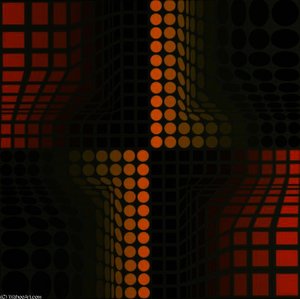
Victor Vasarely's 'Orion,' a vibrant explosion of color and geometric form, isn’t merely a painting; it’s an invitation to experience the world anew. Born in Pécs, Croatia (then part of Austria-Hungary) in 1906, Vasarely’s journey from medical student to pioneering Op Art master is a testament to his relentless pursuit of visual perception. This particular work, created within the fertile ground of the Sándor Bortnyik’s Műhely workshop – a crucible for Bauhaus principles and functional design – embodies the core tenets of his style: an exploration of how our eyes perceive depth, movement, and color in a two-dimensional space. ‘Orion,’ far from depicting a recognizable celestial scene, instead offers a meticulously constructed illusion—a dynamic, pulsating grid that draws the viewer into its intricate depths.
At first glance, 'Orion' appears deceptively simple. A predominantly symmetrical arrangement of circles and squares dominates the canvas, creating an immediate sense of order. However, this structure is deliberately disrupted—the sizes of the shapes vary dramatically, their colors shift subtly, and thin black lines delineate many forms with precise accuracy. This isn’t haphazard; it’s a carefully orchestrated illusion. Vasarely likely employed rulers and measuring tools to ensure the grid's perfect geometry, but the resulting effect is anything but sterile. The strategic placement of adjacent colors—reds next to oranges, blues against purples—creates optical mixing effects, causing our eyes to perceive hues that aren’t actually present in the paint itself. This technique, central to Op Art, leverages the brain's natural tendency to interpret visual information and generate a sense of depth and movement.
While ‘Orion’ deliberately avoids traditional subject matter, it resonates with a powerful emotional charge. The title itself—referencing the prominent constellation—hints at a connection to the vastness of space and the mysteries of the cosmos. However, Vasarely wasn't interested in literal representation; instead, he sought to capture the *feeling* of looking at the stars – that sense of wonder, dynamism, and perhaps even slight disorientation. The vibrant colors and intricate patterns evoke energy, stimulating the viewer’s senses and creating a visually arresting experience. The work can be interpreted as an exploration of perception itself—a meditation on how our brains construct reality from visual input. It's a piece that invites contemplation, prompting us to question the nature of representation and the very act of seeing.
‘Orion’ stands as a quintessential example of Victor Vasarely's groundbreaking work within the Op Art movement. Emerging in the mid-20th century, Op Art challenged traditional notions of painting by utilizing geometric shapes and optical illusions to create dynamic and often disorienting effects. Vasarely wasn’t simply creating pretty pictures; he was investigating the fundamental principles governing human perception. His meticulous approach—combining precise geometry with carefully chosen colors—demonstrates a deep understanding of how our visual system processes information. The influence of Vasarely's work can be seen in countless contemporary artists and designers, solidifying his place as a pivotal figure in 20th-century art history. A hand-painted reproduction of ‘Orion’ offers a remarkable opportunity to experience this revolutionary style firsthand, bringing the energy and complexity of Vasarely’s vision into your space.

1906 - 1997 , 크로아티아

Embark on a visual journey through the mesmerizing world of Op Art. Discover the masters of optical illusion, explore geometric abstraction, and learn how to curate high-impact kinetic works for your private collection with expert guidance from art professionals.
Explore the mesmerizing world of Victor Vasarely. Discover how his Bauhaus-inspired Op Art masters the science of perception through geometric abstraction and vibrant color. A sophisticated guide for discerning art collectors seeking to understand the legacy of optical illusion.

Explore the profound world of optical art and masterpieces that redefine perception. From Vasarely’s geometric illusions to Farndon’s sensory reality, discover how legendary works challenge the eye and transform the viewer's experience through sophisticated abstraction.

Explore the profound spiritual depth of geometric abstraction. From Malevich's Suprematism to modern masters, our expert guide reveals how pure form and color command presence in fine art collections.

Discover the profound beauty of abstract art. Our expert guide explores geometric abstraction, Op Art, and Expressionism, offering connoisseurs deep insights into collecting and curating powerful, non-representational masterpieces for sophisticated interiors.


 미리보기
미리보기
 공유하기
공유하기 공유하기
공유하기
 상세 정보
상세 정보

 다운로드
다운로드
 유사 작품
유사 작품 X-레이
X-레이 슬라이드 쇼
 통계 정보
통계 정보

 더 보기
더 보기









 유리 옵션은 110cm 미만 크기에서만 선택 가능합니다.