x































작품의 원본 비율을 유지하는 미리 설정된 크기 중에서 선택하세요.

특정 프레임이나 공간에 맞도록 직접 크기를 입력할 수 있습니다. 선택하신 크기가 원본 이미지의 비율과 일치하지 않는 경우, 작품을 자르거나 추가적인 손으로 그린 요소를 사용하여 그림을 확장합니다. 제작 시작 전 승인을 위해 디지털 목업을 보내드립니다.
화면 미리 보기는 실제 자르기 또는 확장을 반영하지 않습니다. 최종 구성은 목업을 통해서만 정확하게 확인하실 수 있습니다.
맞춤 크기 제작도 가능하지만, 원본 비율을 유지하기 위해 사전 정의된 목록에서 크기를 선택하시는 것을 권장합니다.

Oervegn
복제본 크기
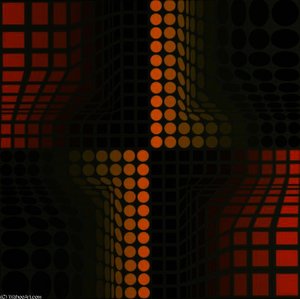
Victor Vasarely's "Oervegn," painted in 1968, is more than just a visually striking image of a blue circle punctuated by a vibrant yellow spiral; it’s a profound meditation on perception and the very nature of reality. Created during his pivotal period as a leading figure in Op Art – Optical Art – this work embodies Vasarely's lifelong fascination with geometry, movement, and the illusionary effects created through precise visual arrangements. The painting’s genesis lies within the Bauhaus-influenced workshop of Sándor Bortnyik, where Vasarely honed his skills in functional design and geometric abstraction, principles that would become the bedrock of his artistic vocabulary.
Vasarely's technique was meticulously crafted to manipulate the viewer’s perception. “Oervegn” exemplifies this approach through a deliberate use of contrasting colors – the cool, calming blue against the energetic yellow – and a precisely rendered spiral. This isn’t simply a decorative element; it’s a carefully constructed illusion designed to create a sense of movement and depth within a static image. The circular form itself is a fundamental geometric shape, often associated with wholeness, unity, and the cosmos. Vasarely's mastery lay in exploiting the way our eyes and brain process visual information, creating an optical experience that transcends traditional representational art.
Painted in 1968, “Oervegn” reflects a broader artistic movement – Op Art – which emerged in the mid-20th century as a reaction against the dominance of representational painting. Artists like Vasarely sought to engage with the viewer directly through optical effects, challenging conventional notions of space and form. This period was also marked by advancements in science, particularly psychology and optics, which informed artists’ explorations into visual perception. The work speaks to a time of rapid technological change and increasing awareness of the constructed nature of reality – themes that continue to resonate today.
While seemingly abstract, “Oervegn” invites contemplation about fundamental questions: What is real? How do we perceive the world around us? The spiral, a symbol of eternity and continuous movement, suggests an endless cycle or process. The blue hue evokes feelings of serenity and introspection, while the yellow injects energy and optimism. Ultimately, Vasarely’s work isn't about depicting a specific scene; it’s about evoking an emotional response through carefully orchestrated visual elements. It is a piece that invites the viewer to become actively involved in the creation of meaning.

1906 - 1997 , 크로아티아

Explore the mesmerizing world of Victor Vasarely. Discover how his Bauhaus-inspired Op Art masters the science of perception through geometric abstraction and vibrant color. A sophisticated guide for discerning art collectors seeking to understand the legacy of optical illusion.

Embark on a visual journey through the mesmerizing world of Op Art. Discover the masters of optical illusion, explore geometric abstraction, and learn how to curate high-impact kinetic works for your private collection with expert guidance from art professionals.


최신 미술 뉴스, 특별 혜택 및 인테리어 아이디어를 가장 먼저 만나보세요.
프로젝트에 대해 알려주시면 저희 미술 전문가들이 맞춤형 아트 제안 3가지를 전달해 드립니다.
당신만을 위한 맞춤형 옵션 3가지를 무료로 추천해 드립니다!


 미리보기
미리보기
 프린트 구매
 공유하기
공유하기 공유하기
공유하기
 상세 정보
상세 정보

 다운로드
다운로드
 유사 작품
유사 작품 X-레이
X-레이 슬라이드 쇼

 더 보기
더 보기









 유리 옵션은 110cm 미만 크기에서만 선택 가능합니다.