이 페이지에 표시된 작품은 저작권법의 보호를 받으며, 이에 따라 동일한 복제품을 제작하거나 판매하는 것은 법으로 금지되어 있습니다. 이러한 권리 보호는 다음과 같은 국제 협약에 따라 시행됩니다. 베른 협약 또한 다음에서 명시하는 법률을 포함한 국내법에 의해 보호됩니다. 미국 저작권법 제17조.
저희는 존중을 담은 합법적인 대안으로서, 원작에서 영감을 받은 맞춤형 수제 유화 작품을 제공합니다. 저희의 숙련된 전문 화가들은 원작의 스타일, 분위기, 예술적 정수를 면밀히 연구하여, 그 자체로 독창적인 창작물이면서도 원작과 동일한 감동을 불러일으키는 새로운 작품을 만들어냅니다.
이 방식은 저작권 보호를 받는 예술 작품을 복제하거나 그대로 재현하는 것이 아니기에 저작권 규정을 완벽히 준수합니다. 대신, 이는 창의적인 재해석의 과정을 거칩니다. 즉, 원작에서 영감을 받되 원작과 동일하지 않은 새로운 회화 작품을 의미합니다.
작가가 직접 캔버스에 손으로 그린 유화 작품으로, 원하는 크기와 액자로 맞춤 제작해 드립니다. ( 프린트 판매로 전환 디지털 이미지 판매 채널로 전환)
작품의 원본 비율을 그대로 유지하는 프리셋 사이즈 중에서 선택해 보세요.

액자나 벽면 크기에 맞춰 필요한 가로와 세로 길이를 입력해 주세요. 본 작품은 수작업으로 제작되므로, 요청하신 비율에 따라 작가가 그림의 가장자리를 조금 더 넓게 그리거나 일부를 조정하여 작업할 수 있습니다. 작업 시작 전, 최종 확인을 위해 디지털 목업 이미지를 보내드립니다. 이 페이지에 표시된 이미지는 실제 결과물과 다를 수 있으며, 오직 목업 이미지만이 정확한 결과물을 보여줍니다.
Harmas
복제본 규격
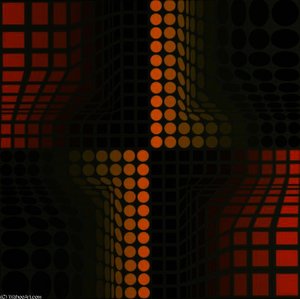
To stand before Harmas is to step directly into the mind of its creator, Victor Vasarely. This piece is not merely an arrangement of color and pattern; it is a vibrant intellectual puzzle, a visual meditation on structure itself. The eye is immediately drawn into the intricate dance between the bold red checks and the myriad small circles that populate the background. It possesses the undeniable energy characteristic of Op Art—an art movement that dared to challenge the very nature of what we perceive as solid form. Vasarely masterfully manipulates these elements, creating an optical vibration that seems to shift and breathe with every passing glance.
Technically speaking, Harmas showcases a sophisticated understanding of geometric abstraction. The composition reads almost like a meticulously crafted mosaic or a complex collage, suggesting the painstaking assembly of countless colored squares into a cohesive whole. While the overall effect is one of vibrant chaos, there is an underlying mathematical rigor. Vasarely’s signature technique involves using simple, repeating geometric units—dots, lines, and checks—to trick the viewer's perception. The scattering of those deep red dots acts as both an anchor point and a disruptive element, adding necessary depth and contrast to the otherwise patterned plane. It is this tension between order and perceived instability that gives the work its electrifying quality.
The title itself, Harmas, hints at the core philosophical underpinning of the piece: harmony or balance. In Vasarely’s hands, geometry transcends mere decoration; it becomes a vehicle for exploring universal principles. The interplay between opposing patterns—the structured grid against the scattered points—suggests that true harmony is not found in simplicity, but rather in the dynamic equilibrium achieved through contrast and complexity. It invites us to consider our own internal balances, suggesting that life’s most beautiful moments are often those where disparate elements coexist.
Created in 1964, this work sits at a fascinating juncture in art history, emerging from the intellectual ferment following the Bauhaus movement and solidifying Op Art as a global phenomenon. For the modern collector or designer, owning a reproduction of Harmas is acquiring more than just wall decor; it is acquiring a piece of conceptual art that speaks to the modernist fascination with structure and perception. Emotionally, the painting is invigorating. It demands engagement, refusing to allow the viewer to simply pass by. Instead, it compels you to slow down, to look closer, and to participate actively in the artwork’s visual dialogue.
"Harmas"의 형식은 Square입니다. 이는 작품 복제본을 배치할 공간을 계획할 때 유용합니다.
빅터 바사렐리의 "Harmas"에 기록된 정서적 톤은 Energetic입니다. 이는 작품이 표현하는 감정을 요약한 것입니다.
1964년에 제작된 "Harmas"은 빅터 바사렐리의 예술적 발전 과정 중 Op Art Period에 해당합니다.

1906 - 1997 , 크로아티아

Discover the profound beauty of abstract art. Our expert guide explores geometric abstraction, Op Art, and Expressionism, offering connoisseurs deep insights into collecting and curating powerful, non-representational masterpieces for sophisticated interiors.
Explore the mesmerizing world of Victor Vasarely. Discover how his Bauhaus-inspired Op Art masters the science of perception through geometric abstraction and vibrant color. A sophisticated guide for discerning art collectors seeking to understand the legacy of optical illusion.

Explore the profound spiritual depth of geometric abstraction. From Malevich's Suprematism to modern masters, our expert guide reveals how pure form and color command presence in fine art collections.

Embark on a visual journey through the mesmerizing world of Op Art. Discover the masters of optical illusion, explore geometric abstraction, and learn how to curate high-impact kinetic works for your private collection with expert guidance from art professionals.


 보내기
보내기 공유하기
공유하기
 상세 보기
상세 보기 가이드 보기

 이미지 다운로드
 유사 작품 더 보기
 슬라이드 쇼 보기
 통계 정보
통계 정보

 상세 보기
상세 보기






































 유리 옵션은 110cm 미만 크기에서만 선택 가능합니다.