x


빠른 제작과 다양한 마감 옵션을 제공하는 박물관 품질의 지클레이 또는 캔버스 프린트. ( 손으로 그린 그림 구매 이미지 구매)





























작품의 원본 비율을 유지하는 미리 설정된 크기 중에서 선택하세요.

특정 프레임이나 공간에 맞춰 직접 치수를 입력하실 수 있습니다. 선택하신 사이즈가 원본 이미지의 비율과 일치하지 않을 경우, 작품을 크롭(자르기)하거나 이미지를 대칭 또는 단색 채우기로 확장하여 제작합니다. 제작 시작 전, 최종 확인을 위해 디지털 목업이 전송됩니다.
화면상의 미리보기는 실제 크롭이나 확장 상태를 반영하지 않으므로, 최종 구도는 오직 목업을 통해서만 정확하게 확인하실 수 있습니다.
맞춤 사이즈 제작도 가능하지만, 원본 비율을 유지하기 위해서는 사전 정의된 목록에서 치수를 선택하시는 것을 권장합니다.

Globe
복제본 크기
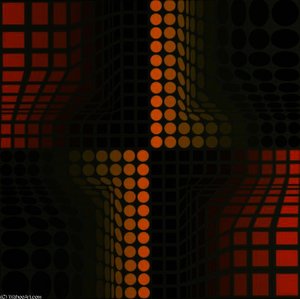
Victor Vasarely's "Globe" is more than just a painting; it’s an invitation into the heart of Op Art, a visual exploration of perception and movement that defined a generation. This vibrant composition, dominated by concentric circles of luminous yellow and orange, immediately draws the eye inward, creating a mesmerizing depth that seems to defy the two-dimensional surface. The artwork's genesis lies in Vasarely’s pioneering work with kinetic art and his deep engagement with geometric abstraction – principles he honed during his formative years at the Bauhaus-influenced Műhely workshop.
Born in 1906 in Pécs, Croatia, Vasarely’s artistic trajectory began unexpectedly. Initially pursuing a medical degree, he abandoned this path to embrace the burgeoning world of visual expression, ultimately becoming a key figure in the development of Op Art – Optical Art. This movement, flourishing in the mid-20th century, sought to stimulate optical illusions through precise geometric forms. Vasarely’s approach was revolutionary; he meticulously constructed his paintings using static elements—circles, lines, and squares—to create dynamic visual effects that appeared to shift and move before the viewer's eyes. “Globe” exemplifies this technique perfectly, demonstrating how seemingly simple shapes can generate complex optical experiences.
The execution of "Globe" reveals Vasarely’s mastery of color theory and his deliberate manipulation of visual perception. The use of contrasting yellows and oranges isn't merely decorative; it’s a calculated strategy to heighten the illusion of movement and depth. Each circle is rendered with painstaking precision, creating a series of overlapping planes that trick the eye into perceiving three-dimensional space. Vasarely’s technique involved layering thin washes of paint, allowing each color to subtly interact with its neighbors, further enhancing the artwork's dynamic quality. The meticulous detail suggests a dedication to scientific observation and an understanding of how the human visual system processes information.
"Globe" can be interpreted as a representation of the universe itself – a microcosm reflecting the vastness and complexity of space. The concentric circles evoke notions of orbits, cycles, and interconnectedness, mirroring Vasarely’s fascination with mathematical principles and their application to art. Beyond its symbolic resonance, the artwork possesses a powerful emotional impact. Its vibrant colors and dynamic composition generate a sense of excitement, wonder, and perhaps even a slight disorientation – a testament to Op Art's ability to challenge our perceptions and stimulate our senses. This piece is not simply observed; it’s experienced.

1906 - 1997 , 크로아티아

Embark on a visual journey through the mesmerizing world of Op Art. Discover the masters of optical illusion, explore geometric abstraction, and learn how to curate high-impact kinetic works for your private collection with expert guidance from art professionals.

Explore the profound spiritual depth of geometric abstraction. From Malevich's Suprematism to modern masters, our expert guide reveals how pure form and color command presence in fine art collections.

Explore the mesmerizing world of Victor Vasarely. Discover how his Bauhaus-inspired Op Art masters the science of perception through geometric abstraction and vibrant color. A sophisticated guide for discerning art collectors seeking to understand the legacy of optical illusion.

Discover the profound beauty of abstract art. Our expert guide explores geometric abstraction, Op Art, and Expressionism, offering connoisseurs deep insights into collecting and curating powerful, non-representational masterpieces for sophisticated interiors.


최신 미술 뉴스, 특별 혜택 및 인테리어 아이디어를 가장 먼저 만나보세요.
프로젝트에 대해 알려주시면 저희 미술 전문가들이 맞춤형 아트 제안 3가지를 전달해 드립니다.
당신만을 위한 맞춤형 옵션 3가지를 무료로 추천해 드립니다!


 미리보기
미리보기
 공유하기
공유하기 공유하기
공유하기
 상세 정보
상세 정보

 다운로드
다운로드
 유사 작품
유사 작품 X-레이
X-레이 슬라이드 쇼

 더 보기
더 보기









 유리 옵션은 110cm 미만 크기에서만 선택 가능합니다.