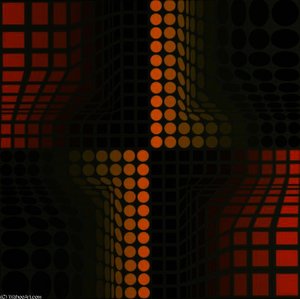
이 페이지에 표시된 작품은 저작권법의 보호를 받으며, 이에 따라 동일한 복제품을 제작하거나 판매하는 것은 법으로 금지되어 있습니다. 이러한 권리 보호는 다음과 같은 국제 협약에 따라 시행됩니다. 베른 협약 또한 다음에서 명시하는 법률을 포함한 국내법에 의해 보호됩니다. 미국 저작권법 제17조.
이 방식은 저작권 보호를 받는 예술 작품을 복제하거나 그대로 재현하는 것이 아니기에 저작권 규정을 완벽히 준수합니다. 대신, 이는 창의적인 재해석의 과정을 거칩니다. 즉, 원작에서 영감을 받되 원작과 동일하지 않은 새로운 회화 작품을 의미합니다.
빠른 제작과 다양한 마감 옵션을 선택할 수 있는 박물관 수준의 지클레이 및 캔버스 프린트. ( 수작업 채색 복제본 주문하기 디지털 이미지 판매 채널로 전환)





























작품의 원본 비율을 그대로 유지하는 프리셋 사이즈 중에서 선택해 보세요.

액자나 벽면 크기에 맞춰 필요한 가로와 세로 길이를 입력해 주세요. 프린트는 원본 이미지보다 크게 제작할 수 없으며 오직 자르는 것만 가능하므로, 비율이 다른 사이즈를 선택할 경우 이미지의 일부가 잘려 나갈 수 있습니다. 인쇄 작업에 들어가기 전, 최종 확인을 위해 디지털 목업을 보내드립니다. 이 페이지에 표시된 이미지는 실제 잘리는 영역을 나타내지 않으며, 오직 목업을 통해서만 정확한 확인이 가능합니다.
Folkokta
복제본 규격
Victor Vasarely's Folkokta is more than just a colorful arrangement of squares; it’s a meticulously crafted portal into the heart of Op Art and a testament to the revolutionary ideas that shaped 20th-century art. Born in 1906 in Pécs, Croatia – then part of Austria-Hungary – Vasarely's artistic trajectory began unexpectedly, with an initial pursuit of medicine before he was captivated by the possibilities of visual expression. This shift led him to the Podolini-Volkmann Academy and, crucially, to Sándor Bortnyik’s “Műhely,” a workshop deeply rooted in the principles of Bauhaus functional design and geometric abstraction. It was within this environment that Vasarely's unique vision began to coalesce – a fascination with how our perception is manipulated by visual stimuli, particularly movement and vibration.
Folkokta exemplifies Vasarely’s pioneering work in kinetic art, a field he largely defined. He wasn't simply painting shapes; he was exploring the *illusion* of movement through static forms. The seemingly random arrangement of squares is, in fact, a carefully calculated orchestration designed to trick the eye and create an optical illusion. This technique, central to Op Art, aimed to stimulate sensory perception directly, bypassing conscious thought and engaging the viewer on a visceral level. The artist meticulously controlled color relationships and spatial variations to generate this dynamic effect – a subtle but powerful demonstration of how our brains interpret visual information.
Vasarely’s masterful use of color is integral to the artwork's impact. The vibrant palette—a rich tapestry of reds, greens, blues, yellows, and purples—isn't chosen arbitrarily. Each hue was carefully selected to amplify the optical illusion, creating areas of simultaneous contrast and visual tension. The overlapping squares generate a sense of depth and movement, drawing the eye across the composition in a seemingly endless dance. This deliberate manipulation of color is a hallmark of Vasarely’s approach, reflecting his belief that art could directly influence our emotional and psychological states.
Folkokta stands as a significant piece within Victor Vasarely's extensive body of work. It represents the culmination of his lifelong exploration into geometric abstraction, influenced by the Bauhaus movement’s emphasis on functionality and clarity. His influence extended far beyond the art world, impacting graphic design, architecture, and even industrial product development. Today, reproductions like this offer a window into a pivotal moment in artistic history – a time when artists began to actively investigate the very nature of perception itself. This artwork is not just decoration; it’s an intellectual exercise rendered visually, inviting contemplation on the relationship between art, science, and human experience.
빅터 바사렐리의 "Folkokta"의 휘도는 Soft Shadow입니다. 휘도는 색상이 빛을 얼마나 반사하는지를 나타냅니다.
빅터 바사렐리의 "Folkokta"은(는) Clear Color Presence의 채도와 Vivid의 강도로 기록되어 있습니다.
빅터 바사렐리의 "Folkokta"은(는) Modern 시대의 작품입니다. 이 시기는 해당 작품의 역사적 배경을 잘 보여줍니다.

1906 - 1997 , 크로아티아

Explore the profound spiritual depth of geometric abstraction. From Malevich's Suprematism to modern masters, our expert guide reveals how pure form and color command presence in fine art collections.

 실제 크기로 보기
 보내기
보내기 공유하기
공유하기
 상세 보기
상세 보기 가이드 보기

 이미지 다운로드
 유사 작품 더 보기
 X-레이
X-레이 슬라이드 쇼 보기
 통계 정보
통계 정보

 상세 보기
상세 보기









 유리 옵션은 110cm 미만 크기에서만 선택 가능합니다.