이 페이지에 표시된 작품은 저작권법의 보호를 받으며, 이에 따라 동일한 복제품을 제작하거나 판매하는 것은 법으로 금지되어 있습니다. 이러한 권리 보호는 다음과 같은 국제 협약에 따라 시행됩니다. 베른 협약 또한 다음에서 명시하는 법률을 포함한 국내법에 의해 보호됩니다. 미국 저작권법 제17조.
이 방식은 저작권 보호를 받는 예술 작품을 복제하거나 그대로 재현하는 것이 아니기에 저작권 규정을 완벽히 준수합니다. 대신, 이는 창의적인 재해석의 과정을 거칩니다. 즉, 원작에서 영감을 받되 원작과 동일하지 않은 새로운 회화 작품을 의미합니다.
빠른 제작과 다양한 마감 옵션을 선택할 수 있는 박물관 수준의 지클레이 및 캔버스 프린트. ( 수작업 채색 복제본 주문하기 디지털 이미지 판매 채널로 전환)





























작품의 원본 비율을 그대로 유지하는 프리셋 사이즈 중에서 선택해 보세요.

액자나 벽면 크기에 맞춰 필요한 가로와 세로 길이를 입력해 주세요. 프린트는 원본 이미지보다 크게 제작할 수 없으며 오직 자르는 것만 가능하므로, 비율이 다른 사이즈를 선택할 경우 이미지의 일부가 잘려 나갈 수 있습니다. 인쇄 작업에 들어가기 전, 최종 확인을 위해 디지털 목업을 보내드립니다. 이 페이지에 표시된 이미지는 실제 잘리는 영역을 나타내지 않으며, 오직 목업을 통해서만 정확한 확인이 가능합니다.
DVA-DVA
복제본 규격
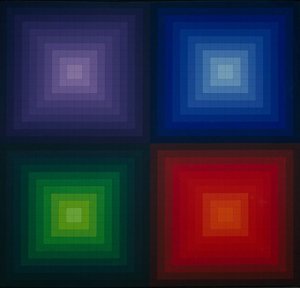
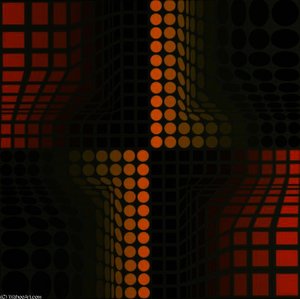
Victor Vasarely's DVA-DVA is more than just a colorful square; it’s a meticulously crafted portal into the heart of Op Art and a testament to the revolutionary approach Vasarely took towards understanding perception. Painted in 1960s, this work embodies the artist’s core philosophy: to translate mathematical principles – specifically, the way our eyes perceive movement and vibration – directly onto the canvas. The painting's deceptively simple composition—four distinct squares of red, green, blue, and yellow—immediately draws the viewer in, inviting a deeper engagement than mere aesthetic appreciation.
Born Károly Vaszary in 1906 in Pécs, Croatia (then part of Austria-Hungary), Vasarely’s artistic trajectory was initially rooted in medicine before he decisively embraced the burgeoning world of abstraction. His formative years were profoundly shaped by the Bauhaus movement and Sándor Bortnyik's “Műhely” workshop, where he absorbed the principles of functional design and geometric abstraction. This wasn’t simply about creating pretty pictures; it was a rigorous scientific investigation into how our brains process visual information. Vasarely sought to create art that actively *stimulated* perception, challenging traditional notions of representation and inviting viewers to become active participants in the artwork's creation.
The technique employed in DVA-DVA is a masterclass in controlled illusion. Each square isn’t painted with broad strokes but rather with precise, overlapping geometric shapes – lines, circles, and curves – meticulously arranged to create the impression of movement and vibration. The artist's deliberate use of contrasting colors amplifies this effect, further manipulating our visual system. The subtle variations within each color field—the delicate shading and layering—are crucial to generating the optical illusion that defines Op Art. It’s a technique demanding immense precision and control, reflecting Vasarely’s dedication to translating mathematical concepts into tangible artistic forms.
While ostensibly abstract, DVA-DVA resonates with deeper symbolic meanings. The four primary colors – red, green, blue, and yellow – are often associated with fundamental energies and emotions. Vasarely’s work isn't about depicting a specific scene or narrative; instead, it aims to evoke a visceral response within the viewer—a sense of dynamism, excitement, and perhaps even a slight disorientation. The painting’s impact is profoundly psychological, tapping into our innate sensitivity to visual stimuli. It invites contemplation on the nature of perception itself, prompting us to question how we see the world around us.
WahooArt offers meticulously crafted hand-painted reproductions of DVA-DVA, ensuring that you experience the full impact of Vasarely’s groundbreaking work. Each reproduction is created using archival quality materials and techniques, faithfully capturing the original's intricate details and vibrant colors. Whether adorning a contemporary space or serving as an investment in art history, this piece offers a unique opportunity to engage with one of the 20th century’s most influential artists.
빅터 바사렐리의 "DVA-DVA"의 수작업 복제화는 본 웹사이트의 수작업 유화 복제화 페이지를 통해 리넨 캔버스 위에 손으로 직접 그린 유화 복제화에서 구매하실 수 있습니다.
Living Room 공간에는 "DVA-DVA" 작품을 Large 크기로 인쇄하여 배치하는 것을 추천합니다.
빅터 바사렐리의 "DVA-DVA"은(는) Modern 시대의 Op Art 사조에 속합니다. 이 요소들이 어우러져 미술사에서 이 작품이 갖는 위상을 완성합니다.

1906 - 1997 , 크로아티아

Explore the profound spiritual depth of geometric abstraction. From Malevich's Suprematism to modern masters, our expert guide reveals how pure form and color command presence in fine art collections.

Discover the profound beauty of abstract art. Our expert guide explores geometric abstraction, Op Art, and Expressionism, offering connoisseurs deep insights into collecting and curating powerful, non-representational masterpieces for sophisticated interiors.

 실제 크기로 보기
 보내기
보내기 공유하기
공유하기
 상세 보기
상세 보기 가이드 보기

 이미지 다운로드
 유사 작품 더 보기
 X-레이
X-레이 슬라이드 쇼 보기
 통계 정보
통계 정보

 상세 보기
상세 보기









 유리 옵션은 110cm 미만 크기에서만 선택 가능합니다.