작품의 원본 비율을 유지하는 미리 설정된 크기 중에서 선택하세요.

특정 프레임이나 공간에 맞도록 직접 크기를 입력할 수 있습니다. 선택하신 크기가 원본 이미지의 비율과 일치하지 않는 경우, 작품을 자르거나 추가적인 손으로 그린 요소를 사용하여 그림을 확장합니다. 제작 시작 전 승인을 위해 디지털 목업을 보내드립니다.
화면 미리 보기는 실제 자르기 또는 확장을 반영하지 않습니다. 최종 구성은 목업을 통해서만 정확하게 확인하실 수 있습니다.
맞춤 크기 제작도 가능하지만, 원본 비율을 유지하기 위해 사전 정의된 목록에서 크기를 선택하시는 것을 권장합니다.

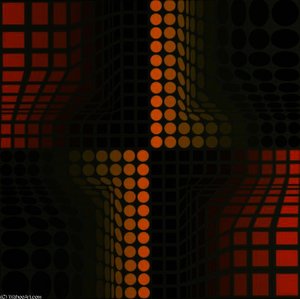
Akos Iv
복제본 크기
Victor Vasarely's "Akos Iv" is not merely a painting; it’s an invitation to question the very nature of perception. This striking close-up reveals a deceptively simple composition – a vibrant red square punctuated by a pristine white center, overlaid with a meticulously rendered checkered pattern reminiscent of honeycomb or a complex lattice. It's a quintessential example of Op Art, a movement that exploded onto the art scene in the mid-20th century and continues to captivate viewers with its mastery of optical illusion. The work’s power lies not just in its visual impact but also in its intellectual engagement – forcing us to confront how our eyes interpret shape, color, and space.
The deliberate juxtaposition of red and white is fundamental to “Akos Iv’s” effect. Red, traditionally associated with energy, passion, and movement, commands immediate attention. The stark contrast against the white creates a sense of depth and dynamism, drawing the eye across the surface. Vasarely wasn't simply applying color; he was manipulating it strategically to trigger specific visual responses. The checkered pattern further amplifies this effect, creating an illusion of movement and vibration that seems to shift with every subtle change in viewing position. This is a testament to Vasarely’s deep understanding of how the human eye processes information – a key principle behind Op Art.
"Akos Iv" was created during a period of significant artistic and intellectual upheaval. Following the devastation of World War II, artists were increasingly rejecting traditional representational art in favor of abstraction. Vasarely’s work aligned with this broader trend, but he took it further by actively exploring the scientific basis of perception. His approach anticipated developments in fields like psychology and optics, demonstrating a remarkable intersection between art and science. Born in Pécs, Croatia (then part of Austria-Hungary) in 1906, Vasarely’s early medical studies ultimately led him to a profound appreciation for visual form, shaping his lifelong dedication to geometric abstraction.
A hand-painted reproduction of “Akos Iv” offers a unique opportunity to own a piece of art history. These reproductions capture not only the visual impact of Vasarely’s original but also the meticulous craftsmanship that went into its creation. Beyond its aesthetic appeal, "Akos Iv" represents a pivotal moment in the development of modern art – a bold experiment with perception and illusion that continues to resonate today. Its vibrant colors and dynamic composition make it an ideal addition to contemporary interiors, adding a touch of intellectual stimulation and visual intrigue.

1906 - 1997 , 크로아티아
Explore the mesmerizing world of Victor Vasarely. Discover how his Bauhaus-inspired Op Art masters the science of perception through geometric abstraction and vibrant color. A sophisticated guide for discerning art collectors seeking to understand the legacy of optical illusion.

Embark on a visual journey through the mesmerizing world of Op Art. Discover the masters of optical illusion, explore geometric abstraction, and learn how to curate high-impact kinetic works for your private collection with expert guidance from art professionals.

Explore the profound impact of geometric form in art history. From Cubism to Op Art, discover how shape creates movement and emotion in masterpieces, and learn how to curate these powerful compositions for your private collection.


 미리보기
미리보기
 프린트 구매
 공유하기
공유하기 공유하기
공유하기
 상세 정보
상세 정보

 다운로드
다운로드
 유사 작품
유사 작품 X-레이
X-레이 슬라이드 쇼

 더 보기
더 보기









 유리 옵션은 110cm 미만 크기에서만 선택 가능합니다.