
 PaintingContemporary Realism
 1942Modern
 23.0 x 17.0 cm
 Leo Baeck Institute
원하는 크기와 액자로 주문 제작되는, 작가들이 직접 캔버스에 손으로 그린 유화 작품입니다. ( 프린트 판매로 전환 디지털 이미지로 전환)





























작품의 원본 비율을 유지하는 미리 설정된 크기 중에서 선택하세요.

특정 프레임이나 공간에 맞도록 직접 크기를 입력할 수 있습니다. 선택하신 크기가 원본 이미지의 비율과 일치하지 않는 경우, 작품을 자르거나 추가적인 손으로 그린 요소를 사용하여 그림을 확장합니다. 제작 시작 전 승인을 위해 디지털 목업을 보내드립니다.
화면 미리 보기는 실제 자르기 또는 확장을 반영하지 않습니다. 최종 구성은 목업을 통해서만 정확하게 확인하실 수 있습니다.
맞춤 크기 제작도 가능하지만, 원본 비율을 유지하기 위해 사전 정의된 목록에서 크기를 선택하시는 것을 권장합니다.

Terezin: Still-life.
복제본 크기
In the quiet, shadowed corners of art history, few works possess the profound emotional weight found in Terezin: Still-life. Painted in 1942 by the Czech-American artist Norbert Troller, this intimate composition serves as much more than a mere study of objects; it is a hauntingly beautiful testament to the human spirit amidst the darkness of the Theresienstadt concentration camp. At first glance, the viewer is met with a collection of mundane items—a red lipstick tube, various bowls, cups, and bottles—arranged with a deliberate, almost rhythmic precision. Yet, beneath this surface-level arrangement lies a narrative of survival and the desperate attempt to maintain a sense of normalcy and dignity in an environment defined by deprivation.
The composition is anchored by the striking presence of a single red lipstick tube, positioned centrally like a beacon of color against the more muted tones of the surrounding vessels. This splash of crimson acts as a powerful symbol of identity and the lingering traces of civilization. Surrounding this focal point, the artist has meticulously placed bowls and bottles that create a sense of structured space within the frame. The way the light interacts with the glass of the bottles and the curves of the ceramic bowls suggests a mastery of form, where each object occupies its own small territory of existence, much like the prisoners themselves striving to hold onto their individual humanity.
Technically, Troller utilizes a style that blends the observational precision of traditional still life with a poignant, documentary-like gravity. The arrangement of the three bowls and two cups creates a visual movement that guides the eye across the table, yet there is an underlying tension in the stillness. The artist’s background as an architect is subtly evident in the balanced, architectural placement of the objects, providing a sense of order to a world that had descended into chaos. This structural stability provides a stark, moving contrast to the historical reality of the work's creation, making the painting an evocative piece for collectors who value art that speaks to the depth of the human experience.
For the discerning collector or interior designer, Terezin: Still-life offers a unique opportunity to possess a piece of profound historical significance. As a high-quality reproduction, it brings a sophisticated and contemplative energy to any space, serving as a conversation starter that invites deep reflection. It is not merely a decoration but an emotional anchor—a reminder that even in the most desolate circumstances, beauty and the will to create can endure. This work stands as a masterpiece of resilience, making it an invaluable addition to a collection dedicated to art that transcends time and touches the very soul.


1896 - 1984 , Czech Republic
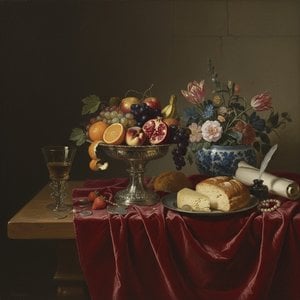
Embark on a sophisticated journey through the history of still life art. From Dutch Golden Age masterpieces to Baroque opulence, explore the profound symbolism and timeless beauty of the world's most exquisite table compositions.

Embark on a sophisticated journey through art history with our exploration of still life masterpieces. Discover the profound symbolism behind classical paintings of drinks and fruit, curated for the true connoisseur seeking timeless elegance and academic depth.

Explore the profound evolution of Cubist still life, from Cézanne's structural foundations to the fragmented brilliance of Braque and Léger. Discover how geometric abstraction redefined reality through a sophisticated lens of form, color, and modern artistic mastery.


 미리보기
미리보기
 공유하기
공유하기 공유하기
공유하기
 상세 정보
상세 정보

 다운로드
다운로드
 유사 작품
유사 작품 X-레이
X-레이 슬라이드 쇼
 통계 정보
통계 정보 더 보기
더 보기









 유리 옵션은 110cm 미만 크기에서만 선택 가능합니다.


