이 페이지에 표시된 작품은 저작권법의 보호를 받으며, 이에 따라 동일한 복제품을 제작하거나 판매하는 것은 법으로 금지되어 있습니다. 이러한 권리 보호는 다음과 같은 국제 협약에 따라 시행됩니다. 베른 협약 또한 다음에서 명시하는 법률을 포함한 국내법에 의해 보호됩니다. 미국 저작권법 제17조.
저희는 존중을 담은 합법적인 대안으로서, 원작에서 영감을 받은 맞춤형 수제 유화 작품을 제공합니다. 저희의 숙련된 전문 화가들은 원작의 스타일, 분위기, 예술적 정수를 면밀히 연구하여, 그 자체로 독창적인 창작물이면서도 원작과 동일한 감동을 불러일으키는 새로운 작품을 만들어냅니다.
이 방식은 저작권 보호를 받는 예술 작품을 복제하거나 그대로 재현하는 것이 아니기에 저작권 규정을 완벽히 준수합니다. 대신, 이는 창의적인 재해석의 과정을 거칩니다. 즉, 원작에서 영감을 받되 원작과 동일하지 않은 새로운 회화 작품을 의미합니다.
작가가 직접 캔버스에 손으로 그린 유화 작품으로, 원하는 크기와 액자로 맞춤 제작해 드립니다. ( 프린트 판매로 전환 디지털 이미지 판매 채널로 전환)
작품의 원본 비율을 그대로 유지하는 프리셋 사이즈 중에서 선택해 보세요.

액자나 벽면 크기에 맞춰 필요한 가로와 세로 길이를 입력해 주세요. 본 작품은 수작업으로 제작되므로, 요청하신 비율에 따라 작가가 그림의 가장자리를 조금 더 넓게 그리거나 일부를 조정하여 작업할 수 있습니다. 작업 시작 전, 최종 확인을 위해 디지털 목업 이미지를 보내드립니다. 이 페이지에 표시된 이미지는 실제 결과물과 다를 수 있으며, 오직 목업 이미지만이 정확한 결과물을 보여줍니다.
Ferryman
복제본 규격
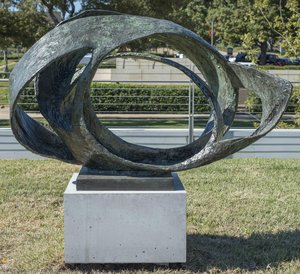
In the vast, open expanse of a verdant landscape, where the whispers of nature meet the silent strength of human ingenuity, stands Ferryman. This striking work by the renowned British sculptor Tony Cragg invites the viewer into a profound dialogue between the organic and the industrial. At first glance, the sculpture presents a captivating paradox: a large-scale, metallic rabbit perched with unexpected grace upon a rugged concrete base. The figure, though clearly recognizable in its soft, familiar silhouette, is transformed by its medium, rendered in a way that suggests both the lightness of a living creature and the enduring weight of modern art. It is a piece that commands attention, not through aggression, or noise, but through a quiet, monumental presence that anchors the surrounding field.
The artistry of Cragg lies in his ability to manipulate material to evoke complex emotional responses. In Ferryman, the metallic surface catches the shifting light of the sky, creating a dynamic interplay of shadows and highlights that breathes life into the sculpture's form. The contrast between the smooth, engineered precision of the metal and the raw, unyielding texture of the concrete pedestal creates a tension that is central to the work's allure. This juxtaposition serves as a metaphor for the contemporary condition—the intersection of our biological origins and our increasingly technological existence. For the collector or interior designer, this piece offers a sophisticated focal point, bringing a sense of sculptural depth and intellectual curiosity to any curated space.
To understand Ferryman, one must look toward the historical trajectory of Tony Cragg himself. Emerging from the vibrant assemblage movement, Cragg has spent decades redefining how we perceive fragments and forms. This work, dating from 1997, reflects a period of mastery where the artist moved beyond the mere accumulation of discarded objects toward a more fluid, integrated approach to three-dimensional space. The sculpture does not merely sit upon the earth; it seems to emerge from it, bridging the gap between the man-made and the natural world. The presence of distant buildings and the subtle inclusion of human observers in the landscape further emphasize this connection, placing the artwork within a living, breathing ecosystem.
The symbolism within the piece is as layered as the artist's technique. The rabbit, often a symbol of fertility, rebirth, and sudden movement, is here frozen in a moment of stillness, acting as a silent sentinel over the landscape. This stillness invites a meditative state in the viewer, encouraging a slow, rhythmic observation of the surrounding environment. For those seeking to incorporate high-quality reproductions into their homes or galleries, Ferryman represents more than just a decorative object; it is an invitation to contemplate the permanence of art amidst the transience of life. It is a masterpiece of balance, offering a sophisticated aesthetic that resonates with anyone who finds beauty in the harmony of contrasting elements.
Tony Cragg은(는) Contemporary Art 운동의 흐름 속에서 "Ferryman"을(를) 제작했습니다.
Tony Cragg의 "Ferryman"의 재료는 Sculpture이며, 제작 연도는 1997년입니다.
Tony Cragg의 "Ferryman"은(는) 밝은 부분과 어두운 부분 사이의 Statement 대비를 보여줍니다.

Sir Anthony Cragg, a titan of British contemporary sculpture, possesses the rare ability to breathe life into the inanimate. Born in Liverpool in 1949, Cragg’s artistic consciousness was shaped by an early mastery of painting, yet it was his profound fascination with the three-dimensional realm that would eventually redefine the boundaries of modern sculpture. His journey through the Gloucestershire College of Arts and Technology and Wimbledon School of Art provided a rigorous foundation, but it was his move to Germany in 1977 that acted as a true catalyst, thrusting him into an international dialogue with the avant-garde and expanding his sculptural vocabulary beyond the limits of traditional medium.
In the early stages of his career, Cragg emerged as a pioneer of the assemblage movement, finding profound beauty in the discarded and the mundane. He possessed a singular vision for transforming everyday detritus—stacked chairs, weathered tables, and forgotten boxes—into complex, rhythmic reliefs. Through works such as “Stack” (1975), he demonstrated an uncanny ability to manipulate spatial arrangement and color, turning fragments of plastic and wood into vibrant geometric abstractions. This period was defined by a philosophical rejection of representational imagery; instead, Cragg sought to distill visual language into its purest essence, forcing the viewer to confront the raw energy of form and texture without the distraction of recognizable subjects.
As his career progressed through the mid-1970s and into the 1980s, Cragg’s ambitions grew from the intimate scale of wall-mounted reliefs to the monumental presence of large-scale installations. He began to bridge the gap between architecture and sculpture, creating works that engaged aggressively with the spaces they inhabited. His mastery over diverse materials—ranging from the industrial coldness of fiberglass to the timeless weight of bronze—allowed him to explore a spectrum of textures and densities. In pieces like “Red Indian” (1982–3), one can observe his meticulous method of arranging individual fragments to generate larger, more complex images that simultaneously evoke organic, natural growth and rigid, geometric precision.
The brilliance of Cragg’s development lies in his ability to navigate the tension between the artificial and the biological. His later series, such as 'Early Forms' and 'Rational Beings', showcase a sculptor deeply invested in the concept of emergence—the way complex structures arise from simple components. His sculptures often appear to be in a state of flux, caught in a moment of transformation or unfolding. This sense of kinetic energy, even within static bronze or resin, creates a psychological depth that challenges our perceptions of stability and permanence.
The historical significance of Sir Anthony Cragg cannot be overstated; he has fundamentally altered the trajectory of contemporary sculpture by dismantling the distinction between found objects and fine art. His work serves as a bridge between the sculptural traditions of the past and the fragmented, multi-material reality of the present. By treating the fragment not as a broken piece, but as a building block for new realities, he has provided a visual language for an era defined by complexity and interconnectedness.
Today, Cragg remains a vital force in the global art scene, his influence felt in the way contemporary artists approach materiality and spatial intervention. His achievements are marked by:

1949 -

Discover the enduring elegance of bronze sculpture. From ancient Roman strength to Art Deco sophistication, explore our expert guide on collecting, casting techniques, and integrating timeless metal masterpieces into your fine art collection.

Discover the enduring allure of metal art. Explore how masterfully forged sculptures blend industrial strength with organic elegance to create timeless investment pieces for sophisticated collectors and luxury interiors.

Discover the enduring allure of bronze sculptures at WahooArt.com. From classical lost-wax casting to modern metal masterpieces, explore museum-quality artworks designed to elevate luxury interiors. Expert curation, authenticity guaranteed, and worldwide shipping for discerning collectors.

Master the nuances of three-dimensional art with our expert guide. Explore sculptural history, from Phidias to Neoclassicism, and learn to evaluate materiality, form, and technique like a true connoisseur. Elevate your collection with profound insights into the world of sculpture.


 보내기
보내기 공유하기
공유하기
 상세 보기
상세 보기 가이드 보기

 이미지 다운로드
 유사 작품 더 보기
 슬라이드 쇼 보기
 통계 정보
통계 정보


 상세 보기
상세 보기






































 유리 옵션은 110cm 미만 크기에서만 선택 가능합니다.