The Soul of the Brush: The Life and Legacy of Tōkei Sōboku
In the heart of Kyoto, a city where the echoes of ancient traditions meet the shifting tides of modernity, the life of Tōkei Sōboku (東渓宗牧) unfolded as a profound meditation on form and spirit. Born in 1883, Sōboku emerged during the Shōwa period, an era defined by a complex negotiation between Japan's venerable past and an encroaching global modernism. He was not merely a practitioner of calligraphy; he was a scholar-artist whose very existence served as a bridge between the disciplined rigors of classical scholarship and the expressive freedom of contemporary artistic thought. His journey was one of deep spiritual contemplation, rooted in the intellectual soil of Kyoto, where every stroke of his brush was informed by a lifetime of studying the delicate balance of the universe.
Sōbanc’s formative years were steeped in an education that transcended simple technical training. He immersed himself in the profound depths of Confucian classics and the meditative complexities of Zen Buddhism, disciplines that provided the philosophical scaffolding for his later masterpieces. This dual foundation instilled in him a reverence for harmony, balance, and the pursuit of enlightenment—values that would become the heartbeat of his work. Under the guidance of the era's most esteemed masters, he mastered the foundational mechanics of ink blending and brush control, yet he never allowed himself to be imprisoned by them. While he held a deep respect for the meticulous traditions of Chinese calligraphy, particularly in the precision of seal execution and compositional equilibrium, Sōboku possessed a restless, innovative spirit that sought to breathe new life into ancient characters.
A Synthesis of Tradition and Modernist Nuance
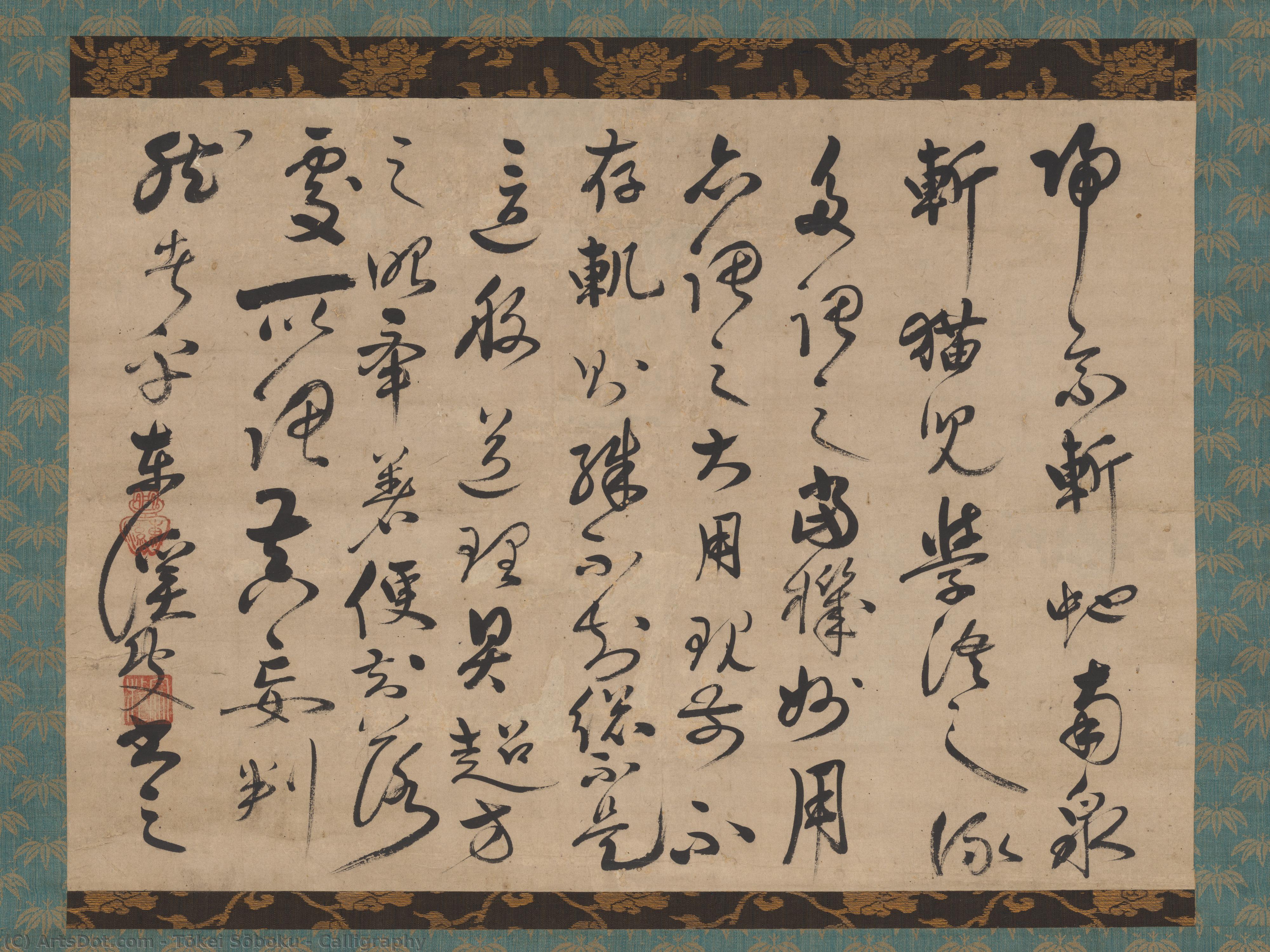
What truly distinguishes the work of Tōkei Sōboku is his courageous departure from rigid convention. While many of his contemporaries found comfort in the repetition of established styles, Sōboku engaged in a deliberate dialogue with tradition, often challenging it through subtle experimentation. He possessed a rare ability to synthesize the weight of historical technique with a modernist sensibility that embraced nuance and texture. His calligraphy was never static; it moved with an organic vitality, incorporating delicate variations in ink density and unexpected touches of color that suggested a deeper, more tactile dimension to the written word.
This stylistic evolution allowed his art to resonate on both an intellectual and emotional level. To observe a Sōboku piece is to witness a controlled tension between the structured and the spontaneous. His work often reflects:
- The Elegance of Balance: A masterful use of negative space that allows the ink to breathe, mirroring the Zen concept of emptiness.
- Textural Depth: An innovative approach to ink application that creates a sense of movement and atmospheric presence.
- Spiritual Resonance: A profound connection to the rhythmic flow of nature, captured through the disciplined yet fluid motion of the brush.
Historical Significance and Enduring Influence
Beyond his individual achievements as a painter and calligrapher, Tōkei Sōboku’s historical significance lies in his role as a mentor and a cultural custodian. As a respected teacher, he nurtured generations of aspiring artists, passing down the wisdom of the old masters while encouraging them to find their own unique voices within the modern landscape. He helped ensure that the profound spiritual essence of Japanese calligraphy would not be lost to the rapid industrialization of the 20th century, but rather transformed into a living, breathing medium capable of expressing the complexities of a new age.
His legacy remains a testament to the power of artistic synthesis. By refusing to choose between the past and the present, Sōboku created a space where tradition could evolve without losing its soul. Today, his works stand as enduring monuments to the Shōwa period's artistic flourishing, reminding us that true innovation is most powerful when it is anchored in a deep understanding of what came before. Through his brush, the ancient wisdom of Kyoto continues to speak, offering a timeless lesson in beauty, discipline, and the eternal pursuit of harmony.

 미리보기
미리보기
 공유하기
공유하기 공유하기
공유하기
 상세 정보
상세 정보 가이드 보기

 다운로드
다운로드
 유사 작품 더 보기
 X-레이
X-레이 슬라이드 쇼 보기
 질의응답
질의응답
 통계 정보
통계 정보

 더 보기
더 보기
 프린트 판매로 전환





































 유리 옵션은 110cm 미만 크기에서만 선택 가능합니다.


