웹 미리보기 화면을 훨씬 뛰어넘는 인쇄용 파일을 만나보세요. 저희가 판매하는 모든 디지털 이미지는 스톡 데이터베이스 내의 고해상도 마스터 파일(일반적으로 가로 5,000~15,000픽셀)을 기반으로 합니다. 따라서 대형 인쇄나 정밀한 크롭 작업 시에도 세밀한 디테일을 자신 있게 구현할 수 있습니다.
저희 스튜디오를 거치는 모든 파일은 정교한 손길을 거칩니다. 디지털 전문가가 원작과 대조하여 색상을 점검하고 필요 시 보정하며, 전문 리터칭 도구를 사용하여 선명도와 디테일을 높입니다. 이 과정에서 작가의 붓 터치와 화풍을 충실히 유지하는 것을 원칙으로 합니다. 그 결과, 단순한 스캔본에 필터를 입힌 듯한 느낌이 아닌, 마치 실제 회화 작품을 보는 듯한 이미지를 구현해냅니다.
최종 완료 전 확인 단계가 있습니다. 전문가가 검토하실 수 있도록 72시간 이내에 이미지를 이메일로 보내드립니다. 결과물이 만족스럽지 않으신가요? 수정이나 보완을 요청하시거나, 품질이 기대에 미치지 못할 경우 환불을 요청하실 수 있습니다.
출판사, 디자인 스튜디오, 갤러리 및 인쇄소가 신뢰하는 바로 그 품질입니다.
개인 소장 및 전시, 인쇄, 창작 프로젝트를 위한 고해상도 파일을 다운로드하세요. ( 프린트 판매로 전환 수작업 채색 복제본 주문하기)
WahooArt.com를 선택하시면 단순히 이미지를 받는 것을 넘어, 정밀한 보정 과정을 거쳐 완성된 전문적인 디지털 예술 작품을 만나보실 수 있습니다. 모든 주문에는 만족 보장 서비스가 포함되어 있으며, 다음과 같은 사항들이 자동으로 제공됩니다:
주문 후 72시간 이내에 고해상도 디지털 이미지 파일이 이메일로 발송되며, 즉시 사용하실 수 있습니다.
귀하의 작품은 첨단 AI 기술과 정교한 수동 편집 과정을 거쳐 전문적으로 최적화되며, 이를 통해 디테일과 선명도, 색상의 정확도를 극대화합니다.
파일을 실수로 삭제하거나 분실하셨나요? 걱정 마세요. 언제든 무료로 다시 보내드립니다.
관세, 부가세, 배송비 부담 없이 작품을 즉시 소장하세요 - 디지털 다운로드는 언제나 면세 혜택이 적용됩니다.
전문적인 도구와 색상 관리 시스템을 통해 디지털 이미지가 원본의 색상을 최대한 정확하게 구현하도록 보장합니다.
구매하신 디지털 이미지에 만족하지 못하실 경우, 100일 이내에 별도의 조건 없이 수정 또는 100% 환불을 진행해 드립니다.
만족스럽지 않으신가요? 디지털 파일을 받으신 후 100일 이내라면 어떤 이유로든 조건 없이 전액 환불해 드립니다.
이미지 3매 구매 시 10% 할인 - 5매 구매 시 15% 할인 - 10매 이상 구매 시 20% 할인. 크리에이티브 프로젝트, 갤러리, 에이전시에 매우 유용합니다.
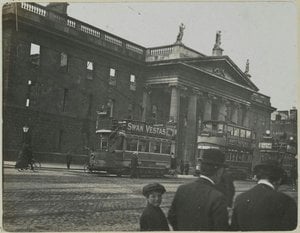
Thomas Johnson Westropp’s “Eden Quay” isn't merely a photograph; it’s a frozen moment in time—a visceral testament to the devastation wrought by the Easter Rising of 1916. Captured on May 17th, just weeks after Dublin endured the brutal bombardment of British forces during the rebellion, this monochrome image transcends documentation and becomes an emblem of loss interwoven with an undeniable spirit of defiance.
The composition is strikingly simple yet profoundly effective. A long, straight street dominates the frame, receding into a hazy distance—a deliberate choice that amplifies the sense of scale and underscores the immensity of the destruction surrounding it. Buildings loom large in the background, their facades scarred by explosions and fires, forming a jagged skyline that speaks volumes about the conflict’s destructive force. At the forefront stands a horse-drawn carriage, providing a grounding element against which the grandeur of ruin is contrasted.
Westropp's masterful use of light contributes significantly to the photograph’s mood. Diffused illumination softens shadows and minimizes harsh contrasts, fostering an atmosphere of solemn contemplation rather than dramatic spectacle. This understated lighting emphasizes textures—the rough cobblestones beneathfoot, the crumbling brickwork of the buildings—drawing the viewer into a detailed sensory experience.
Beyond its technical merits, “Eden Quay” resonates with powerful symbolic significance. The ruined buildings serve as poignant reminders of human vulnerability in the face of overwhelming power – a visual representation of fragility against the backdrop of historical upheaval. Yet, amidst the devastation, figures populate the sidewalk, symbolizing enduring life and resilience—a subtle but crucial element that elevates the photograph beyond mere depiction to profound contemplation.
Ultimately, “Eden Quay” compels us to confront not only the horrors of war but also the capacity for beauty to emerge from ruin. It’s a hauntingly evocative piece that invites viewers to consider themes of loss, memory, and the enduring spirit of humanity—a timeless image destined to inspire admiration and contemplation for generations to come.
"Eden Quay"의 원작은 트리니티 칼리지 더블린 도서관에 소장되어 있으며, 이 작품은 퍼블릭 도메인 - 저작권 보호 기간이 만료되었습니다 상태입니다.
시각적 밝기 측면에서 볼 때, Thomas Johnson Westropp의 "Eden Quay"은(는) brilliant 수준입니다.
Thomas Johnson Westropp의 "Eden Quay"의 재료는 Giclée Print이며, 제작 연도는 1916년입니다.

Thomas Johnson Westropp was born on August 16, 1860, at Attyflin Park, Patrickswell, County Limerick, Ireland. His ancestors were landowners of English origin who had resided in the area since the mid-16th century. From a young age, Westropp displayed a keen interest in antiquities, meticulously documenting topography, ancient buildings, and folk life during family trips throughout neighboring counties.
He pursued higher education at Trinity College Dublin, earning an MA in 1882. He furthered his studies with a degree in civil engineering in 1885, subsequently apprenticing under Bindon Blood Stoney, who was overseeing the expansion and dredging of the Dublin port entrance.
Despite his initial training as an engineer, Westropp soon abandoned professional practice to dedicate himself fully to archaeological research. He became assistant surveyor for County Meath briefly but quickly prioritized his passion for uncovering Ireland’s past. For the remainder of his life, he focused on researching antiquities along the western seaboard of Ireland.
Westropp is renowned for his incredibly detailed sketches of buildings, grave slabs, and other archaeological remains found throughout Ireland. These drawings are not merely artistic representations; they serve as invaluable historical records. Many of these sketches are now preserved by the Royal Irish Academy.
His work extended beyond visual documentation to include the collection of folklore and local traditions, providing a rich tapestry of cultural insights into 19th and early 20th-century Ireland.
Westropp’s initial engineering training likely influenced his meticulous approach to documentation and precise rendering of architectural details. His mentor, Bindon Blood Stoney, a prominent engineer involved in significant infrastructural projects, instilled a sense of technical precision. However, it was his innate curiosity and passion for Irish history that truly shaped his artistic development.
His work can be seen as part of a broader movement of antiquarianism prevalent during the Victorian era, where there was growing interest in preserving and understanding historical artifacts and traditions.
Thomas Johnson Westropp died in 1922, leaving behind a substantial body of work that continues to be studied by historians, archaeologists, and folklorists today. His detailed sketches and meticulous notes remain essential resources for understanding Ireland’s rich past. He is remembered as a dedicated scholar who played a crucial role in preserving Irish cultural heritage.
His publications are widely accessible in libraries throughout the west of Ireland, ensuring his contributions continue to inspire future generations.

1860 - 1922 , Ireland
 공유하기
공유하기 공유하기
공유하기
 상세 정보
상세 정보 가이드 보기

 다운로드
다운로드
 유사 작품 더 보기
 슬라이드 쇼 보기
 질의응답
질의응답
 통계 정보
통계 정보


 더 보기
더 보기