

빠른 제작과 다양한 마감 옵션을 선택할 수 있는 박물관 수준의 지클레이 및 캔버스 프린트. ( 수작업 채색 복제본 주문하기 디지털 이미지 판매 채널로 전환)





























작품의 원본 비율을 그대로 유지하는 프리셋 사이즈 중에서 선택해 보세요.

액자나 벽면 크기에 맞춰 필요한 가로와 세로 길이를 입력해 주세요. 프린트는 원본 이미지보다 크게 제작할 수 없으며 오직 자르는 것만 가능하므로, 비율이 다른 사이즈를 선택할 경우 이미지의 일부가 잘려 나갈 수 있습니다. 인쇄 작업에 들어가기 전, 최종 확인을 위해 디지털 목업을 보내드립니다. 이 페이지에 표시된 이미지는 실제 잘리는 영역을 나타내지 않으며, 오직 목업을 통해서만 정확한 확인이 가능합니다.
테린과 리너와 받침대
복제본 규격
Thomas Germain의 "테린과 리너와 받침대"의 AR 미리보기 페이지에서는 증강 현실(AR) 기술을 사용하여 호환 가능한 기기를 통해 작품이 사용자의 공간에 배치된 모습을 미리 확인할 수 있습니다.
"테린과 리너와 받침대"의 명암 대비는 부드러운로 기록되었습니다. 대비는 밝은 부분과 어두운 부분의 차이가 얼마나 강한지를 나타냅니다.
"테린과 리너와 받침대"은(는) 캔버스에 아크릴 물감 기법을 사용하여 Rococo Baroque Fusion 양식으로 제작되었습니다.

Thomas Germain (1673–1748) stands as the undisputed titan of Parisian silversmithing during the opulent Rococo era—a period defined by extravagant ornamentation, playful asymmetry, and a fervent embrace of nature’s beauty. Born in Paris to Pierre Germain, whose artistic legacy remains elusive, young Thomas initially pursued painting, honing his skills in Rome between 1687 and 1702 where he swiftly transitioned into the craft of goldsmithing, establishing himself as a true artisan. This formative experience instilled within him an unwavering dedication to meticulous technique and a profound understanding of sculptural principles—qualities that would permeate his entire oeuvre. His early years in Italy allowed him to absorb the dramatic energy of Baroque sculpture, a foundation that would later enable him to manipulate precious metals with the fluidity of a painter's brush.
Returning to Paris in 1720, Germain ascended to the prestigious rank of Maître (master), securing his position as Orfèvre du Roi—the King’s Goldsmith. This appointment was more than a mere title; it was a gateway to the very heart of French power. Granted apartments within the Palais du Louvre in 1723, Germain operated at the epicenter of European luxury. His workshop became a sanctuary of creation where he served Louis XV and the French royal family with unparalleled devotion. From the delicate gold mustard pots used in intimate royal breakfasts to the grand, ceremonial objects destined for foreign thrones, his work embodied the prestige of the Bourbon monarchy. His influence was truly international, as his exquisite silver pieces traveled to the courts of Spain, Naples, and Portugal, leaving an indelible mark on the decorative arts of the entire continent.
The genius of Germain resided not merely in replicating established styles but in elevating them to breathtaking heights. He possessed a rare ability to blend the structural rigor of his training with the whimsical, organic motifs that defined the Rococo spirit. His work often featured:
Beyond his functional masterpieces, Germain’s impact reached into the very fabric of Parisian architecture and culture. His involvement in the reconstruction of Saint-Louis-du-Louvre demonstrated a versatility that few craftsmen could claim. Even the great philosopher Voltaire recognized his extraordinary talent, immortalizing Germain's "divine hand"* in verse. When he passed away in 1748, his contribution to French artistry was so profound that the King of France himself ordered a requiem mass to be sung in his honor. Today, the surviving pieces of Thomas Germain—from his legendary hunting-themed surtout de table to his delicate royal rattles—remain as shimmering testaments to a man who transformed cold metal into the living pulse of the Rococo age.

1673 - 1748 , France

Explore the dramatic evolution from Baroque's intense chiaroscuro to Rococo's golden elegance. Our expert guide decodes the shift from high-drama shadows to playful, ornate grace for art enthusiasts and collectors seeking deep historical insight.
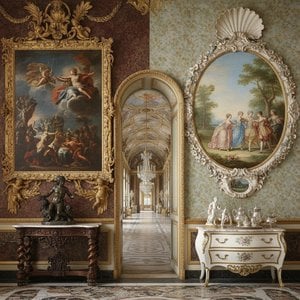
Embark on a cultural journey through the dramatic grandeur of Baroque and the delicate grace of Rococo art. Discover the history, techniques, and timeless beauty of these magnificent eras with our expert-led exploration of European masterpieces.

Explore the profound differences between Baroque drama and Rococo elegance. Our expert guide delves into art history, chiaroscuro, and the evolution of European masterpieces for collectors and enthusiasts seeking deep historical context.
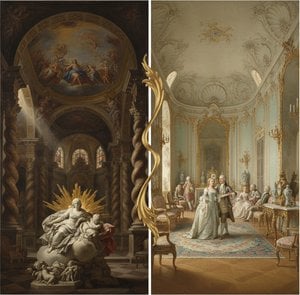
Explore the captivating evolution from Baroque's drama to Rococo's grace! Discover key artists, characteristics & lasting influence of these art movements with expert insights at WahooArt.

화려함과 우아함의 절정, 로코코 미술! 부셰, 프라고나르 등 거장들의 걸작 10편을 통해 18세기 예술 황금시대를 만나보세요. WahooArt.com에서 박물관 수준의 명품 아트 프린트와 인테리어 영감을 얻으세요. 지금 바로 온라인 컬렉션을 탐험해보세요!

 실제 크기로 보기
 보내기
보내기 공유하기
공유하기
 상세 보기
상세 보기 가이드 보기

 이미지 다운로드
 유사 작품 더 보기
 X-레이
X-레이 슬라이드 쇼 보기
 통계 정보
통계 정보

 상세 보기
상세 보기









 유리 옵션은 110cm 미만 크기에서만 선택 가능합니다.


