빠른 제작과 다양한 마감 옵션을 제공하는 박물관 품질의 지클레이 또는 캔버스 프린트. ( 손으로 그린 그림 구매 디지털 이미지로 전환)
작품의 원본 비율을 유지하는 미리 설정된 크기 중에서 선택하세요.

특정 프레임이나 공간에 맞춰 직접 치수를 입력하실 수 있습니다. 선택하신 사이즈가 원본 이미지의 비율과 일치하지 않을 경우, 작품을 크롭(자르기)하거나 이미지를 대칭 또는 단색 채우기로 확장하여 제작합니다. 제작 시작 전, 최종 확인을 위해 디지털 목업이 전송됩니다.
화면상의 미리보기는 실제 크롭이나 확장 상태를 반영하지 않으므로, 최종 구도는 오직 목업을 통해서만 정확하게 확인하실 수 있습니다.
맞춤 사이즈 제작도 가능하지만, 원본 비율을 유지하기 위해서는 사전 정의된 목록에서 치수를 선택하시는 것을 권장합니다.

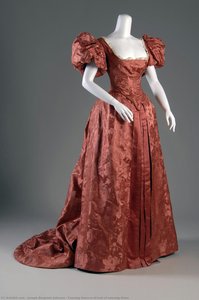
Day Dress
복제본 크기

To contemplate the life of Thomas Augustine Martin is to witness a rare harmony between the analytical mind of a scholar and the sensitive soul of an artist. Born in the quiet beauty of Ballinamore, County Leitrim, on November 13, 1935, Martin’s journey was one defined by a profound connection to the Irish landscape and its cultural heartbeat. While history primarily remembers him as a titan of Anglo-Irish literary criticism—a man whose intellect shaped the halls of University College Dublin and the Senate of Ireland—there existed within him a deeply resonant visual sensibility. He was not merely an observer of the written word, but a creator of light and color, capable of translating the ephemeral textures of life onto paper.
His formative years at Cistercian College, Roslam, laid the groundwork for a life of disciplined excellence. A natural leader who captained the rugby team and served as House Captain, Martin possessed a vigor that would later manifest in his passionate advocacy for Irish arts. It was during this period that his linguistic talents first shone, earning him a top mark in English that signaled a lifelong devotion to the nuances of expression. This early academic rigor provided the scaffolding upon which he built an expansive career, moving from the local classrooms of Roscrea to the prestigious Chair of Anglo-Irish Literature at UCD, where he became a pivotal interpreter of the nation's literary traditions.
Beyond the lecture halls and the political debates of Seanad Éireann, Martin found a sanctuary in the visual arts. His foray into painting, most notably seen in his celebrated watercolour ‘Day Dress’, reveals an artist deeply attuned to the subtle shifts of atmosphere and light. In this work, one finds a departure from the structured arguments of his literary critiques; instead, there is a fluid, emotive exploration of color and form. The piece captures a moment of quiet contemplation, mirroring the very essence of the Irish landscape he so loved. Through the medium of watercolour, Martin was able to evoke the vibrant yet soft hues of his homeland, demonstrating an ability to capture the transient beauty of a single moment.
This artistic dimension of his life served as a vital counterpoint to his public roles. While his work at the Abbey Theatre board and his political service required a focus on institutional strength and national identity, his painting allowed for a more intimate, personal dialogue with the world. There is a poetic symmetry in his ability to navigate both the macrocosm of national culture and the microcosm of a single brushstroke. His art was not a separate hobby but an extension of his literary soul—a way to visualize the rhythms and textures that he spent his professional life analyzing through text.
The historical significance of Thomas Augustine Martin lies in his ability to bridge disparate worlds. He was a man who could command a Senate chamber, lead a university department, and direct a national theatre, yet he remained anchored by the delicate precision of an artist’s eye. His contributions to Irish life were multifaceted:
When he passed away in Dublin on October 16, 1995, Ireland lost more than an academic; it lost a polymath who embodied the very essence of the Irish intellectual tradition. His legacy remains etched in the archives of UCD and the annals of the Abbey Theatre, but it also lives on in the soft, luminous traces of his paintings, which continue to invite viewers into a world of quiet, enduring beauty.

1935 - 1995 , Republic of Ireland


 미리보기
미리보기
 공유하기
공유하기 공유하기
공유하기
 상세 정보
상세 정보

 다운로드
다운로드
 유사 작품
유사 작품 X-레이
X-레이 슬라이드 쇼
 통계 정보
통계 정보

 더 보기
더 보기






































 유리 옵션은 110cm 미만 크기에서만 선택 가능합니다.