

빠른 제작과 다양한 마감 옵션을 선택할 수 있는 박물관 수준의 지클레이 및 캔버스 프린트. ( 수작업 채색 복제본 주문하기 디지털 이미지 판매 채널로 전환)





























작품의 원본 비율을 그대로 유지하는 프리셋 사이즈 중에서 선택해 보세요.

액자나 벽면 크기에 맞춰 필요한 가로와 세로 길이를 입력해 주세요. 프린트는 원본 이미지보다 크게 제작할 수 없으며 오직 자르는 것만 가능하므로, 비율이 다른 사이즈를 선택할 경우 이미지의 일부가 잘려 나갈 수 있습니다. 인쇄 작업에 들어가기 전, 최종 확인을 위해 디지털 목업을 보내드립니다. 이 페이지에 표시된 이미지는 실제 잘리는 영역을 나타내지 않으며, 오직 목업을 통해서만 정확한 확인이 가능합니다.
Composition I (still life)
복제본 규격
In the quiet evolution of modernism, few works capture the radical shift from representation to pure abstraction as poignantly as Theo van Doesburg’s Composition I (still life). Created in 1916, this masterpiece serves as a profound bridge between the tangible world and the spiritual realm of geometry. At first glance, the viewer is presented with a familiar tableau—the humble arrangement of bowls, cups, apples, and a vase resting upon a table. Yet, as one lingers, the recognizable forms begin to dissolve. The objects are not merely depicted; they are distilled. Through a masterful application of Neoplasticism, van Doesburg strips away the superficial textures of reality to reveal a skeletal structure of horizontal lines, vertical axes, and overlapping circles that pulse with an internal, rhythmic life.
The technique employed in this work is a testament to the artist's disciplined pursuit of clarity. Eschewing the expressive, thick impasto of his contemporaries, van Does andburg utilized precise, meticulous brushstrokes to apply pigment onto the canvas. This method ensures that every intersection of line and every curve of a circle feels intentional and balanced. The composition is anchored by a central, tree-like structure composed of concentric circles, which draws the eye inward, creating a sense of depth that defies the flatness of the abstract plane. This interplay between the weight of the geometric forms and the lightness of the negative space creates a visual equilibrium that is both intellectually stimulating and aesthetically soothing.
To understand Composition I, one must look toward the turbulent era of its birth. Painted amidst the shadows of World War I, the work emerged from a period of intense intellectual ferment. Van Doesburg, alongside luminaries like Piet Mondriaan, sought to establish the De Stijl movement—a collective mission to redefine art’s role in a fractured society. They believed that by moving away from the "sensory" and toward the "universal," art could foster a new sense of cosmic harmony. The painting is not merely an experiment in shape; it is a philosophical manifesto. The dominant circles within the work are deeply symbolic, representing spiritual unity and the infinite nature of the cosmos—concepts heavily influenced by the writings of Wassily Kandinsky.
For the discerning collector or interior designer, this piece offers more than just visual interest; it provides an emotional anchor of warmth and stability. Despite its austere, geometric vocabulary, the palette—rich with warm hues—imbues the canvas with a surprising sense of intimacy. It is a work that demands contemplation, inviting the viewer to transcend the chaos of the external world and enter a realm of pure intellect and emotion. Whether placed in a contemporary gallery setting or as a focal point in a sophisticated modern interior, Composition I radiates a timeless elegance, making it an incomparable choice for those who appreciate art that speaks to both the mind and the soul.
테오 반 뒤스부르흐의 "Composition I (still life)"은(는) Subtle Color의 채도와 Balanced의 강도로 기록되어 있습니다.
테오 반 뒤스부르흐의 "Composition I (still life)"은(는) 크롤러뮐러 미술관, 오터로, 네덜란드에 전시되어 있습니다. 박물관 목록은 복제품이 아닌 원작을 기준으로 합니다.
테오 반 뒤스부르흐의 "Composition I (still life)" 작품에 추천하는 공간은 Living Room입니다. 물론 이 제안은 고객님의 인테리어에 맞춰 자유롭게 조정하실 수 있습니다.


1883 - 1931 , 네덜란드

Explore the profound spiritual depth of geometric abstraction. From Malevich's Suprematism to modern masters, our expert guide reveals how pure form and color command presence in fine art collections.
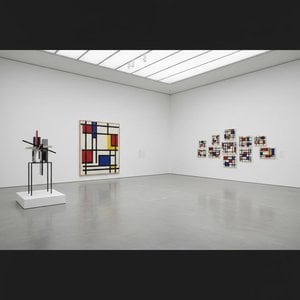
Explore the profound essence of Neoplasticism. Discover how Piet Mondrian and De Stijl masters used pure color and geometric form to redefine modern art. An essential guide for collectors seeking to understand the enduring power of abstract harmony and universal order.

 실제 크기로 보기
 보내기
보내기 공유하기
공유하기
 상세 보기
상세 보기 가이드 보기

 이미지 다운로드
 유사 작품 더 보기
 X-레이
X-레이 슬라이드 쇼 보기
 Q&A
Q&A 통계 정보
통계 정보


 상세 보기
상세 보기









 유리 옵션은 110cm 미만 크기에서만 선택 가능합니다.


