
 46.0 x 61.0 cm
 Usher Gallery
빠른 제작과 다양한 마감 옵션을 제공하는 박물관 품질의 지클레이 또는 캔버스 프린트. ( 손으로 그린 그림 구매 디지털 이미지로 전환)
작품의 원본 비율을 유지하는 미리 설정된 크기 중에서 선택하세요.

특정 프레임이나 공간에 맞춰 직접 치수를 입력하실 수 있습니다. 선택하신 사이즈가 원본 이미지의 비율과 일치하지 않을 경우, 작품을 크롭(자르기)하거나 이미지를 대칭 또는 단색 채우기로 확장하여 제작합니다. 제작 시작 전, 최종 확인을 위해 디지털 목업이 전송됩니다.
화면상의 미리보기는 실제 크롭이나 확장 상태를 반영하지 않으므로, 최종 구도는 오직 목업을 통해서만 정확하게 확인하실 수 있습니다.
맞춤 사이즈 제작도 가능하지만, 원본 비율을 유지하기 위해서는 사전 정의된 목록에서 치수를 선택하시는 것을 권장합니다.

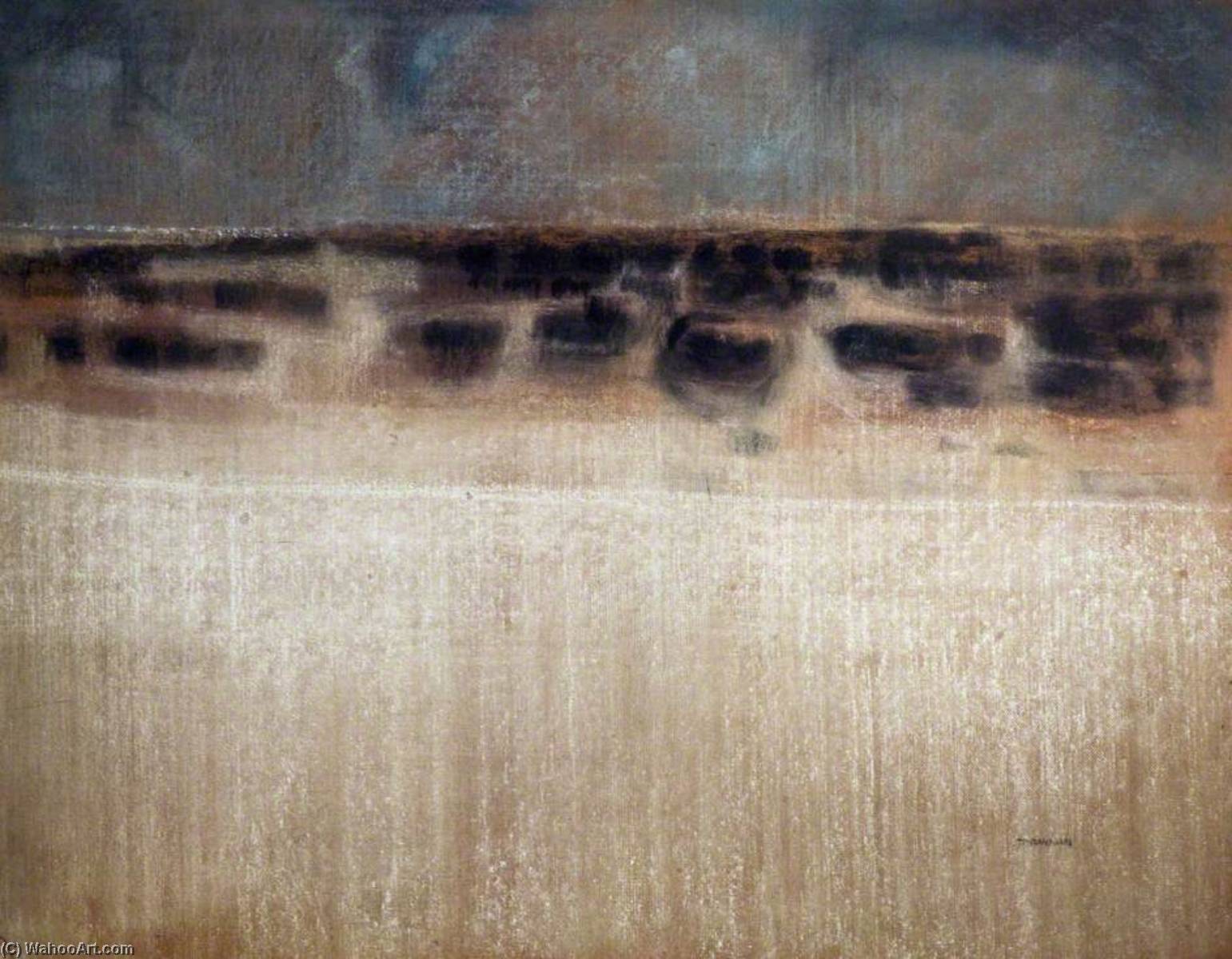
Sand Dunes
복제본 크기

To wander through the canvases of Terence Philip Flanagan is to embark on a sensory journey through the soul of the Irish countryside. Born in the quiet, verdant landscapes of Enniskillen, County Fermanagh, on August 15, 1929, Flanagan’s life and art were inextricably linked to the textures of the land he called home. His early years were marked by a profound connection to nature, a bond forged in the wake of personal loss when his mother passed away during his childhood. Raised primarily by two aunts, his world was one of intimate observation, a quality that would later manifest in the meticulous detail and atmospheric luminosity of his mature works. It was under the tutelage of Kathleen Bridle at St Michael’s College and Enniskillen Technical College that the seeds of his mastery were sown; through her guidance, he learned the delicate art of watercolour, developing a technique rooted in the patient, deliberate immersion in the natural world.
As Flanagan transitioned from student to professional, his artistic vocabulary expanded far beyond the borders of Fermanagh. His formal training at the Belfast College of Art between 1949 and 1953 brought him into contact with influential mentors such as Romeo Toogood, John Luke, and Tom Carr. These masters encouraged a departure from mere imitation toward a deeper exploration of artistic principles, allowing him to experiment with diverse mediums while maintaining his fundamental commitment to observation. This period of academic rigor provided the structural foundation upon which he would build his reputation as a painter capable of capturing not just the sight of a landscape, but its very breath and light.
Flanagan’s work is often described as a dialogue between the visual and the poetic. He possessed a rare ability to translate the ephemeral qualities of Irish weather—the shifting mists, the sudden bursts of sunlight, and the heavy, damp air of the wetlands—into permanent, evocative imagery. His connection to the literary landscape was perhaps most famously cemented by his relationship with the Nobel Laureate Seamus Heaney. The profound resonance between Flanagan’s paintings and Heaney’s poetry is immortalized in the fact that Heaney dedicated his seminal 1969 poem, Bogland, to him. This connection underscores the historical significance of Flanagan's work; he was not merely painting scenery, but documenting the cultural and spiritual essence of the Irish terrain.
Throughout his prolific career, several distinct series emerged as hallmarks of his genius:
His technique was a marriage of precision and emotion. Whether working in oil or watercolour, Flanagan employed an intricate brushstroke that allowed for a breathtaking level of detail, yet he never allowed technical perfection to overshadow the atmospheric mood. His paintings possess a certain luminosity, as if the light is emanating from within the pigment itself, inviting the viewer to linger in the quietude of a shore or the depth of a bogland.
Beyond the aesthetic beauty of his canvases, Terence Philip Flanagan holds a significant place in the history of 20th-century Northern Irish art. As both a painter and a teacher, he contributed to the cultural fabric of his region for over six decades. His recognition through honors such as the MBE (Member of the Order of the British Empire) and DFA (Diploma of the Fine Arts) reflects the esteem in which he was held by his peers and the public alike. His exhibitions, spanning from local galleries in Belfast to international stages, helped bring the specific, evocative beauty of the Irish landscape to a global audience.
Even after his passing in Belfast in 2011, Flanagan’s legacy remains vibrant. He left behind a body of work that serves as a vital visual record of a particular time and place—a landscape shaped by tradition, poetry, and an unwavering devotion to the truth of nature. To look upon a Flanagan landscape is to experience a moment of stillness, a profound encounter with the enduring spirit of the Irish countryside that continues to resonate with every generation of art lovers.

1929 - 2011

 미리보기
미리보기
 공유하기
공유하기 공유하기
공유하기
 상세 정보
상세 정보 가이드 보기

 다운로드
다운로드
 유사 작품
유사 작품 X-레이
X-레이 슬라이드 쇼
 통계 정보
통계 정보 더 보기
더 보기






































 유리 옵션은 110cm 미만 크기에서만 선택 가능합니다.


