
 Nihonga
 104.0 x 34.0 cm
원하는 크기와 액자로 주문 제작되는, 작가들이 직접 캔버스에 손으로 그린 유화 작품입니다. ( 프린트 판매로 전환 디지털 이미지로 전환)
작품의 원본 비율을 유지하는 미리 설정된 크기 중에서 선택하세요.

특정 프레임이나 공간에 맞도록 직접 크기를 입력할 수 있습니다. 선택하신 크기가 원본 이미지의 비율과 일치하지 않는 경우, 작품을 자르거나 추가적인 손으로 그린 요소를 사용하여 그림을 확장합니다. 제작 시작 전 승인을 위해 디지털 목업을 보내드립니다.
화면 미리 보기는 실제 자르기 또는 확장을 반영하지 않습니다. 최종 구성은 목업을 통해서만 정확하게 확인하실 수 있습니다.
맞춤 크기 제작도 가능하지만, 원본 비율을 유지하기 위해 사전 정의된 목록에서 크기를 선택하시는 것을 권장합니다.

Sparrow Hovering
복제본 크기

In the heart of Kyoto’s vibrant textile district, a legacy was born that would forever alter the trajectory of Japanese painting. Takeuchi Tsunekichi, known to the world by his artistic name Takeuchi Seihō, emerged from the Meiji era not merely as a painter, but as a bridge between two worlds. His journey began amidst the rhythmic looms and intricate patterns of his family’s restaurant and textile connections, an upbringing that instilled in him a profound sensitivity to texture, color, and form. As he transitioned from a student of Chinese literature and temple arts to a dedicated pupil of the renowned Kōno Bairei, Seihō began to master the Shijō school's essence—a style defined by its delicate realism and an almost spiritual connection to the natural world.
The evolution of Seihō’s artistry is a testament to his courage in the face of cultural transformation. While many of his contemporaries clung strictly to the traditions of the past, Seihō looked toward the horizon. His pivotal journey to Paris during the 1900 Exposition Universelle served as a transformative encounter with the avant-garde. Immersed in the atmospheric light of Impressionism and the dreamlike depths of Symbolism, he returned to Japan with a vision that was uniquely his own. He did not abandon the traditional Nihonga techniques; instead, he breathed new life into them by synthesizing the meticulous brushwork of Japanese masters with the luminous, spatial depth found in the works of Western legends like Turner and Corot.
The true brilliance of Seihō lies in his ability to capture the ephemeral soul of nature through a sophisticated technical duality. His work often oscillates between the minimalist tranquility of sumi-e ink wash and a robust, textured realism. In masterpieces such as "Sparrow Hovering," one can witness the breathtaking simplicity of Japanese aesthetics, where every stroke of ink conveys a sense of weightless motion and profound stillness. Conversely, his larger landscapes and seascapes demonstrate a mastery of light and atmosphere that feels remarkably modern, utilizing subtle gradations to evoke the salt spray of a "Seascape" or the shifting mists of a mountain morning.
His subject matter—ranging from the intimate details of small animals to the sweeping grandeur of the Japanese landscape—serves as a canvas for his exploration of life's fleeting moments. Through his brush, the following elements often converge:
Takeuchi Seihō’s impact on the art world extends far beyond the borders of Japan. By successfully navigating the tension between the preservation of heritage and the necessity of innovation, he provided a blueprint for modern Japanese art. He proved that tradition is not a static relic to be guarded, but a living, breathing entity capable of absorbing new influences without losing its fundamental identity. His life, spanning the transformative Meiji and early Shōwa periods, mirrors the very evolution of Japan itself—a nation moving from isolation into a complex, interconnected global stage.
Today, his works remain cherished symbols of cultural synthesis. To view a Seihō painting is to experience a moment of profound equilibrium: the stillness of ancient Kyoto meeting the dynamic energy of a modernizing world. He remains a titan of Nihonga, an artist whose name continues to evoke the delicate balance of light, line, and the eternal beauty of the natural world.

1864 - 1942 , Japan
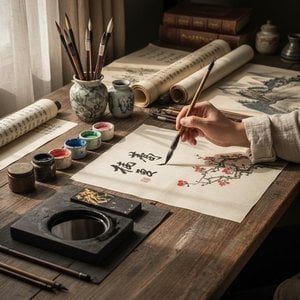
Embark on a sophisticated exploration of ink wash painting and Sumi-e. Uncover the profound historical lineages, Zen philosophies, and technical mastery behind this timeless medium in our authoritative guide for fine art enthusiasts.

Explore the profound beauty of Japanese Ukiyo-e art. Discover the legacy of Hokusai and the Utagawa school through an expert exploration of Edo-period aesthetics, seasonal motifs, and the enduring global influence of Japan's 'Floating World' on fine art history.

Embark on a journey through the ephemeral beauty of Ukiyo-e. Explore the profound mastery of Japanese woodblock prints, from Hokusai to the masters of the Edo period. Discover museum-quality reproductions and bespoke commissions curated for the discerning global collector.

Explore the ephemeral beauty of Japanese Ukiyo-e art. From the dynamic warriors of Kuniyoshi to serene landscapes, discover the profound history, masterful techniques, and global influence of these iconic woodblock prints in our deep cultural retrospective.


 미리보기
미리보기
 공유하기
공유하기 공유하기
공유하기
 상세 정보
상세 정보 가이드 보기

 다운로드
다운로드
 유사 작품
유사 작품 X-레이
X-레이 슬라이드 쇼
 통계 정보
통계 정보 더 보기
더 보기






































 유리 옵션은 110cm 미만 크기에서만 선택 가능합니다.


