웹 미리보기 화면을 훨씬 뛰어넘는 인쇄용 파일을 만나보세요. 저희가 판매하는 모든 디지털 이미지는 스톡 데이터베이스 내의 고해상도 마스터 파일(일반적으로 가로 5,000~15,000픽셀)을 기반으로 합니다. 따라서 대형 인쇄나 정밀한 크롭 작업 시에도 세밀한 디테일을 자신 있게 구현할 수 있습니다.
저희 스튜디오를 거치는 모든 파일은 정교한 손길을 거칩니다. 디지털 전문가가 원작과 대조하여 색상을 점검하고 필요 시 보정하며, 전문 리터칭 도구를 사용하여 선명도와 디테일을 높입니다. 이 과정에서 작가의 붓 터치와 화풍을 충실히 유지하는 것을 원칙으로 합니다. 그 결과, 단순한 스캔본에 필터를 입힌 듯한 느낌이 아닌, 마치 실제 회화 작품을 보는 듯한 이미지를 구현해냅니다.
최종 완료 전 확인 단계가 있습니다. 전문가가 검토하실 수 있도록 72시간 이내에 이미지를 이메일로 보내드립니다. 결과물이 만족스럽지 않으신가요? 수정이나 보완을 요청하시거나, 품질이 기대에 미치지 못할 경우 환불을 요청하실 수 있습니다.
WahooArt.com를 선택하시면 단순히 이미지를 받는 것을 넘어, 정밀한 보정 과정을 거쳐 완성된 전문적인 디지털 예술 작품을 만나보실 수 있습니다. 모든 주문에는 만족 보장 서비스가 포함되어 있으며, 다음과 같은 사항들이 자동으로 제공됩니다:
주문 후 72시간 이내에 고해상도 디지털 이미지 파일이 이메일로 발송되며, 즉시 사용하실 수 있습니다.
귀하의 작품은 첨단 AI 기술과 정교한 수동 편집 과정을 거쳐 전문적으로 최적화되며, 이를 통해 디테일과 선명도, 색상의 정확도를 극대화합니다.
파일을 실수로 삭제하거나 분실하셨나요? 걱정 마세요. 언제든 무료로 다시 보내드립니다.
관세, 부가세, 배송비 부담 없이 작품을 즉시 소장하세요 - 디지털 다운로드는 언제나 면세 혜택이 적용됩니다.
전문적인 도구와 색상 관리 시스템을 통해 디지털 이미지가 원본의 색상을 최대한 정확하게 구현하도록 보장합니다.
구매하신 디지털 이미지에 만족하지 못하실 경우, 100일 이내에 별도의 조건 없이 수정 또는 100% 환불을 진행해 드립니다.
만족스럽지 않으신가요? 디지털 파일을 받으신 후 100일 이내라면 어떤 이유로든 조건 없이 전액 환불해 드립니다.
이미지 3매 구매 시 10% 할인 - 5매 구매 시 15% 할인 - 10매 이상 구매 시 20% 할인. 크리에이티브 프로젝트, 갤러리, 에이전시에 매우 유용합니다.
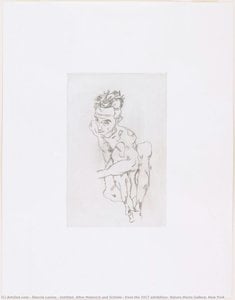
Stuart Pearson Wright의 "Christopher Lee"의 주된 색조는 Ochre to Sepia입니다. 이 색조는 팔레트의 바탕이 되는 톤을 형성합니다.
"Christopher Lee"은(는) Stuart Pearson Wright의 Contemporary Realism 시기 작품으로, 작가의 주요 주제로는 realism, portraiture tradition, drawing year techniques", aging & mortality", nature's resilience, quiet contemplation, "explor 등이 있습니다.
Stuart Pearson Wright의 "Christopher Lee"에 사용된 색상들은 Monochromatic 강도를 띱니다.

Born in Northampton in 1975, Stuart Pearson Wright entered a life shaped by a fundamental absence. Conceived through artificial insemination, he grew up without the knowledge of his father’s identity. This void remained a quiet, persistent feature of his early years, a personal mystery that would eventually influence the psychological depth of his later work. He spent his formative years in Eastbourne, Sussex, where the landscape of his childhood provided the backdrop for his developing sensibilities.
His formal training began in earnest at the Slade School of Fine Art, University College of London. Between 1995 and 1999, he studied there, eventually earning a B.A. in Fine Art. It was during these years of rigorous academic study that his technical foundations were solidified, preparing him for a career defined by precision and observation. The discipline of the Slade provided the necessary structure for a talent that would soon move beyond the classroom and into the public eye.
The mystery of his lineage remained unresolved for decades, a fact that Wright eventually addressed through a DNA test in 2019. This discovery allowed him to finally establish contact and find a sense of belonging within his paternal family. What began as a childhood of disconnected origins concluded with a formal assimilation into a family history that had been, for much of his life, entirely unknown.
While primarily recognized for his portraits, Wright’s practice extends into sculpture, film, and printmaking. He often describes his paintings as "pseudo portraits," a distinction that suggests his interest lies less in the mere recording of a likeness and more in the construction of a character. His approach has drawn comparisons to the 18th-century British satirist William Hogarth, particularly in how he navigates the space between observation and social commentary. There is a certain tension in his work where the subject is rendered with precision, yet the surrounding context often hints at something more complex or unsettling.
His ability to capture the essence of a sitter has led many to consider him the most gifted portraitist of his generation. He does not rely on simple flattery; instead, he uses the medium to probe the psychological depth of his subjects. This method allows him to move beyond the traditional boundaries of the genre, using the portrait as a vehicle for narrative and personal inquiry. His work often balances the meticulous detail of a formal sitting with a sense of the surreal, creating images that feel both grounded in reality and slightly displaced from it.
The trajectory of Wright’s career was marked early by significant institutional recognition. In 1998, he was awarded the BP Travel Prize, a distinction that preceded his most notable breakthrough in the field of portraiture. By 2001, he had secured the first prize at the BP Portrait Award. This particular win was accompanied by a painting of six academy presidents that drew intense scrutiny; the work, which depicted the men gathered around a dead chicken, was described by observers as astounding.
This period of success brought with it a series of high-profile responsibilities, including a commission to paint the author J. K. Rowling, a work that eventually entered the National Collection. His ability to navigate the complexities of formal portraiture while maintaining a distinct, often unsettling perspective continued to earn him accolades. In 2005, he was the recipient of the Garrick/Milne Prize, further cementing his position within the contemporary British art landscape.
Wright’s ability to translate character into form has frequently placed him at the center of significant institutional requests. At the age of twenty-five, his portrait of the actor John Hurt was acquired by the National Portrait Gallery, a moment that signaled his growing presence within the British art establishment. This professional momentum continued through his recognition by the BP Portrait Award, which included a prestigious commission to paint the author J. K. Rowling. This work eventually became part of the National Collection, securing his place in the ongoing narrative of contemporary British portraiture.
His reach extends into the realm of public service and televised storytelling. In 2021, he was commissioned by then HRH The Prince of Wales to paint Ruzena Levy for the Seven Portraits: Surviving the Holocaust series, a project unveiled at the Queen's Gallery in Buckingham Palace. Beyond the studio, his process has been brought to a wider audience through his appearance in the BBC series Extraordinary Portraits, where he served as the featured artist for the program's second series.
The reach of Wright’s portraiture is reflected in the institutions that safeguard his output. The National Portrait Gallery maintains a significant presence in his career, holding his painting of the actor John Hurt, which was acquired when the artist was twenty-five. The gallery also preserves a pencil drawing of actress Parminder Nagra, executed in 2004. These works sit alongside his contribution to the National Collection, specifically his portrait of the author J. K. Rowling.
Beyond these individual likenesses, his broader body of work has found a permanent home in several major repositories. The British Museum and the Government Art Collection both hold pieces from his oeuvre. His ability to navigate the complexities of the human face has led to his work being included in various prestigious archives, including the collections of the Rhode Island School of Design Museum USA and the Barings Bank collection in Brussels.
The reach of Wright’s portraiture extends from the institutional halls of London to more remote corners of the British Isles. The National Portrait Gallery holds several of his paintings, preserving his presence within the official record of British likenesses. His reach is not limited to the United Kingdom; the Rhode Island School of Design Museum in the USA maintains works in its collection, while the Barings Bank collection in Brussels also holds his pieces.
There is a certain geographic variety to where his art resides. In the north, the Shetland Museum holds a painting by the artist, a piece that was previously donated following his appearance on a BBC television series. These various locations, from private collections in Europe to public museums across the Atlantic, reflect the breadth of his professional standing.

1975 - , United Kingdom
 미리보기

 파인 아트 프린트
 공유하기
 공유하기
 상세 정보
 학습용 요약본


 다운로드
 유사 작품 더 보기
 X-레이
 슬라이드 쇼 보기
 질의응답

 통계 정보


 더 보기