
 1971
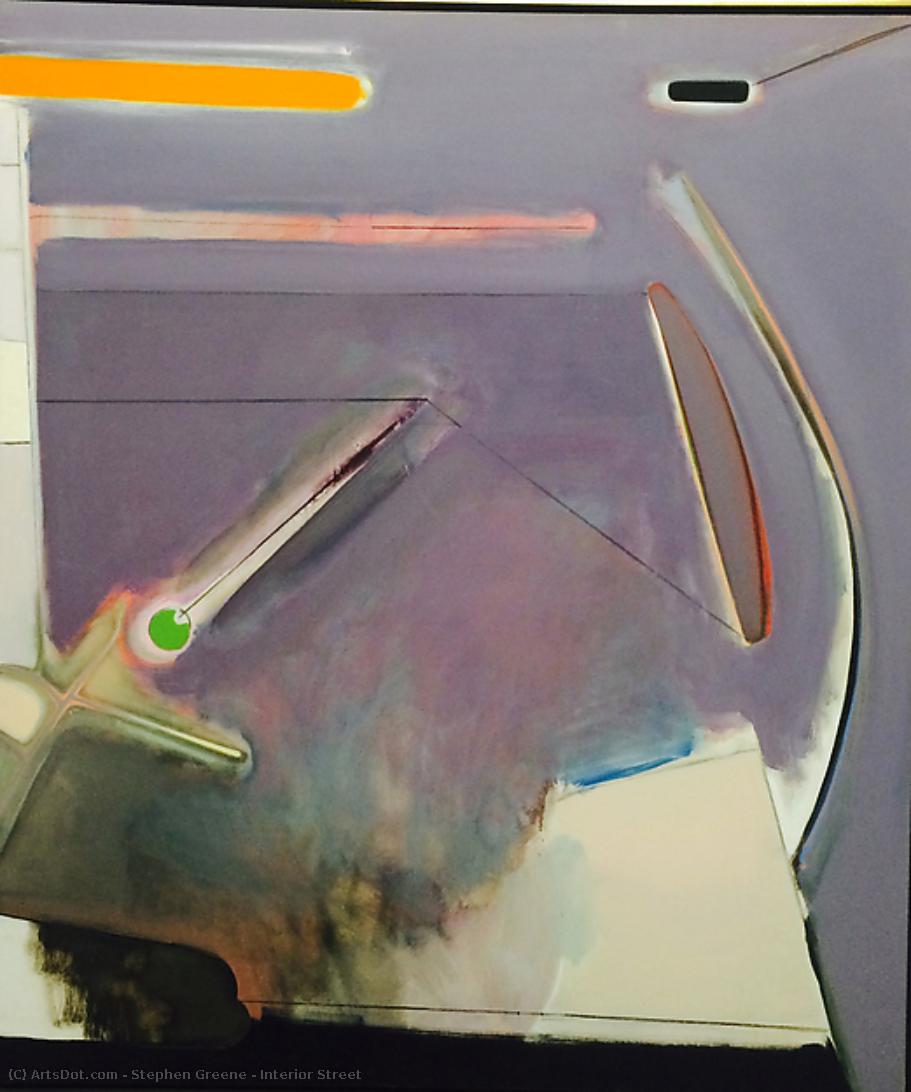
1971 178.0 x 152.0 cm
원하는 크기와 액자로 주문 제작되는, 작가들이 직접 캔버스에 손으로 그린 유화 작품입니다. ( 프린트 판매로 전환 디지털 이미지로 전환)
작품의 원본 비율을 유지하는 미리 설정된 크기 중에서 선택하세요.

특정 프레임이나 공간에 맞도록 직접 크기를 입력할 수 있습니다. 선택하신 크기가 원본 이미지의 비율과 일치하지 않는 경우, 작품을 자르거나 추가적인 손으로 그린 요소를 사용하여 그림을 확장합니다. 제작 시작 전 승인을 위해 디지털 목업을 보내드립니다.
화면 미리 보기는 실제 자르기 또는 확장을 반영하지 않습니다. 최종 구성은 목업을 통해서만 정확하게 확인하실 수 있습니다.
맞춤 크기 제작도 가능하지만, 원본 비율을 유지하기 위해 사전 정의된 목록에서 크기를 선택하시는 것을 권장합니다.

Interior Street
복제본 크기

Born in the vibrant landscape of New York City in 1917, Stephen Greene emerged as a profound voice in American art, weaving together the raw emotionality of social realism with the sophisticated complexities of abstraction. His journey began in the heart of the American art scene, where he refined his craft through rigorous training at the National Academy School of Art and the prestigious Art Students League. This foundational period was further enriched by his academic pursuits at the University of Iowa, where he earned both a BFA and an MA, grounding his creative instincts in a deep understanding of classical technique and formal composition.
In the 1940s, Greene first captured the public imagination through his poignant social realist figure paintings. These works were characterized by a haunting intimacy, capturing the human condition with a sensitivity that resonated deeply within the socio-political climate of the era. His early mastery of the human form allowed him to explore themes of struggle, resilience, and the quiet dramas of everyday life, imbuing his subjects with a weight and dignity that transcended mere representation.
As the trajectory of twentieth-century art shifted toward more non-representational forms, Greene underwent a remarkable stylistic metamorphosis. He transitioned from the literal depiction of figures to a more nuanced, abstract language. This evolution was not a departure from his earlier concerns but rather an expansion of them; he began to use color, texture, and shape to communicate the same emotional truths that had once been anchored in the human silhouette. His later works became landscapes of the psyche, where layers of paint and gestural strokes served as metaphors for memory, loss, and the intangible essence of existence.
The brilliance of Greene's mature period lies in his ability to balance the visceral with the ethereal. His canvases often possess a rhythmic quality, inviting the viewer to lose themselves in a sea of symbolic forms. Through this abstract lens, he achieved a universal resonance, allowing his art to speak to the collective human experience beyond the boundaries of specific historical moments.
Throughout his long and distinguished career, Stephen Greene received significant acclaim, cementing his place within the canon of American modernism. His contributions were celebrated in major solo exhibitions that traced his artistic growth, most notably:
By the time of his passing in Valley Cottage, New York, in 1999, Greene had left behind a legacy defined by versatility and emotional depth. His ability to navigate the transition from the figurative to the abstract remains a testament to his enduring curiosity and his unwavering commitment to the expressive power of paint. Today, his work continues to inspire, serving as a bridge between the tangible world of social reality and the infinite realms of abstract thought.

1917 - 1999 , United States of America

 미리보기
미리보기
 공유하기
공유하기 공유하기
공유하기
 상세 정보
상세 정보 가이드 보기

 다운로드
다운로드
 유사 작품
유사 작품 X-레이
X-레이 슬라이드 쇼
 통계 정보
통계 정보 더 보기
더 보기






































 유리 옵션은 110cm 미만 크기에서만 선택 가능합니다.


