A Life Forged in Baroque Splendor
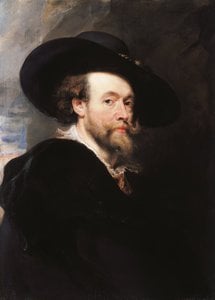
Sir Peter Paul Rubens, a name synonymous with the exuberant dynamism of the Baroque period, was more than just a painter; he was a diplomat, a scholar, and a cultural force who reshaped the artistic landscape of 17th-century Europe. Born in Siegen, Germany, in 1577, his early life was marked by displacement. His father, Jan Rubens, a lawyer fleeing religious persecution for his Calvinist beliefs, uprooted the family from their native Antwerp, then under Spanish rule. This initial experience of exile would subtly inform Rubens’s later work, imbuing it with a sense of drama and emotional depth. Following his father's death in 1587, the family returned to Antwerp, where young Peter Paul received a humanist education before embarking on his artistic training around 1590. He apprenticed under several prominent artists – Tobias Verhaecht and Adam van Noort – honing his skills in drawing and painting techniques, but it was his time
in Leuven that cemented his artistic vision. Rubens studied at Saint John’s College Leuven, where he absorbed the humanist ideals of Erasmus and Pico della Mirandola, shaping his intellectual curiosity alongside his burgeoning talent. He excelled in anatomy studies, a crucial element in capturing human form with unparalleled realism—a hallmark of his distinctive Baroque style. His ambition was to become a Doctor of Theology, but he ultimately chose painting as his vocation, recognizing its capacity for conveying profound spiritual truths.
Rubens’ artistic journey took him through Italy during the mid-1590s, where he encountered the influence of Michelangelo and Raphael, absorbing their mastery of composition and perspective. He spent considerable time in Rome, immersing himself in papal patronage and engaging with the intellectual ferment of the era. This formative period instilled in him a fascination for classical mythology and allegory—themes that would recur throughout his prolific oeuvre. Rubens’ artistic style evolved from Mannerism to Baroque, characterized by bold colors, dramatic lighting, and dynamic movement. He skillfully employed chiaroscuro—the interplay between light and shadow—to heighten emotional impact and create an illusion of depth. His brushstrokes were loose and expressive, conveying a palpable sense of energy and vitality. Rubens’ technique involved layering pigments onto wooden panels with meticulous precision, achieving remarkable textural richness and luminosity.
His commissioned works were mostly history paintings, which included religious and mythological subjects, and hunt scenes. He painted portraits, especially of friends, and self-portraits, and in later life painted several landscapes. Rubens designed tapestries and prints, as well as his own house. He oversaw the ephemeral decorations of the royal entry into Antwerp by the Cardinal-Infante Ferdinand of Austria in 1635. He wrote a book with illustrations of the palaces in Genoa, which was published in 1622 as Palazzi di Genova. The book was influential in spreading the Genoese palace style in Northern Europe. Rubens was an avid art collector and had one of the largest collections of art and books in Antwerp. He was also a dealer and is known to have sold important art objects to George Villiers, 1st Duke of Buckingham.
He was one of the last major artists to make consistent use of wooden panels as a support medium, even for very large works, but used canvas as well, especially when the work needed to be sent a long distance. For altarpieces, he sometimes painted on slate to reduce reflection problems. Rubens’ legacy extends far beyond his artistic achievements; he served as ambassador to England and Spain, navigating complex diplomatic relations with grace and intelligence. His humanist convictions guided his actions throughout his life, advocating for tolerance and intellectual freedom—values that resonated deeply with the spirit of the Baroque age.
The Museo del Prado in Madrid houses
A Peasant Dance by Peter Paul Rubens—a monumental testament to his artistic genius and a cornerstone of Flemish Baroque art. Its vibrant colors, dynamic composition, and masterful depiction of human emotion continue to captivate viewers centuries later. For those interested in exploring more of Rubens’ works,
The Death of Seneca and
The Judgment of Paris are notable examples of his artistic prowess. These paintings, like
A Peasant Dance, demonstrate Rubens’ mastery of capturing the essence of human emotion and experience through his art. WahooArt.com offers high-quality handmade oil painting reproductions of his masterpieces.