
 Acrylic On CanvasWallArt
 1638
1638 132.0 x 143.0 cm
 로열 컬렉션
빠른 제작과 다양한 마감 옵션을 제공하는 박물관 품질의 지클레이 또는 캔버스 프린트. ( 손으로 그린 그림 구매 디지털 이미지로 전환)





























작품의 원본 비율을 유지하는 미리 설정된 크기 중에서 선택하세요.

특정 프레임이나 공간에 맞춰 직접 치수를 입력하실 수 있습니다. 선택하신 사이즈가 원본 이미지의 비율과 일치하지 않을 경우, 작품을 크롭(자르기)하거나 이미지를 대칭 또는 단색 채우기로 확장하여 제작합니다. 제작 시작 전, 최종 확인을 위해 디지털 목업이 전송됩니다.
화면상의 미리보기는 실제 크롭이나 확장 상태를 반영하지 않으므로, 최종 구도는 오직 목업을 통해서만 정확하게 확인하실 수 있습니다.
맞춤 사이즈 제작도 가능하지만, 원본 비율을 유지하기 위해서는 사전 정의된 목록에서 치수를 선택하시는 것을 권장합니다.

Thomas Killigrew and (.) William, Lord Croft
복제본 크기
Sir Anthony van Dyck's “Thomas Killigrew and William, Lord Croft” (1638) is more than a simple depiction of two men; it’s a poignant meditation on loss, friendship, and the carefully constructed language of mourning in 17th-century England. This remarkable double portrait, rendered with Van Dyck's signature elegance and psychological depth, offers a rare glimpse into the private lives of prominent figures during a turbulent period. Measuring a modest 132 x 143 cm, the painting immediately draws the eye with its restrained palette – primarily muted browns, greys, and creams – that evokes a sense of melancholy and quiet contemplation. The composition itself is subtly masterful; the two sitters are presented in a triangular arrangement, their figures balanced against each other while simultaneously conveying distinct emotional states.
The central figure on the left is Thomas Killigrew, a renowned poet, playwright, and wit who served as a loyalist during the English Civil War. His posture, with his head supported by his hand – a traditional gesture signifying sorrow and introspection – speaks volumes about the recent death of his wife, Cecilia Crofts. Van Dyck’s meticulous attention to detail is evident in Killigrew's attire: the dark suit with its subtle white trim, the carefully arranged jewelry—a wedding ring attached to his wrist by a black silk band, alongside a mourning ring—all serve as potent symbols of bereavement and remembrance. These aren’t merely decorative elements; they are visual cues that communicate grief through material objects, reflecting the prevailing societal norms surrounding death and mourning at the time.
Alongside Killigrew stands William, Lord Croft, a man shrouded in a degree of mystery. While his identity has been debated by scholars for decades, the most compelling evidence suggests he was a nephew of Cecilia Crofts, also deeply affected by the simultaneous loss of his aunt and uncle. The blankness of the paper held by Lord Croft is particularly significant; it represents an unspoken conversation, a shared attempt to grapple with their collective sorrow. The subtle contrast in their poses – Killigrew’s head bowed in contemplation versus Lord Croft's profile turned away – further emphasizes their individual responses to grief. Van Dyck masterfully uses light and shadow to sculpt the figures, creating a sense of depth and intimacy that draws the viewer into their shared experience.
Created during Van Dyck's prolific period in England, this portrait exemplifies his evolving artistic style. He had spent formative years under the influence of Peter Paul Rubens at the court of Antwerp, absorbing the master’s dynamic compositions and rich color palettes. However, Van Dyck quickly developed a distinct voice, characterized by an unparalleled elegance, refined detail, and a remarkable ability to capture the psychological nuances of his subjects. The use of soft brushstrokes, blended tones, and subtle gradations of light creates a remarkably lifelike quality, while simultaneously conveying a sense of emotional restraint. The background—a simple wall with a clock—provides a grounding element, anchoring the scene in time and subtly reinforcing the theme of mortality.
Beyond its immediate depiction of two men mourning a shared loss, “Thomas Killigrew and William, Lord Croft” is rich in symbolic meaning. The broken column, a recurring motif in Van Dyck’s work, represents both the fragility of human life and the enduring strength of the spirit. The painting speaks to the complexities of grief – not merely as an individual experience but as a shared burden that can be eased through companionship and conversation. It's a testament to Van Dyck’s skill in translating complex emotions onto canvas, creating a work that continues to resonate with viewers centuries later. The reproduction offered by WahooArt.com allows you to bring this poignant masterpiece into your home or office, experiencing its beauty and emotional depth firsthand.


1599 - 1641 , 벨기에
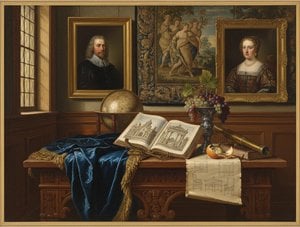
Journey through 17th century art with masterpieces by Rembrandt, Vermeer & Caravaggio. Explore Baroque paintings, Dutch Golden Age techniques & timeless beauty. Find museum-quality reproductions and elevate your home decor on WahooArt.com.

Explore the grandeur of Baroque portraiture! Discover Rubens, Van Dyck & the masters of 17th-century art. Uncover symbolism, techniques & lasting influence. Expert insights for collectors and enthusiasts.
Explore the breathtaking drama of 17th-century Baroque art. Our expert guide decodes the use of chiaroscuro, emotional intensity, and historical grandeur to help you appreciate and curate timeless masterpieces for your collection.

Explore the life & legacy of Sir Anthony van Dyck, the leading court painter of his era. Discover his innovative portraiture, Baroque masterpieces, and investment potential for discerning collectors. Learn more at WahooArt.

렘브란트 반 레인 명작 25선을 만나보세요. 빛과 그림자의 거장이 그린 역사화, 초상화 속 예술의 정수를 감상하고, 네덜란드 황금시대 바로크 미술의 깊이를 느껴보세요. WahooArt.com에서 고품질 복제화를 컬렉션하세요.


 미리보기
미리보기
 공유하기
공유하기 공유하기
공유하기
 상세 정보
상세 정보 가이드 보기

 다운로드
다운로드
 유사 작품
유사 작품 X-레이
X-레이 슬라이드 쇼
 통계 정보
통계 정보 더 보기
더 보기









 유리 옵션은 110cm 미만 크기에서만 선택 가능합니다.


