
x


 Tempera On PanelWallArtLate Gothic
 1321Late Medieval
 235.0 x 405.0 cm
 이사벨라 스튜어트 가드너 미술관




























작품의 원본 비율을 유지하는 미리 설정된 크기 중에서 선택하세요.

특정 프레임이나 공간에 맞도록 직접 크기를 입력할 수 있습니다. 선택하신 크기가 원본 이미지의 비율과 일치하지 않는 경우, 작품을 자르거나 추가적인 손으로 그린 요소를 사용하여 그림을 확장합니다. 제작 시작 전 승인을 위해 디지털 목업을 보내드립니다.
화면 미리 보기는 실제 자르기 또는 확장을 반영하지 않습니다. 최종 구성은 목업을 통해서만 정확하게 확인하실 수 있습니다.
맞춤 크기 제작도 가능하지만, 원본 비율을 유지하기 위해 사전 정의된 목록에서 크기를 선택하시는 것을 권장합니다.

Boston Polyptych
복제본 크기
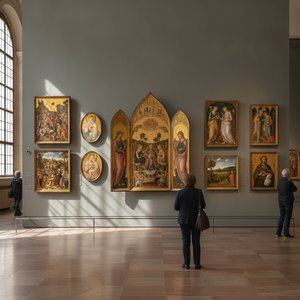
To stand before the Boston Polyptych is to step through a gilded portal into the spiritual heart of fourteenth-century Siena. Completed in 1321 by the incomparable master Simone Martini, this monumental work transcends mere religious decoration, offering instead a profound window into the medieval soul. The polyptych, an intricate arrangement of panels, presents a celestial assembly that commands the room with its sheer scale and luminous presence. At its core, the composition radiates a sense of divine order, where figures of saints and holy personages are arranged with a rhythmic grace that guides the eye across a landscape of profound devotion. The interplay of sacred iconography—specifically honoring Saint Benedict—creates an atmosphere of quiet reverence, making it an ideal centerpiece for those seeking to infuse a space with historical depth and contemplative peace.
The artistry of Martini is defined by an unparalleled elegance, a quality that distinguishes the Sienese school from the more robust naturalism found in Florence. While he drew inspiration from the groundbreaking realism of Giotto, Martini skillfully infused his work with the shimmering splendor of the Byzantine tradition. This delicate balance is achieved through his masterful use of tempera on wood panels, a technique that allows for an extraordinary luminosity. Each layer of pigment serves to enhance the brilliance of the gold leaf, creating a surface that seems to glow from within. The artist’s command of chiaroscuro—the subtle manipulation of light and shadow—breathes life into the heavy drapery of the figures' robes and lends an emotive, almost human vulnerability to their facial expressions. For the discerning collector or interior designer, this technique offers a dynamic visual texture that changes beautifully under different lighting conditions.
Beyond its aesthetic splendor, the Boston Polyptych is a silent witness to a transformative era in European history. Created during a period of significant religious upheaval and papal disputes, the painting reflects the intense piety and burgeoning civic pride of Siena. The work was commissioned as an emblem of prestige for the Benedictine Order, specifically for the Monastery of Echternach, serving as both a spiritual tool and a symbol of institutional strength. This historical weight adds a layer of intellectual richness to the piece; it is not merely a beautiful object, but a fragment of a lost world where art, politics, and faith were inextricably entwined. The architectural backdrop within the painting, with its tall, windowed structures, evokes the very essence of medieval urban life, inviting viewers to wander through the streets of a storied past.
For those looking to integrate such a masterpiece into a contemporary setting, the Boston Polyptych offers endless inspiration. Its grand proportions—measuring an imposing 235 x 405 cm—make it a transformative element for large-scale interior design projects, providing a focal point that anchors a room with authority and grace. Whether presented as a high-quality hand-painted reproduction or studied through its historical significance, the work continues to evoke a sense of wonder. It remains a testament to Martini's ability to capture the divine within the earthly, offering a timeless beauty that resonates with the modern seeker of art, history, and soul.

Simone Martini는 기네즈가 다소 불확실하지만 대략 1284년 이탈리아 시에나에서 태어난 이탈리아의 화가이자 미니어처 화가로, 중세 시대와 레르네상스 시대 사이의 전환기를 대표하는 예술가입니다. 그는 단순히 그림을 그린 사람이 아니었으며, 우아함과 세련미를 불어넣은 화가였습니다. 기요토 디 부오니세그나처럼 시에나 최고의 화가였던 두초 디 부오니세그나의 영향 아래 그의 초기 교육은 이루어졌습니다. 이 외에도 그는 플로렌스에서 기요토의 영향을 받았습니다. 그러나 Martini는 독특한 예술적 길을 개척했습니다.
Martini의 생애에 대한 정보는 매우 부족하며, 역사학자들은 다양한 자료와 전통적인 계통으로부터 그의 삶 이야기를 재구성해야 합니다. 그는 시에나에서 태어났으며 두초 디 부오니세그나의 영향을 받았습니다. Martini는 기요토의 영향 아래 플로렌스에서 교육을 받았고 이 외에도 그는 시에나의 문화와 상업 중심 환경에서 예술가로서 성장했습니다.
Martini의 작품 스타일은 플로렌스와 대조적으로 우아함과 세련미를 특징으로 합니다. 그는 기요토의 영향을 받아 장식적인 선과 색상 사용에 주목했으며 이 외에도 시에나에서 새로운 예술적 흐름이 나타났습니다. Martini는 이러한 스타일을 단순히 모방한 것이 아니라 기존 시에네 전통과 합성하여 독창적인 작품을 창조했습니다. 그의 그림은 종교적인 장면을 표현하는 것 이상으로 감정적 깊이와 시각적 서사시를 담고 있습니다.
Martini는 특히 기요토의 영향을 받아 이탈리아 미술의 흐름에 중요한 역할을 했습니다. 그는 국제 고딕 스타일을 유럽 전역에 확산시키고 레르네상스 시대 초반 예술가들에게 영감을 주었습니다. Martini는 기술적인 능력뿐만 아니라 그의 시대의 미적 감성을 사로잡는 시각 언어를 창조했습니다. 그의 작품은 기요토의 영향을 받아 장식적인 선과 색상 사용에 주목했으며 이 외에도 시에나에서 새로운 예술적 흐름이 나타났습니다.
Martini는 레르네상스 시대 초반 예술가들에게 영감을 주었습니다. 그는 국제 고딕 스타일을 유럽 전역에 확산시키고 레르네상스 시대 초반 예술가들에게 영감을 주었습니다. Martini의 작품은 기요토의 영향을 받아 장식적인 선과 색상 사용에 주목했으며 이 외에도 시에나에서 새로운 예술적 흐름이 나타났습니다.

1284 - 1344 , 이탈리아

Journey through the divine elegance of Duccio di Buoninsegna. Explore 25 iconic Sienese masterpieces, from the Maestà to the Rucellai Madonna. Find inspiration for museum-quality art reproductions and timeless decor. Discover all masterpieces on WahooArt.com.
Journey through history with 10 legendary tempera on panel masterpieces. From Renaissance icons to gold-leafed wonders, explore the stories behind these timeless works and find museum-quality art reproductions for your space. Discover all masterpieces on WahooArt.com.

Embark on a scholarly journey through the golden era of Byzantine art. Discover the profound symbolism, masterful mosaics, and imperial grandeur that defined an epoch of spiritual and aesthetic splendor in this expert-led guide for art enthusiasts.

Immerse yourself in the golden splendor of Byzantine masterpieces. Explore luminous mosaics and sacred iconography through our premium, hand-painted oil reproductions. Discover museum-quality elegance and expert curation for your sophisticated interiors at WahooArt.com.


최신 미술 뉴스, 특별 혜택 및 인테리어 아이디어를 가장 먼저 만나보세요.
프로젝트에 대해 알려주시면 저희 미술 전문가들이 맞춤형 아트 제안 3가지를 전달해 드립니다.
당신만을 위한 맞춤형 옵션 3가지를 무료로 추천해 드립니다!


 미리보기
미리보기
 프린트 구매
 공유하기
공유하기 공유하기
공유하기
 상세 정보
상세 정보

 다운로드
다운로드
 유사 작품
유사 작품 X-레이
X-레이 슬라이드 쇼
 더 보기
더 보기









 유리 옵션은 110cm 미만 크기에서만 선택 가능합니다.


