
빠른 제작과 다양한 마감 옵션을 제공하는 박물관 품질의 지클레이 또는 캔버스 프린트. ( 수제 페인팅으로 전환하기 이미지로 전환)
작품의 원본 비율을 유지하는 미리 설정된 크기 중에서 선택하세요.

특정 프레임이나 공간에 맞춰 직접 치수를 입력하실 수 있습니다. 선택하신 사이즈가 원본 이미지의 비율과 일치하지 않을 경우, 작품을 크롭(자르기)하거나 이미지를 대칭 또는 단색 채우기로 확장하여 제작합니다. 제작 시작 전, 최종 확인을 위해 디지털 목업이 전송됩니다.
화면상의 미리보기는 실제 크롭이나 확장 상태를 반영하지 않으므로, 최종 구도는 오직 목업을 통해서만 정확하게 확인하실 수 있습니다.
맞춤 사이즈 제작도 가능하지만, 원본 비율을 유지하기 위해서는 사전 정의된 목록에서 치수를 선택하시는 것을 권장합니다.

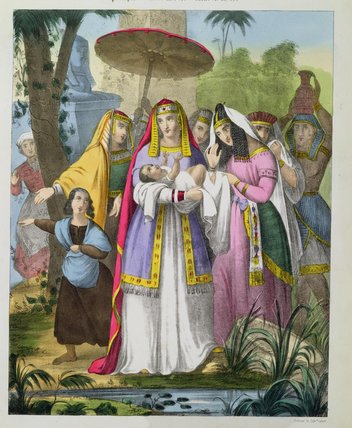
Moses Saved
복제본 크기

Siegfried Detler Bendixen (1786–1864) stands as a profound figure in the landscape of 19th-century art, a creator whose brush and lithographic stone breathed life into the ancient narratives of the Old Testament. Born in Kiel, Germany, into a lineage of painters, Bendixen was destined for a life steeped in the visual arts. His early years were defined by a rigorous pursuit of technical mastery, leading him to the prestigious Düsseldorf Kunstakademie. Under the tutelage of Anton Graff, he absorbed the essential principles of Romanticism, learning to balance classical precision with an burgeoning interest in emotional depth. This formative period was not merely about technique; it was an era of intellectual awakening where the moral philosophies of thinkers like Johann Christian Ludwig Gellert began to permeate his work, encouraging him to explore themes of faith, human suffering, and divine intervention through a lens of profound spiritual gravity.
The evolution of Bendixen’s artistry is a journey through both geography and medium. His travels took him through the artistic heart of Italy and later to Hamburg, where he established his own school of painting in 1815. However, it was his move to London in 1832 that perhaps most significantly expanded his reach. Within the vibrant English art scene, Bendixen became a regular presence at prestigious institutions such as the Royal Academy, the British Institution, and the New Water-Colour Society. This period of international exposure allowed him to refine a style that was uniquely his own—a blend of German Romantic intensity and a sophisticated, almost theatrical, approach to composition that resonated with the Victorian era's fascination with biblical history.
While Bendixen was a skilled painter of oils and watercolors, his true revolution lay in his adoption of lithography. At a time when printing technology was undergoing rapid transformation, he recognized the unparalleled potential of this medium to convey subtle gradations of light and texture. Unlike the starker lines of traditional engraving, lithography offered Bendixen a way to achieve a painterly softness, allowing him to recreate the grandeur of biblical landscapes with remarkable atmospheric depth. His prints became much more than mere illustrations; they were dramatic windows into the past, where the interplay of shadow and radiance could evoke the very presence of the divine.
In works such as Moses Saved or his poignant depictions of Abraham Offering Isaac, one can witness this mastery of light. He utilized the lithographic stone to create a sense of weight and volume in his figures, often employing a Baroque-inspired chiaroscuro that heightened the tension of the narrative. His ability to render the rugged textures of ancient landscapes alongside the delicate, emotional expressions of his subjects created a visual language that was both epic in scale and intimate in feeling. This technical prowess ensured that his biblical scenes were not just stories told, but experiences felt by the viewer.
The significance of Siegfried Detler Bendixen lies in his ability to bridge the gap between classical tradition and the emotive power of the Romantic movement. His work serves as a vital link in the history of religious art, particularly in how he translated the monumental weight of scripture into a medium that was accessible yet profoundly sophisticated. Beyond his famous biblical lithographs, his repertoire included delicate still-lifes of flowers and evocative landscapes, demonstrating a versatility that spoke to the breadth of his talent.
Bendixen’s contributions can be summarized through several key artistic pillars:
Today, the works of Bendixen, held in esteemed collections such as the British Museum and the Royal Collection, continue to offer a window into a period of immense artistic transition. He remains a master of the dramatic, an artist who could take the ancient words of the prophets and render them in a light that felt both timeless and strikingly modern.

1786 - 1864 , Germany

Explore the captivating world of 19th-century landscape painting! Discover renowned artists like Friedrich & Monet, key movements, and find the perfect artwork to bring nature's serenity into your home. Expert insights at WahooArt.

Explore the captivating world of Romantic Realism! Discover key artists like Courbet & Millet, masterpieces, and the social context behind this influential art movement. Expert insights for collectors at WahooArt.

Explore the captivating world of Ivan Aivazovsky, a master of 19th-century marine painting. Discover his techniques, iconic artworks & lasting legacy in this expert guide.

Explore the diverse world of 19th-century art! From Realism's rebellion to Impressionism’s light and beyond, discover key movements, artists & collecting tips. Expert insights for classic enthusiasts.
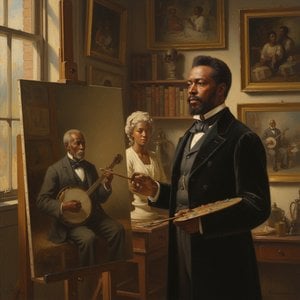
Explore the life and groundbreaking work of Henry Ossawa Tanner, a pioneering African American artist who achieved international acclaim with his deeply spiritual and realistic paintings. Discover his legacy at WahooArt.


최신 미술 뉴스, 특별 혜택 및 인테리어 아이디어를 가장 먼저 만나보세요.
프로젝트에 대해 알려주시면 저희 미술 전문가들이 맞춤형 아트 제안 3가지를 전달해 드립니다.
당신만을 위한 맞춤형 옵션 3가지를 무료로 추천해 드립니다!


 미리보기
미리보기
 공유하기
공유하기 공유하기
공유하기
 상세 정보
상세 정보

 다운로드
다운로드
 유사 작품
유사 작품 X-레이
X-레이 슬라이드 쇼
 더 보기
더 보기






































 유리 옵션은 110cm 미만 크기에서만 선택 가능합니다.


