
x


 Traditional Chinese Painting
 77.0 x 35.0 cm
빠른 제작과 다양한 마감 옵션을 제공하는 박물관 품질의 지클레이 또는 캔버스 프린트. ( 손으로 그린 그림 구매 이미지 구매)
작품의 원본 비율을 유지하는 미리 설정된 크기 중에서 선택하세요.

특정 프레임이나 공간에 맞춰 직접 치수를 입력하실 수 있습니다. 선택하신 사이즈가 원본 이미지의 비율과 일치하지 않을 경우, 작품을 크롭(자르기)하거나 이미지를 대칭 또는 단색 채우기로 확장하여 제작합니다. 제작 시작 전, 최종 확인을 위해 디지털 목업이 전송됩니다.
화면상의 미리보기는 실제 크롭이나 확장 상태를 반영하지 않으므로, 최종 구도는 오직 목업을 통해서만 정확하게 확인하실 수 있습니다.
맞춤 사이즈 제작도 가능하지만, 원본 비율을 유지하기 위해서는 사전 정의된 목록에서 치수를 선택하시는 것을 권장합니다.

DOGS PLAYING
복제본 크기

In the grand tapestry of the Qing Dynasty, few threads shimmer with as much delicate brilliance as the artistry of Shen Quan. Known by his courtesy name Nanpin and the evocative sobriquet Hengzhai—signifying "Harmony" and "Quietude"—Shen was far more than a mere painter of nature; he was a visionary who bridged the gap between meticulous scientific observation and poetic expression. Born in Deqing, Zhejiang Province, around 1682, his life unfolded during an era of profound cultural fluidity, where the boundaries between China and Japan were porous enough to allow for a monumental exchange of aesthetic ideals.
Shen’s early years were defined by a rigorous pursuit of mastery. Under the tutelage of masters such as Bian Jingzhao, a specialist in landscape realism, and the skilled Lü Ji, Shen developed a foundational technique that prioritized the true essence of his subjects. This training instilled in him a reverence for the natural world that transcended simple decoration. He did not merely seek to paint a flower; he sought to understand its anatomy, its texture, and the way light interacts with its petals. This dedication to accuracy transformed his work into a form of visual inquiry, where every brushstroke served as an act of botanical and zoological documentation.
The most transformative chapter of Shen Quan’s life began in 1731, when he was invited to Japan by a high-ranking official. Arriving in Nagasaki with only two students, he would soon find himself at the heart of a burgeoning artistic revolution. His presence in Japan during the Edo period acted as a catalyst for change, as his "flora and fauna decorative painting" style captivated local audiences. This method—characterized by a striking contrast between bold, ink-heavy brushwork for rocks and trees and the incredibly fine, colorful application of pigment for birds and blossoms—became a hallmark of his legacy.
Even after returning to China in 1733, Shen’s influence remained anchored in Japanese soil. He continued to send works back to his former students and patrons, ensuring that his stylistic innovations took deep root in the Japanese consciousness. The impact of his "Nanpin school" can be traced through generations of Japanese masters, influencing legendary figures such as Katsushika Hokusai, Maruyama Ōkyo, and Ganku. Through these connections, Shen Quan’s aesthetic became a shared language of beauty that transcended national borders.
To gaze upon a Shen Quan masterpiece is to enter a world where every element carries a weight of profound meaning. His works often utilize classical motifs to convey deep-seated cultural values:
Ultimately, the historical significance of Shen Quan lies in his ability to harmonize the scientific with the spiritual. He captured the "three-dimensional" reality of the natural world while maintaining the ethereal grace required of classical Chinese painting. His legacy remains etched in the vibrant petals and lifelike plumage of his scrolls, reminding us that true art is found when the observant eye meets an inspired heart.

1682 - 1760
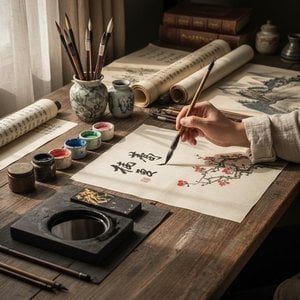
Embark on a sophisticated exploration of ink wash painting and Sumi-e. Uncover the profound historical lineages, Zen philosophies, and technical mastery behind this timeless medium in our authoritative guide for fine art enthusiasts.

Discover the ethereal beauty of watercolor through an art-historical lens. Master the delicate balance of light, fluidity, and pigment to capture the luminous essence of nature, inspired by the legendary techniques of the Old Masters and Impressionist greats.

Embark on a profound journey through the soul of Chinese calligraphy. Explore the historical mastery of ink, brush, and script, from ancient Zhuanshu to elegant running script, and discover how this timeless art form reflects the enduring spirit of classical East Asian aesthetics.

Discover the ethereal beauty of premium watercolor reproductions and bespoke commissions at WahooArt. From museum-quality landscapes to custom AI-enhanced portraits, our master artists deliver unparalleled craftsmanship and white-glove service for discerning collectors worldwide.


최신 미술 뉴스, 특별 혜택 및 인테리어 아이디어를 가장 먼저 만나보세요.
프로젝트에 대해 알려주시면 저희 미술 전문가들이 맞춤형 아트 제안 3가지를 전달해 드립니다.
당신만을 위한 맞춤형 옵션 3가지를 무료로 추천해 드립니다!


 미리보기
미리보기
 공유하기
공유하기 공유하기
공유하기
 상세 정보
상세 정보

 다운로드
다운로드
 유사 작품
유사 작품 X-레이
X-레이 슬라이드 쇼
 더 보기
더 보기






































 유리 옵션은 110cm 미만 크기에서만 선택 가능합니다.


