작가 약력
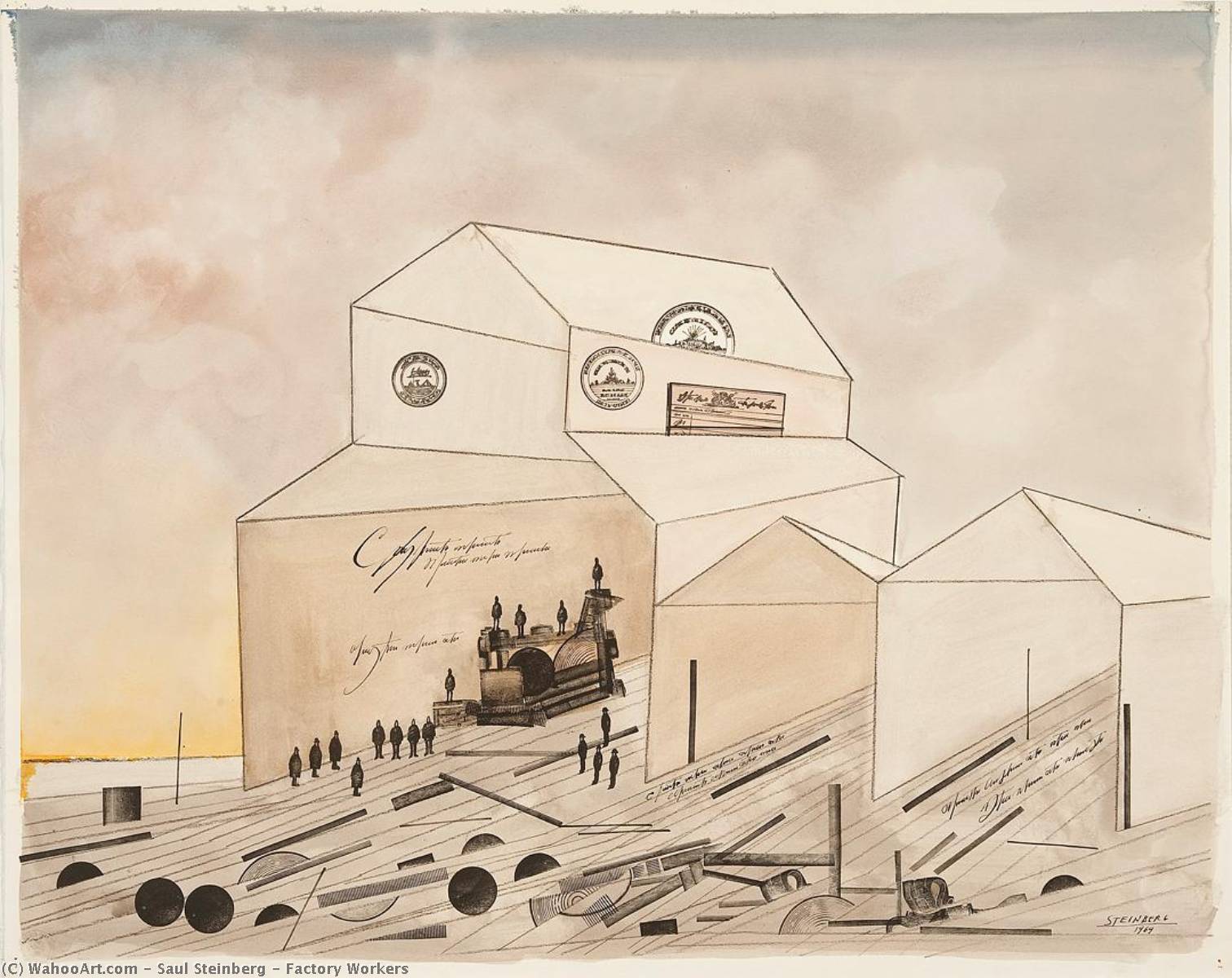
Saul Steinberg
Saul Erik Steinberg (June 15, 1914, Rm. Sărat, Romania – May 12, 1999, New York City) was a Romanian-born American artist, best known for his work for *The New Yorker*, most notably *View of the World from 9th Avenue*. He described himself as “a writer who draws,” encapsulating his artistic philosophy and lifelong dedication to observation and creative expression.
Early Life & Education
Steinberg was born in Râmnicu Sărat, Buzău County, Romania, to parents of Russian Jewish descent. In 1932, he enrolled at the University of Bucharest where he pursued studies in literature and philosophy. Recognizing his aptitude for visual arts alongside intellectual pursuits, he moved to Milan in 1933 to study architecture at the Polytechnic University, graduating in 1940 with honors. This formative period instilled in him a foundational understanding of spatial reasoning and artistic principles that would permeate his subsequent oeuvre. The looming threat of antisemitic legislation fueled his desire for refuge abroad, marking an early turning point in his life’s trajectory.
Career & Artistic Style
Steinberg's artistic journey began with contributions to Bertoldo, a Romanian humor newspaper, establishing him as a cartoonist and illustrator from a young age. His distinctive style quickly gained recognition—characterized by deceptively simple lines, meticulous detail, and an uncanny ability to convey complex ideas through visual metaphors. Following the enactment of discriminatory laws in Italy during World War II, he sought refuge in the Dominican Republic before relocating to New York City in 1942 where he joined OSS (Office of Strategic Services), serving as a morale officer during WWII. This experience broadened his worldview and honed his observational skills—elements that would become central to his artistic vision. He married Hedda Sterne in 1946, forging a collaborative partnership that enriched his creative output. Steinberg continued to produce drawings for *The New Yorker* and other publications throughout the postwar era, exploring themes of urban life, human psychology, and existential contemplation. His work spanned diverse mediums—drawings, prints, collages, sculptures—each imbued with a singular blend of Surrealist influences and meticulous realism. He achieved international acclaim through numerous solo exhibitions in galleries and museums across Europe and America, cementing his legacy as one of the most influential artists of his generation. Notable affiliations included Betty Parsons Gallery and Sidney Janis Gallery in New York City and Galerie Maeght in Paris.
Major Achievements & Legacy
Steinberg’s artistic reputation soared after 1946 with inclusion in “Fourteen Americans” at MoMA, alongside luminaries like Arshile Gorky and Robert Motherwell—a testament to his contribution to the burgeoning Abstract Expressionist movement. He amassed over eighty one-artist exhibitions throughout his lifetime, demonstrating an unwavering commitment to artistic exploration and pushing boundaries of visual representation. His work remains celebrated for its intellectual depth, whimsical charm, and profound engagement with the human condition. Steinberg’s distinctive approach—combining meticulous draftsmanship with imaginative conceptualization—continues to inspire artists today. He is remembered as a visionary artist who redefined the role of drawing in conveying complex ideas and emotions, leaving an indelible mark on 20th-century art history.
Notable Works
Steinberg's artistic output encompassed iconic pieces such as “Hen” (1945), "View of the World from 9th Avenue" (1966) and many others that exemplify his signature style—characterized by understated elegance, symbolic imagery, and a masterful manipulation of perspective. These artworks are housed in prominent museums worldwide and continue to captivate audiences with their enduring relevance and artistic brilliance.



 미리보기
미리보기
 프린트 구매
 공유하기
공유하기 공유하기
공유하기
 상세 정보
상세 정보

 다운로드
다운로드
 유사 작품
유사 작품 X-레이
X-레이 슬라이드 쇼

 더 보기
더 보기






































 유리 옵션은 110cm 미만 크기에서만 선택 가능합니다.





