A Study in Form and Confidence: Botticelli’s Unseen Figure
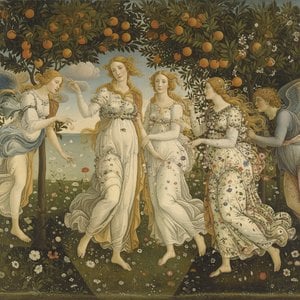
The image before us—often referred to as “untitled (9636)”—offers an intriguing glimpse into the world of Sandro Botticelli, a master whose legacy rests largely on iconic works like "Birth of Venus" and "Primavera." While these paintings are instantly recognizable, this piece, depicting a man in a strikingly simple pose before a building, reveals a different facet of the artist’s talent: a keen eye for capturing human form and an understated confidence in his ability to convey character. The subject, seemingly posed for a portrait, stands with his hands on his hips, radiating a quiet strength—a deliberate choice that speaks volumes about the era's evolving ideals of masculinity. The backdrop of a blue sky provides a dramatic contrast, emphasizing the figure’s physicality and drawing attention to the subtle details of his attire and stance.
Botticelli’s Florentine Roots and Artistic Evolution
Sandro Botticelli was born Alessandro di Mariano di Vanni Filipepi in Florence around 1445, a city that served as both his birthplace and the crucible of his artistic development. His early life was deeply intertwined with the vibrant cultural scene of the Early Renaissance, an era marked by a renewed interest in classical antiquity and a burgeoning spirit of humanism. Initially apprenticed to Fra Filippo Lippi, a prominent painter known for his frescoes, Botticelli quickly surpassed his master’s style, developing a distinctive aesthetic characterized by elegant lines, graceful figures, and a masterful use of color. His connection to the Medici family, Florence's powerful ruling dynasty, provided him with crucial patronage and access to artistic innovation. This period saw him honing his skills, experimenting with techniques, and absorbing the influences of artists like Francesco Rosselli, whose Botticelli-inspired style demonstrated a burgeoning interest in depicting dynamic movement and narrative scenes.
Technique and Symbolism: A Delicate Balance
Botticelli’s technique is immediately recognizable—a meticulous attention to detail combined with a remarkably fluid and graceful rendering of the human form. While this particular piece lacks the elaborate ornamentation often found in his more famous works, it still showcases his mastery of *sfumato*, a subtle blurring of lines and colors that creates an atmospheric effect and adds depth to the image. The simplicity of the composition—a single figure against a clear sky—forces us to focus on the subject’s physicality and posture. The lack of elaborate background details suggests a deliberate choice, perhaps intended to highlight the man's presence and confidence. Considering Botticelli’s frequent engagement with mythological themes, one might speculate that this image represents an idealized version of male beauty and strength, echoing the classical ideals of heroism and virtue.
Beyond the Canvas: Botticelli’s Enduring Influence
Botticelli's work continues to resonate deeply with audiences today. His paintings are not merely beautiful images; they are windows into a specific time and place, offering insights into the values, beliefs, and artistic sensibilities of the Renaissance. Works like “Birth of Venus” and “Primavera,” alongside pieces such as this "untitled (9636)," demonstrate his ability to seamlessly blend classical mythology with humanist ideals, creating images that are both visually stunning and intellectually stimulating. The influence of Botticelli can be seen in countless artists who followed him, solidifying his position as one of the most important figures in Western art history. WahooArt offers museum-quality reproductions of Botticelli’s masterpieces, allowing you to bring this timeless beauty into your own home or office—a tangible connection to a truly remarkable artistic legacy.
질의응답
산드로 보티첼리의 "untitled (9636)"의 복제화가 공간에 어떤 분위기를 선사할까요?
산드로 보티첼리의 "untitled (9636)"은(는) Elegant 분위기를 자아내며, Living Room에 추천하는 작품입니다. 무드란 작품이 주변 공간에 선사하는 정취를 의미합니다.
untitled (9636)은(는) 산드로 보티첼리의 예술적 경력 중 어느 시기에 해당하나요?
"untitled (9636)"은(는) 산드로 보티첼리의 Early Renaissance를 잘 보여주는 작품입니다.
"untitled (9636)"의 화풍은 작가가 활동했던 시대와 어떤 연관이 있나요?
산드로 보티첼리의 "untitled (9636)"은(는) 작가의 르네상스 시대 중 Early Renaissance 사조에 속합니다.