The Annunciation: A Florentine Vision of Divine Grace
Sandro Botticelli’s “The Annunciation,” painted circa 1489-1490 and now residing within the hallowed halls of the Uffizi Gallery in Florence, is more than just a depiction of a pivotal biblical moment; it's a shimmering distillation of Renaissance ideals – a harmonious blend of classical elegance, burgeoning humanism, and profound spiritual contemplation. This tempera painting, commissioned by the church of the Florentine convent of Cestello, offers a glimpse into Botticelli’s unique artistic vision, one that resonated deeply with his contemporaries and continues to captivate viewers centuries later.
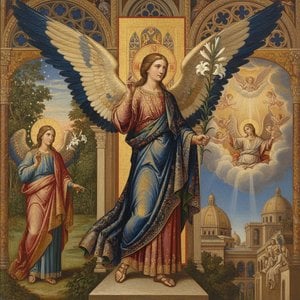
At first glance, the scene unfolds within a meticulously rendered garden setting, a space both earthly and imbued with an ethereal quality. The composition is cleverly divided by a series of elegant pillars, creating two distinct zones: on one side stands the Archangel Gabriel, depicted in motion as he approaches Mary, his gesture conveying urgency and divine revelation. His robes are rich in color – deep blues and purples signifying his celestial origin – while his face holds an expression of solemnity and reverence. Opposite him, we find Mary kneeling at her prie-dieu, a simple wooden bench that symbolizes her humility and devotion. Her posture is one of quiet contemplation as she receives Gabriel’s momentous announcement.
Beneath the figures, the floor is covered with an intricate geometric pattern – a hallmark of Botticelli's style. These repeating shapes aren’t merely decorative; they create a powerful illusion of depth and perspective, drawing the eye into the heart of the scene and reinforcing the sense of spatial harmony. Notably, beneath the original frame of the painting were inscribed words from St. Luke’s Gospel: ‘The Holy Ghost shall come upon thee, and the power of the Highest shalt thou overshadow; therefore also that holy thing which shall be born of thee shall be called the Son of God.’ This inscription underscores the central theological message of the work – the miraculous conception of Jesus through Mary.
Botticelli’s Renaissance Synthesis
Botticelli's artistic journey was deeply influenced by a confluence of factors that defined the Florentine Renaissance. The rediscovery of classical texts and artifacts, particularly those from Greece and Rome, fueled his fascination with idealized beauty and harmonious proportions. Simultaneously, the rise of humanism—a philosophical movement emphasizing human potential and earthly experience—encouraged artists to explore themes of mythology and virtue alongside religious subjects. Botticelli masterfully synthesized these influences in “The Annunciation,” creating a work that is both profoundly spiritual and strikingly beautiful.
He drew upon late Italian Gothic traditions, evident in the flowing drapery and delicate figures, yet he also embraced the innovations of the burgeoning Renaissance, notably the development of linear perspective. This technique—which creates an illusion of depth on a flat surface—is subtly employed here to enhance the painting’s realism and spatial coherence. Botticelli's use of color is equally noteworthy; he favored rich, vibrant hues – particularly blues and reds – that contribute to the work’s overall luminosity and emotional impact.
Symbolism and Spiritual Depth
Beyond its formal beauty, “The Annunciation” is laden with symbolic meaning. The garden setting itself represents paradise, a realm of innocence and divine grace. Gabriel's presence signifies God’s intervention in human affairs, while Mary’s acceptance embodies her willingness to embrace her destiny as the Mother of God. The inclusion of two cherubs—one near the top and another closer to the bottom—adds a touch of youthful exuberance and reinforces the miraculous nature of the event.
The painting also subtly references classical mythology, particularly the story of Joachim and Anna, the biblical parents of Mary. This connection adds layers of meaning and underscores the theme of divine providence – the belief that God orchestrates events in accordance with his plan. The overall effect is a profound meditation on faith, humility, and the transformative power of grace.
Reproductions: Bringing Botticelli’s Vision to Life
Botticelli's “The Annunciation” remains one of the most beloved and enduring works of the Early Renaissance. Its exquisite beauty, intricate detail, and profound symbolism continue to inspire artists and captivate audiences worldwide. WahooArt offers meticulously crafted, hand-painted reproductions that faithfully capture the essence of this masterpiece. Our skilled artisans utilize only the finest materials – traditional oil paints on archival canvas – to create stunning replicas that will grace your home or office for generations to come.
Whether you are a discerning collector, an art enthusiast, or simply seeking a timeless work of art to enhance your space, our “The Annunciation” reproduction provides an unparalleled opportunity to experience the beauty and spiritual depth of Botticelli’s vision. Visit https://WahooArt.com today to explore our selection and bring this iconic masterpiece into your life.



 미리보기
미리보기
 손으로 그린 그림 구매
 공유하기
공유하기 공유하기
공유하기
 상세 정보
상세 정보

 다운로드
다운로드
 유사 작품
유사 작품 X-레이
X-레이 슬라이드 쇼

 더 보기
더 보기






































 유리 옵션은 110cm 미만 크기에서만 선택 가능합니다.