
 Acrylic On CanvasWallArtEarly Renaissance
 1480Early Medieval
 106.0 x 81.0 cm
빠른 제작과 다양한 마감 옵션을 제공하는 박물관 품질의 지클레이 또는 캔버스 프린트. ( 손으로 그린 그림 구매 디지털 이미지로 전환)





























작품의 원본 비율을 유지하는 미리 설정된 크기 중에서 선택하세요.

특정 프레임이나 공간에 맞춰 직접 치수를 입력하실 수 있습니다. 선택하신 사이즈가 원본 이미지의 비율과 일치하지 않을 경우, 작품을 크롭(자르기)하거나 이미지를 대칭 또는 단색 채우기로 확장하여 제작합니다. 제작 시작 전, 최종 확인을 위해 디지털 목업이 전송됩니다.
화면상의 미리보기는 실제 크롭이나 확장 상태를 반영하지 않으므로, 최종 구도는 오직 목업을 통해서만 정확하게 확인하실 수 있습니다.
맞춤 사이즈 제작도 가능하지만, 원본 비율을 유지하기 위해서는 사전 정의된 목록에서 치수를 선택하시는 것을 권장합니다.

Giuliano de' Medici
복제본 크기
Sandro Botticelli’s Giuliano de’ Medici, painted around 1478, is more than just a portrait; it’s a carefully constructed tableau of Florentine power, familial grace, and the burgeoning anxieties of a turbulent era. Executed in tempera on panel, this intimate vertical composition captures Giuliano de' Medici, the second son of Lorenzo the Magnificent, at the cusp of his life – a young man poised between youthful exuberance and the looming shadow of political intrigue. The painting’s subtle yet profound details invite us into a private moment, offering a glimpse into the personality and aspirations of one of Florence’s most influential figures.
Botticelli's style in this work is remarkably restrained, a departure from the more flamboyant depictions of his later years. He eschews overt grandeur, favoring instead a refined elegance that speaks to Giuliano’s position within the powerful Medici family. The palette is muted – pale yellows and browns dominate, creating an atmosphere of contemplative seriousness. Notice how Botticelli masterfully employs light; it falls softly across Giuliano's face, highlighting his features while simultaneously suggesting a certain melancholy. The careful rendering of textures—the velvet of his tunic, the smooth skin of his hand—demonstrates Botticelli’s meticulous attention to detail and his deep understanding of human anatomy.
The setting itself is laden with symbolic significance. Giuliano stands before a narrow ledge, a simple architectural element that serves as a stage for the portrait. Behind him, two shutters—one closed, one partially open—suggest both confinement and a glimpse of the outside world. The sliver of pale sky visible through the opening hints at hope and possibility, yet also carries an undercurrent of vulnerability. The dove perched on a twig in the lower left corner is a potent symbol of peace, but its presence could also be interpreted as a premonition of impending doom – a subtle foreshadowing of Giuliano’s tragic fate.
His posture and expression are equally telling. Giuliano's downcast eyes convey a sense of introspection and perhaps even sadness. The deep vertical crease in his forehead, accentuated by the dark brows, speaks to a burdened mind, hinting at the political machinations and dangers that surrounded him. The slight parting of his lips suggests a quiet dignity, while the long, hooked nose reflects a noble lineage. Botticelli’s skill lies not just in capturing Giuliano's likeness but also in conveying his inner state – a man aware of his privilege yet acutely conscious of the precariousness of his position.
Giuliano de’ Medici was painted during a period of intense political and social change in Florence. The Medici family, under Lorenzo the Magnificent's leadership, had consolidated their power, transforming Florence into a vibrant center of art and culture. However, this prosperity was built on a foundation of intrigue and rivalry, as evidenced by the Pazzi conspiracy that ultimately led to Giuliano’s assassination. The painting reflects this atmosphere of uncertainty – a delicate balance between beauty and danger, strength and vulnerability.
Botticelli's decision to portray Giuliano in a relatively informal setting—away from the elaborate court rituals and public displays of power—is significant. It suggests a desire to capture his true personality, a man who valued intellectual pursuits and artistic patronage alongside political maneuvering. The painting offers a rare glimpse into the private world of a young Medici prince, revealing a complex and multifaceted individual caught in the currents of Florentine history.
Despite its tragic context, Giuliano de’ Medici remains a remarkably enduring work of art. Botticelli's masterful technique, combined with his subtle use of symbolism and psychological insight, creates a portrait that transcends the specifics of its historical setting. It is a testament to the power of human observation and the ability of art to capture not just likeness but also essence – a poignant reminder of a young man’s life cut short and a window into the complexities of Renaissance Florence.


1445 - 1510 , 이탈리아
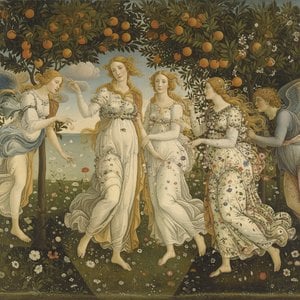
Explore the ethereal beauty of Sandro Botticelli's masterpieces. Delve into the profound symbolism, mythological grace, and technical mastery that define the Italian Renaissance through an expert art-historical lens.


 미리보기
미리보기
 공유하기
공유하기 공유하기
공유하기
 상세 정보
상세 정보

 다운로드
다운로드
 유사 작품
유사 작품 X-레이
X-레이 슬라이드 쇼
 통계 정보
통계 정보 더 보기
더 보기









 유리 옵션은 110cm 미만 크기에서만 선택 가능합니다.


