
원하는 크기와 액자로 주문 제작되는, 작가들이 직접 캔버스에 손으로 그린 유화 작품입니다. ( 프린트 판매로 전환 디지털 이미지로 전환)





























작품의 원본 비율을 유지하는 미리 설정된 크기 중에서 선택하세요.

특정 프레임이나 공간에 맞도록 직접 크기를 입력할 수 있습니다. 선택하신 크기가 원본 이미지의 비율과 일치하지 않는 경우, 작품을 자르거나 추가적인 손으로 그린 요소를 사용하여 그림을 확장합니다. 제작 시작 전 승인을 위해 디지털 목업을 보내드립니다.
화면 미리 보기는 실제 자르기 또는 확장을 반영하지 않습니다. 최종 구성은 목업을 통해서만 정확하게 확인하실 수 있습니다.
맞춤 크기 제작도 가능하지만, 원본 비율을 유지하기 위해 사전 정의된 목록에서 크기를 선택하시는 것을 권장합니다.

Dante and Beatrice
복제본 크기
Sandro Botticelli's "Dante and Beatrice," painted around 1480, isn’t merely a depiction of two figures; it’s a vibrant portal into the heart of Florentine artistic and intellectual life during the Early Renaissance. This captivating drawing, now housed within the prestigious Kupferstichkabinett (Print Room) at the Staatliche Museen zu Berlin, offers a rare glimpse into Botticelli's masterful command of line and his profound engagement with Dante Alighieri’s “Divine Comedy.” More than just an illustration, it embodies a complex interplay of religious fervor, philosophical contemplation, and the burgeoning humanist spirit that defined the era. The work immediately draws the eye with its dynamic composition—a swirling mass of figures rendered in meticulously crafted black and white lines, creating a sense of both urgency and profound serenity.
Botticelli’s technique is instantly recognizable: a deliberate departure from the smooth, polished surfaces favored by many of his contemporaries. Here, he embraces a linear style reminiscent of late Gothic art, yet infused with a distinctly Renaissance sensibility. The artist employs intricate hatching and cross-hatching to build up tonal variations, suggesting depth and volume without relying on traditional shading. Notice how the varying line weights create texture—the dense layering of figures in the foreground contrasts sharply with the more fluid lines depicting the distant crowd, conveying a powerful sense of spatial recession. This masterful use of line isn’t simply decorative; it's integral to the work’s expressive power.
At its core, “Dante and Beatrice” captures a pivotal moment from Dante’s “Paradiso,” the final canticle of his epic poem. The scene depicts Dante, guided by Virgil, ascending through the celestial spheres to encounter Beatrice, representing divine grace and ultimately, God himself. Botticelli doesn't offer a literal representation of this journey; instead, he translates the poem’s spiritual intensity into a visual drama. The sheer number of figures surrounding Dante—angels, saints, and other souls—underscores the overwhelming nature of divine presence and the magnitude of Dante’s ascent. Each figure is rendered with a distinct personality, contributing to the overall sense of bustling activity and profound reverence.
Symbolism permeates every aspect of the drawing. The central female figure, Beatrice, is depicted in a pose of serene beauty and ethereal grace—a testament to her role as an intercessor between humanity and the divine. The swirling crowd represents the collective yearning for salvation, while Virgil’s presence signifies human reason guiding Dante towards enlightenment. The composition itself echoes the structure of the “Divine Comedy” – a journey through different realms of existence, culminating in a transcendent experience. Botticelli's choice to depict this scene as a dynamic line drawing—rather than a more traditional fresco or panel painting—suggests a deliberate attempt to capture the *movement* and *energy* inherent in Dante’s vision.
Botticelli’s “Dante and Beatrice” emerged during a period of intense intellectual ferment in Florence. The Renaissance was witnessing a renewed interest in classical antiquity, alongside a burgeoning humanist philosophy that emphasized human potential and earthly experience. This complex interplay of influences is reflected in Botticelli's work—his ability to seamlessly blend religious iconography with elegant, almost decorative forms. The drawing’s creation coincided with the rediscovery of Dante’s “Divine Comedy,” which quickly became a cultural phenomenon throughout Europe.
The acquisition of this drawing by Gustav von Waagen in 1854 from the Hamilton Collection is itself a fascinating story—a testament to the enduring appeal of Botticelli's work. The drawings were initially discovered in Scotland, and their subsequent journey to Berlin highlights the international significance of Renaissance art. “Dante and Beatrice” stands as a remarkable example of Botticelli’s artistic genius—a powerful synthesis of religious devotion, philosophical contemplation, and masterful technique that continues to captivate viewers centuries after its creation. It's a work that invites us to contemplate not only the beauty of the image itself but also the profound spiritual questions it raises.
Botticelli’s “Dante and Beatrice” is more than just an artwork; it’s a window into a pivotal moment in Western art history. Its intricate detail, dynamic composition, and rich symbolism make it a truly exceptional piece. Reproductions of this drawing offer a wonderful opportunity to bring this Renaissance masterpiece into your home or office, allowing you to appreciate its beauty and complexity on a daily basis. Whether you are an avid art collector, a design enthusiast seeking inspiration, or simply someone who appreciates the power of visual storytelling, “Dante and Beatrice” is sure to leave a lasting impression.


1445 - 1510 , 이탈리아

Elevate your artistic practice with this expert guide to mastering the line. Discover advanced techniques in graphite, charcoal, and contour drawing designed for art students seeking technical precision and expressive depth in their fine art studies.
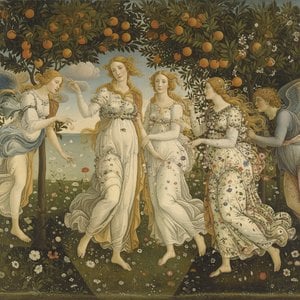
Explore the ethereal beauty of Sandro Botticelli's masterpieces. Delve into the profound symbolism, mythological grace, and technical mastery that define the Italian Renaissance through an expert art-historical lens.

Embark on a sophisticated journey through the history of line drawing. From classical mastery to modern minimalism, explore how the power of the line shapes emotion and space in fine art. Discover expert insights for collectors and enthusiasts of graphic elegance.

Discover the sophisticated mastery of graphite drawing. Explore expert techniques for achieving profound depth, intricate texture, and hyper-realistic detail through the alchemy of carbon, curated for the discerning art enthusiast and professional collector.

Explore the profound artistry of graphite drawing. Discover professional techniques for mastering depth, texture, and detail through a lens of art history, from classical sketches to modern masterpieces. Elevate your understanding of the pencil medium with our expert guide.


 미리보기
미리보기
 공유하기
공유하기 공유하기
공유하기
 상세 정보
상세 정보

 다운로드
다운로드
 유사 작품
유사 작품 X-레이
X-레이 슬라이드 쇼
 통계 정보
통계 정보
 더 보기
더 보기









 유리 옵션은 110cm 미만 크기에서만 선택 가능합니다.


