Acrylic On CanvasWallArtSurrealism
 1930Early Medieval
 113.0 x 87.0 cm
빠른 제작과 다양한 마감 옵션을 제공하는 박물관 품질의 지클레이 또는 캔버스 프린트. ( 손으로 그린 그림 구매 디지털 이미지로 전환)





























작품의 원본 비율을 유지하는 미리 설정된 크기 중에서 선택하세요.

특정 프레임이나 공간에 맞춰 직접 치수를 입력하실 수 있습니다. 선택하신 사이즈가 원본 이미지의 비율과 일치하지 않을 경우, 작품을 크롭(자르기)하거나 이미지를 대칭 또는 단색 채우기로 확장하여 제작합니다. 제작 시작 전, 최종 확인을 위해 디지털 목업이 전송됩니다.
화면상의 미리보기는 실제 크롭이나 확장 상태를 반영하지 않으므로, 최종 구도는 오직 목업을 통해서만 정확하게 확인하실 수 있습니다.
맞춤 사이즈 제작도 가능하지만, 원본 비율을 유지하기 위해서는 사전 정의된 목록에서 치수를 선택하시는 것을 권장합니다.

William Tell
복제본 크기
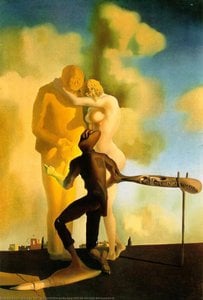
Salvador Dalí's 1930 painting, “William Tell,” isn’t merely a depiction of the legendary Swiss hero; it’s a meticulously constructed descent into the artist’s own psyche. Born in Figueres, Spain, during a period of intense artistic ferment – specifically, the rise of surrealism – Dalí sought to dismantle conventional reality and expose the hidden landscapes of the subconscious mind. This work exemplifies that ambition with startling clarity. The painting emerged from a time when artists like Max Ernst and Giorgio de Chirico were challenging established notions of representation, and Dalí embraced this revolutionary spirit wholeheartedly. The early loss of his brother, Salvador, profoundly shaped Dalí’s artistic vision, imbuing his works with recurring themes of duality and replacement – concepts powerfully present in “William Tell.” The painting's creation coincided with a period of personal turmoil for Dalí, marked by complex relationships and a restless exploration of his own identity. It’s crucial to understand that this isn’t simply a historical illustration; it’s a deeply personal statement rendered in the language of dream logic.
At first glance, “William Tell” appears chaotic – a swirling vortex of figures, horses, and bizarre objects. However, beneath this surface turbulence lies a carefully orchestrated composition brimming with symbolic weight. The central figure, holding a crossbow with a bull’s head affixed to the shaft, immediately establishes an unsettling juxtaposition: the heroic archer transformed into a menacing predator. This grotesque detail is characteristic of Dalí's surrealist approach – taking familiar elements and twisting them into unexpected and often disturbing forms. The two horses, positioned dramatically within the frame, contribute to the sense of instability and impending violence. Their placement isn’t accidental; they represent forces in conflict, mirroring the struggle between Tell and Gessler, but also reflecting Dalí's own internal battles. The inclusion of a clock near the top right corner, a bowl at the lower right side, and scattered books across the scene aren’t merely decorative elements; they are fragments of memory, echoes of past experiences, and symbols of time’s relentless passage – all recurring motifs in Dalí’s oeuvre. Notably, the bull's head on the crossbow is a potent symbol of aggression and primal instinct, further amplifying the painting’s unsettling atmosphere.
Dalí’s masterful use of collage techniques—a practice widely adopted by surrealists—is central to the painting's impact. Rather than relying solely on traditional brushwork, he assembled disparate images and textures from various sources – newspaper clippings, photographs, and printed matter – creating a layered and complex visual experience. This method deliberately disrupted the illusion of reality, forcing the viewer to actively engage with the artwork and decipher its meaning. The collage technique allowed Dalí to juxtapose seemingly unrelated elements, generating unexpected connections and unsettling juxtapositions that are hallmarks of surrealism. The textures within the painting—the rough surface of the books, the smooth sheen of the bowl, the weathered appearance of the horses—add another layer of sensory richness, inviting viewers to explore the artwork on a tactile level. The deliberate fragmentation and reassembly of images reflect Dalí’s interest in exploring different perspectives and challenging conventional ways of seeing the world.
“William Tell” stands as a pivotal work within Dalí’s artistic development, but it also reflects broader trends in 20th-century Western painting. The surrealist movement profoundly influenced subsequent art styles, including abstract expressionism, pop art, and even contemporary digital art. Dalí's exploration of the subconscious mind paved the way for artists to delve into the inner workings of the human psyche, while his innovative techniques—particularly collage—inspired generations of creatives. The painting’s unsettling imagery and dreamlike atmosphere continue to resonate with audiences today, demonstrating the enduring power of surrealism as a means of challenging conventional perceptions and exploring the complexities of the human experience. The work's influence can be seen in countless contemporary artworks that embrace fragmentation, juxtaposition, and psychological depth.


1904 - 1989 , 스페인

Embark on a sophisticated journey through the surrealist movement. Discover how masters like Dalí and Ernst blurred the lines between dreams and reality through innovative techniques, exploring the profound impact of the subconscious on fine art history with expert authority.

Embark on a visual journey through the subconscious. Explore the profound symbolism of Surrealist masterpieces, from Dalí's melting clocks to dreamlike landscapes, and learn how to curate these evocative visions into your private art collection with expert guidance.

Master the complexities of Salvador Dalí’s genius. Explore an expert analysis of the Paranoiac-Critical Method and the profound symbolism within his Surrealist masterpieces for the discerning art collector.

Embark on a journey through the subconscious with our expert guide to Surrealism. Discover the profound symbolism of masters like Dalí and Ernst, exploring how dreamlike imagery reshaped art history and continues to inspire collectors and enthusiasts worldwide.


 미리보기
미리보기
 공유하기
공유하기 공유하기
공유하기
 상세 정보
상세 정보 Guide
Guide

 다운로드
다운로드
 유사 작품
유사 작품 X-레이
X-레이 슬라이드 쇼
 통계 정보
통계 정보 더 보기
더 보기









 유리 옵션은 110cm 미만 크기에서만 선택 가능합니다.