A Life Immersed in Culture: The Journey of Romare Bearden
Romare Howard Bearden, born in Charlotte, North Carolina, in 1911, was more than just an artist; he was a cultural architect, a visual storyteller whose work resonated with the rhythms and realities of
African-American life. His early years were marked by constant movement, a childhood spent between the burgeoning artistic hub of Harlem,
New York, and the quieter landscapes of Pittsburgh, Pennsylvania. This geographic fluidity instilled in him a unique perspective, an ability to observe and absorb the diverse experiences that would later fuel his creative vision. The Bearden home wasn’t simply a residence; it was a salon, a gathering place for luminaries of the
Harlem Renaissance—writers, musicians, intellectuals—who shaped young Romare's understanding of art as a vehicle for
social commentary and cultural preservation. His mother, Bessye Bearden, a prominent figure in
New York City’s civic life and a journalist for the Chicago Defender, further nurtured this environment, instilling in him a sense of responsibility to his community and a deep appreciation for storytelling.
From Social Realism to Abstract Exploration
Bearden's formal education was equally diverse, encompassing studies at Lincoln University, Boston University, and ultimately
New York University, where he earned a degree in science and education in 1935. However, his true calling lay in the realm of art, and he continued his training at the Art Students League under the tutelage of German artist
George Grosz. His early artistic endeavors were rooted in
social realism, depicting scenes from the American South with a keen eye for detail and a commitment to portraying the lives of ordinary people. These works often reflected the influence of Mexican muralists like
Diego Rivera and
José Clemente Orozco, whose powerful narratives and bold compositions resonated with Bearden’s own desire to address issues of
social justice and human dignity. However, his experiences during World War II—serving in the US Army on the European front—profoundly impacted his artistic trajectory. The horrors he witnessed fueled a search for deeper meaning, leading him to explore more
abstract forms of expression after the war. A period of study at the Sorbonne in Paris in 1950 further broadened his horizons, exposing him to new philosophical and art historical perspectives that challenged his previous assumptions and encouraged experimentation.
The Power of Collage: A Defining Aesthetic
It was in the late 1950s and early 1960s that Romare Bearden truly found his signature style—
collage. He didn’t simply adopt
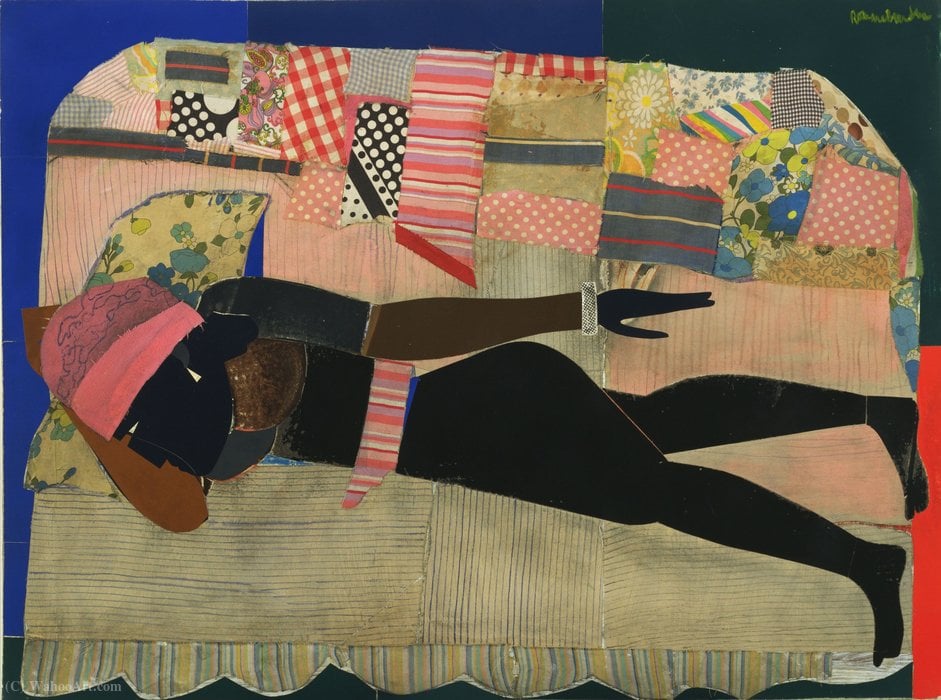
collage as a technique; he elevated it to an art form, transforming humble materials like magazine clippings, fabric scraps, and photographs into vibrant, emotionally resonant compositions. This choice wasn't accidental.
Collage allowed him to fragment and reassemble reality, mirroring the complexities of memory, identity, and experience. His collages weren’t merely representations of scenes; they were evocations of moods, atmospheres, and cultural narratives. He often drew inspiration from jazz music—its improvisational spirit, its layered harmonies, its ability to convey profound emotions through seemingly simple melodies. Bearden saw parallels between the artist's process and the musician's performance, both relying on intuition, spontaneity, and a deep understanding of their respective mediums. He became a founding member of the Spiral group in 1963, an organization of
African-American artists grappling with their role in the Civil Rights Movement. This commitment to
social justice remained central to his work throughout his career.
Legacy and Enduring Influence
Throughout his prolific career, Bearden received numerous accolades, including honorary doctorates from several prestigious universities and, in 1987, the National Medal of Arts. He was also a gifted writer and songwriter, co-writing the jazz standard "Sea Breeze" with childhood friend Dizzy Gillespie. But perhaps his most lasting legacy lies in his dedication to supporting emerging artists. Together with his wife, Nanette Rohan Bearden, he established the Bearden Foundation, providing financial assistance and mentorship to young creatives. The
New York Times famously hailed him as “the nation’s foremost collagist” in its obituary following his death in 1988—a testament to his groundbreaking contributions to the art world.
Romare Bearden's work continues to inspire and challenge audiences today, reminding us of the power of art to illuminate the
human condition, celebrate
cultural heritage, and advocate for a more just and equitable world. His ability to synthesize diverse influences—from African art and
Byzantine mosaics to jazz music and personal memory—created a unique visual language that remains instantly recognizable and profoundly moving.
Major Achievements & Recognitions
- 1964: Appointed the first art director of the Harlem Cultural Council.
- 1972: Elected to the American Academy of Arts and Letters.
- 1987: Awarded the National Medal of Arts.
- Throughout his career: Received honorary doctorates from Pratt Institute, Carnegie Mellon University, Maryland Institute of Art, North Carolina Central College University, and Davidson College.
- Posthumously: Recognized as a pivotal figure in 20th-century American art, with works featured in major museum collections worldwide.

 프린트 판매로 전환

 미리보기
미리보기
 공유하기
공유하기 공유하기
공유하기
 상세 정보
상세 정보 가이드 보기

 다운로드
다운로드
 유사 작품 더 보기
 X-레이
X-레이 슬라이드 쇼 보기
 질의응답
질의응답
 통계 정보
통계 정보 더 보기
더 보기


