
x































작품의 원본 비율을 유지하는 미리 설정된 크기 중에서 선택하세요.

특정 프레임이나 공간에 맞도록 직접 크기를 입력할 수 있습니다. 선택하신 크기가 원본 이미지의 비율과 일치하지 않는 경우, 작품을 자르거나 추가적인 손으로 그린 요소를 사용하여 그림을 확장합니다. 제작 시작 전 승인을 위해 디지털 목업을 보내드립니다.
화면 미리 보기는 실제 자르기 또는 확장을 반영하지 않습니다. 최종 구성은 목업을 통해서만 정확하게 확인하실 수 있습니다.
맞춤 크기 제작도 가능하지만, 원본 비율을 유지하기 위해 사전 정의된 목록에서 크기를 선택하시는 것을 권장합니다.

Braque Family Triptych - left panel
복제본 크기
The left panel of Rogier van der Weyden's celebrated Braque Family Triptych offers a profound glimpse into the artistic and intellectual landscape of 15th-century Flanders. More than simply a portrait, it’s a meticulously crafted meditation on knowledge, faith, and the human condition – a testament to Van der Weyden’s mastery of realism, symbolism, and his deep understanding of the psychological complexities of his subjects. Created around 1452 for the wealthy family of Jean Braque, this oil-on-panel work transcends its initial function as a devotional image, evolving into a complex visual narrative that continues to resonate with viewers today.
The panel immediately draws the eye to its central figure: a dignified man, likely Jean Braque himself, rendered in exquisite detail. He’s presented against a subtly atmospheric landscape – a body of water reflecting a sky dotted with clouds, and two small boats navigating its surface. This isn't merely a backdrop; it establishes a sense of depth and tranquility, grounding the figure within a carefully considered environment. The man wears a rich red robe, a color associated with royalty and piety in this era, further emphasizing his status and importance. His posture is one of quiet contemplation, as if absorbed in the book held gently in his hand.
Van der Weyden’s genius lies not just in his technical skill but also in his masterful deployment of symbolism. The open book, a recurring motif in his work, is far more than a simple prop. It represents knowledge, wisdom, and the pursuit of spiritual understanding – values highly prized within the Burgundian elite. The specific text inscribed on the pages—likely from the Gospel of John—reinforces this theme, inviting viewers to contemplate the divine message contained within its words. The inclusion of a dog at the bottom left corner adds another layer of meaning; dogs have long been associated with loyalty and fidelity, qualities highly valued in both human and familial relationships.
Beyond the book, subtle details throughout the panel contribute to the overall symbolic weight. The landscape itself is carefully constructed to evoke a sense of harmony between humanity and nature – a reflection of Renaissance ideals emphasizing the interconnectedness of all things. The boats suggest journeys, both literal and metaphorical, representing life’s passage and the search for meaning.
Van der Weyden's skill is immediately apparent in the remarkable realism achieved through his use of oil on panel. This medium allowed him to build up layers of paint with incredible precision, capturing subtle textures – the folds of the robe, the sheen of the water, the delicate details of the man’s face. His attention to detail extends beyond mere representation; he imbues each element with a sense of life and vitality. The painting is executed in the Early Netherlandish style, characterized by its meticulous observation of nature, its use of atmospheric perspective, and its profound psychological insight.
This period, known as Flemish Primitives or Early Netherlandish Painting, marked a significant departure from the more stylized approaches of preceding generations. Artists like Van der Weyden were driven to create works that felt utterly lifelike, capturing not just appearances but also emotions and inner states. The Braque Triptych stands as a prime example of this ambition – a window into the soul of a man and his family, rendered with unparalleled skill and symbolic depth.
The Braque Family Triptych is more than just a beautiful painting; it’s a powerful expression of human experience. Van der Weyden's ability to convey both intellectual and emotional complexity has ensured its enduring appeal. Reproductions, like those offered by WahooArt.com, allow viewers to appreciate the nuances of this masterpiece in their own homes, bringing its quiet contemplation and profound symbolism into a contemporary setting. It’s a piece that invites reflection on themes of knowledge, faith, family, and the timeless search for meaning – a true treasure of the Renaissance.

1400년경 투르네에서 태어난 로지에 반 데어 베이든(Roger van der Weyden)은 초기 네덜란드 회화를 대표하는 가장 중요한 인물 중 한 명입니다. 그의 삶에 대한 구체적인 정보는 제한적이지만, 남아있는 작품들은 섬세한 묘사와 깊은 감정 표현을 통해 그의 예술적 천재성을 증명합니다. 금세공사로 시작하여 회화의 길을 걸었던 그는 뛰어난 관찰력과 정교함을 바탕으로 종교화를 중심으로 독창적인 스타일을 구축했습니다. 반 데어 베이든은 단순한 현실 묘사를 넘어, 인물의 내면세계와 감정을 생생하게 전달하는 데 집중하며 당시 미술계에 새로운 지평을 열었습니다.
반 데어 베이든은 1427년 투르네 화가 길드에 입회하면서 자신의 예술적 재능을 공식적으로 인정받았습니다. 이후 그는 브뤼셀의 필리프 장 클로드 공작의 궁정 화가가 되어 더욱 발전된 환경에서 활동할 수 있었습니다. 공작의 후원은 그에게 귀족과 제각기 사회 지도층과의 교류 기회를 제공했을 뿐만 아니라, 예술적 영감을 얻고 새로운 기술을 실험할 수 있는 기반이 되었습니다. 이 시기에 반 데어 베이든은 이전 화가들의 엄격한 규범에서 벗어나 더욱 자연스럽고 감정적인 표현 방식을 추구하며 자신만의 독특한 스타일을 확립했습니다. 그의 작품들은 점차적으로 종교적 주제에 인간적인 감성을 불어넣으며, 보는 이로 하여금 깊은 공감을 불러일으키는 힘을 갖게 되었습니다.
반 데어 베이든의 작품을 가장 뚜렷하게 특징짓는 것은 바로 그의 뛰어난 감정 표현 능력입니다. 그는 색채를 다루는 방식에서도 독특한 면모를 보였습니다. 다양한 색조와 음영을 섬세하게 사용하여 화면에 깊이감을 더하고, 인물의 표정과 몸짓을 통해 복잡한 감정을 전달했습니다. 특히 슬픔과 고통을 묘사할 때 그는 극적인 연출보다는 미묘한 감정의 변화를 포착하여 보는 이에게 더욱 강렬한 인상을 남겼습니다. 그의 대표작인 “애도”는 이러한 특징이 가장 잘 드러나는 작품으로, 예수 그리스도의 죽음을 슬퍼하는 인물들의 표정과 몸짓을 통해 깊은 슬픔과 고통을 생생하게 전달합니다. 또한 반 데어 베이든은 유화 기법을 능숙하게 사용하여 화면에 섬세한 질감과 빛의 효과를 더했습니다. 이는 그의 작품에 사실적인 느낌을 부여했을 뿐만 아니라, 인물의 피부와 의상의 표현을 더욱 풍부하게 만들었습니다.
반 데어 베이든의 영향력은 그의 생존 시대를 넘어 유럽 전역으로 확산되었습니다. 특히 이탈리아와 스페인에서는 그의 작품들이 큰 인기를 얻으며 현지 미술에 새로운 영감을 불어넣었습니다. 비록 17세기 이후 그의 명성은 잠시 잊혀졌지만, 19세기에 들어서면서 다시 재평가되기 시작했습니다. 오늘날 그는 얀 반 에이크, 로베르 캄핀과 함께 초기 네덜란드 미술의 “3대 거장”으로 불리며, 북유럽 르네상스 미술 발전에 지대한 공헌을 한 것으로 평가받고 있습니다. 그의 혁신적인 기법과 감성적인 표현은 후대 화가들에게 큰 영향을 미쳤으며, 서양 미술사의 흐름을 바꾸는 데 결정적인 역할을 했습니다. 반 데어 베이든은 예술가를 단순한 기술자로 보는 시각에서 벗어나 창조적인 존재로 격상시키는 데 기여했으며, 그의 유산은 오늘날까지도 많은 사람들에게 영감을 주고 있습니다.
반 데어 베이든은 생애 동안 수많은 작품을 남겼으며, 그중에서도 몇몇 작품은 예술사의 중요한 이정표로 평가받고 있습니다. 보스턴 미술관에 소장된 “성 루카 복음사가자가 마리아를 묘사하는 모습”은 그의 뛰어난 관찰력과 정교함을 보여주는 대표적인 작품입니다. 또한, 투르네 미술관에 있는 “애도”는 그의 가장 유명한 작품 중 하나로, 극적인 구성과 섬세한 감정 표현을 통해 깊은 슬픔을 전달합니다. 여러 버전으로 존재하는 “십자가 하강” 역시 반 데어 베이든의 대표작으로 꼽히며, 그의 예술적 역량을 보여줍니다. 이 외에도 “수태고지”, 정교하고 세밀하게 묘사된 “블라델린 삼위일체 제단화” 등은 그의 작품 세계를 풍부하게 만들어주는 걸작들입니다. 이러한 작품들은 오늘날까지도 수많은 사람들에게 감동을 선사하며, 반 데어 베이든의 불멸의 예술적 유산을 증명하고 있습니다.

1400 - 1464 , 벨기에
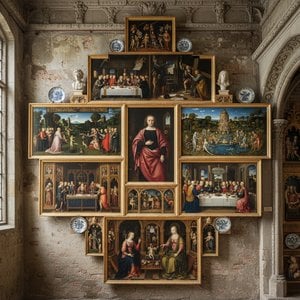
Journey into the Early Netherlandish Renaissance! Explore 10 iconic paintings by Jan van Eyck, Rogier van der Weyden & more. Discover stunning detail, symbolism, and oil painting techniques. Find museum-quality art reproductions for your home at WahooArt.com.

Explore the revolutionary art of Rogier van der Weyden, a pivotal figure of the Early Netherlandish Renaissance. Discover his emotional realism, innovative compositions, and lasting impact on painting history.
Journey into the world of Early Netherlandish painting! Explore 10 masterpieces by Jan van Eyck, Rogier van der Weyden & more. Discover stunning detail, symbolism & Renaissance art for your home decor. Find museum-quality reproductions on WahooArt.com

Explore the revolutionary art of Hugo van der Goes – a master of Early Netherlandish painting renowned for his dramatic realism, psychological depth & profound influence on Renaissance artists. Discover his iconic works and lasting legacy.

렘브란트 반 레인 명작 25선을 만나보세요. 빛과 그림자의 거장이 그린 역사화, 초상화 속 예술의 정수를 감상하고, 네덜란드 황금시대 바로크 미술의 깊이를 느껴보세요. WahooArt.com에서 고품질 복제화를 컬렉션하세요.


최신 미술 뉴스, 특별 혜택 및 인테리어 아이디어를 가장 먼저 만나보세요.
프로젝트에 대해 알려주시면 저희 미술 전문가들이 맞춤형 아트 제안 3가지를 전달해 드립니다.
당신만을 위한 맞춤형 옵션 3가지를 무료로 추천해 드립니다!


 미리보기
미리보기
 프린트 구매
 공유하기
공유하기 공유하기
공유하기
 상세 정보
상세 정보

 다운로드
다운로드
 유사 작품
유사 작품 X-레이
X-레이 슬라이드 쇼

 더 보기
더 보기









 유리 옵션은 110cm 미만 크기에서만 선택 가능합니다.


