
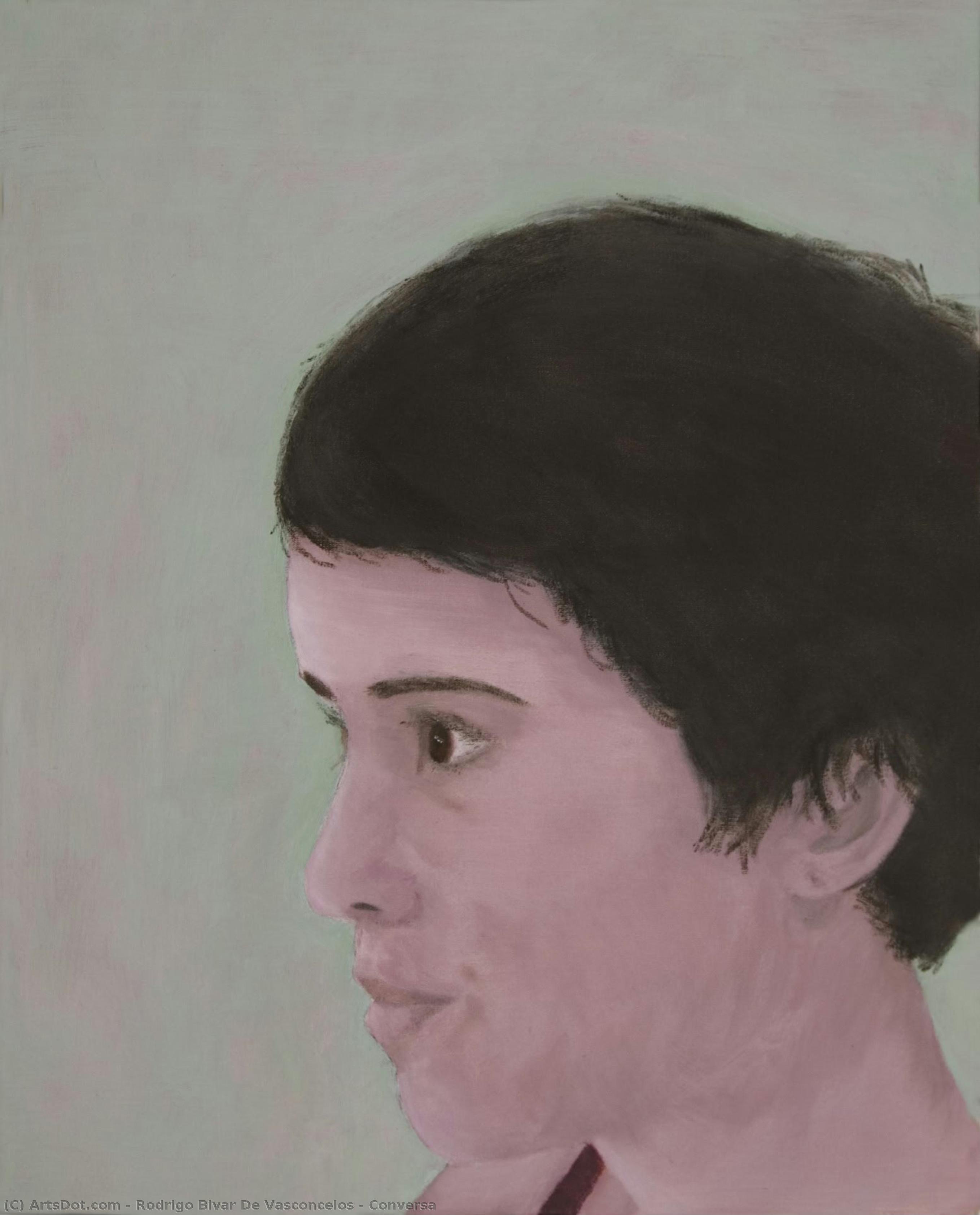
이 페이지에 표시된 작품은 저작권법의 보호를 받으며, 이에 따라 동일한 복제품을 제작하거나 판매하는 것은 법으로 금지되어 있습니다. 이러한 권리 보호는 다음과 같은 국제 협약에 따라 시행됩니다. 베른 협약 또한 다음에서 명시하는 법률을 포함한 국내법에 의해 보호됩니다. 미국 저작권법 제17조.
이 방식은 저작권 보호를 받는 예술 작품을 복제하거나 그대로 재현하는 것이 아니기에 저작권 규정을 완벽히 준수합니다. 대신, 이는 창의적인 재해석의 과정을 거칩니다. 즉, 원작에서 영감을 받되 원작과 동일하지 않은 새로운 회화 작품을 의미합니다.
빠른 제작과 다양한 마감 옵션을 선택할 수 있는 박물관 수준의 지클레이 및 캔버스 프린트. ( 수작업 채색 복제본 주문하기 디지털 이미지 판매 채널로 전환)
작품의 원본 비율을 그대로 유지하는 프리셋 사이즈 중에서 선택해 보세요.

액자나 벽면 크기에 맞춰 필요한 가로와 세로 길이를 입력해 주세요. 프린트는 원본 이미지보다 크게 제작할 수 없으며 오직 자르는 것만 가능하므로, 비율이 다른 사이즈를 선택할 경우 이미지의 일부가 잘려 나갈 수 있습니다. 인쇄 작업에 들어가기 전, 최종 확인을 위해 디지털 목업을 보내드립니다. 이 페이지에 표시된 이미지는 실제 잘리는 영역을 나타내지 않으며, 오직 목업을 통해서만 정확한 확인이 가능합니다.
Conversa
복제본 규격
Born in Lisbon, Portugal, in 1965, Rodrigo Bivar de Vasconcelos has cultivated a career defined by a profound dialogue between form and feeling. His artistic journey began within the hallowed halls of the Faculty of Fine Arts at Universidade Lisboa, an environment that provided him with a rigorous foundation in painting, drawing, and sculpture. This multidisciplinary training allowed Bivar to develop a visual language that is as much about the physical texture of the medium as it is about the ephemeral nature of thought. Throughout his development, he has demonstrated a rare ability to balance meticulous craftsmanship with a spirit of expressive experimentation, creating works that invite the viewer into a deeply contemplative space.
The early sensibilities of Bivar were significantly shaped by the giants of modernism, particularly the surrealist whimsy of Joan Miró and the raw, gestural energy of Willem de Kooning. These influences are palpable in his ability to navigate the boundary between the subconscious and the tangible. His early work often leaned toward the figurative, utilizing photographic references to anchor his compositions. However, as his career progressed, Bivar underwent a transformative "abstract raid," a period where he intentionally abandoned established systems to explore the purity of color and shape. This transition was not merely an aesthetic shift but a philosophical one, moving away from the representation of external reality toward an exploration of internal, emotional landscapes.
Bivar’s technique is characterized by a sophisticated manipulation of light and materiality. In his more recent abstract explorations, he has embraced a unique method of paint preparation, incorporating egg yolk into his oils to achieve a heightened transparency and an expanded luminous range. To temper the brilliance of these colors, he often utilizes beeswax, which removes excess shine and lends a matte, organic quality to the surface. This careful layering creates a sense of depth that mirrors his thematic preoccupations with memory and the passage of time.
Much of his recent inspiration can be traced to the architectural textures of the Lapa neighborhood in São Paulo, where he maintains his studio. The decay of walls, the geometry of doors, and the rhythmic patterns of windows in this historic district serve as a catalyst for his compositions. In these works, Bivar translates urban residue into abstract motifs—fragmented figures and geometric shapes that seem to drift across the canvas. His art seeks to counteract the rapid pace of modern perception with a deliberate slowness, forcing the viewer to linger on the subtle imperfections and asymmetrical passages that define his oeuvre.
The significance of Rodrigo Bivar’s work lies in its ability to engage the viewer in a silent, profound conversation about the human experience. His exhibitions have traveled far beyond the borders of Portugal, reaching prestigious galleries in Spain, France, and the United States, including notable presentations in New York City’s Chelsea district. Whether through the expansive color fields showcased at the Museu Nacional de Arte Contemporânea – Serralves or his more intimate, symbolic sculptures, Bivar continues to push the boundaries of contemporary art.
His achievements are marked by a consistent commitment to exploring the following themes:
Ultimately, Bivar stands as a pivotal figure in contemporary Portuguese art, an artist whose work serves as a bridge between the structured traditions of the past and the spontaneous, abstract possibilities of the future.

1965 - , Portugal

 실제 크기로 보기
 보내기
보내기 공유하기
공유하기
 상세 보기
상세 보기 가이드 보기

 이미지 다운로드
 유사 작품 더 보기
 X-레이
X-레이 슬라이드 쇼 보기
 통계 정보
통계 정보

 상세 보기
상세 보기






































 유리 옵션은 110cm 미만 크기에서만 선택 가능합니다.


