
 Oil On CanvasWallArtLyrical Abstraction
 1949Modern
 77.0 x 55.0 cm
 Galleria d'Arte Moderna Achille Forti
원하는 크기와 액자로 주문 제작되는, 작가들이 직접 캔버스에 손으로 그린 유화 작품입니다. ( 프린트 판매로 전환 디지털 이미지로 전환)





























작품의 원본 비율을 유지하는 미리 설정된 크기 중에서 선택하세요.

특정 프레임이나 공간에 맞도록 직접 크기를 입력할 수 있습니다. 선택하신 크기가 원본 이미지의 비율과 일치하지 않는 경우, 작품을 자르거나 추가적인 손으로 그린 요소를 사용하여 그림을 확장합니다. 제작 시작 전 승인을 위해 디지털 목업을 보내드립니다.
화면 미리 보기는 실제 자르기 또는 확장을 반영하지 않습니다. 최종 구성은 목업을 통해서만 정확하게 확인하실 수 있습니다.
맞춤 크기 제작도 가능하지만, 원본 비율을 유지하기 위해 사전 정의된 목록에서 크기를 선택하시는 것을 권장합니다.

Trinité sur Mer
복제본 크기
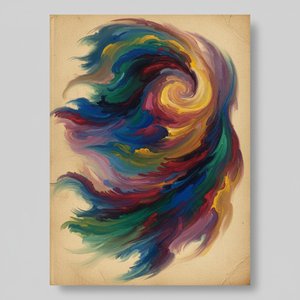
In the quiet, salt-sprayed atmosphere of the Breton coast during the late 1940s, Renato Birolli captured a moment of profound serenity and rhythmic vitality in his masterpiece, Trinité sur Mer. This evocative oil on canvas serves as a window into a period where the artist sought refuge from the political upheavals of post-war Europe, finding instead a sanctuary of light and form. The painting is not merely a depiction of a coastal scene but a lyrical exploration of movement and texture. As the eye wanders across the 77 x 55 cm surface, one is immediately struck by the dynamic interplay between the central figures and their environment. Birolli masterfully orchestrates a composition where two primary figures appear to engage in a silent, almost choreographed performance, their presence anchored by the subtle inclusion of everyday objects like bowls that ground the ethereal atmosphere in a sense of tangible reality.
The technique employed in Trinité sur Mer reveals Birolli’s evolution from the rigid geometries of Cubism toward a more fluid, emotive abstraction. The brushwork is rich and tactile, creating a surface that feels alive with the energy of the Atlantic breeze. Through a sophisticated layering of pigments, the artist achieves a depth that invites the viewer to linger. The background is a mesmerizing tapestry of patterns and shifting hues, where the distinction between sea, sky, and land begins to dissolve into a dreamlike state. This blurring of boundaries is a hallmark of his lyrical style, allowing the colors to bleed into one another with a poetic grace that suggests the infinite nature of the ocean itself.
For the discerning collector or interior designer, this artwork offers much more than visual beauty; it provides an emotional anchor for any sophisticated space. The painting carries a profound sense of nostalgia and peace, making it an ideal centerpiece for rooms designed for contemplation and elegance. Its palette—a complex arrangement of earthy tones balanced by luminous highlights—complements both contemporary minimalist settings and more traditional, classical interiors. To possess a reproduction of such a significant work is to bring a piece of mid-century Italian modernism into the home, offering a constant source of inspiration through its celebration of light, life, and the enduring spirit of the French coastline.

Renato Birolli was an artist whose brushstrokes served as a bridge between the rigid structures of the early twentieth century and the fluid, emotive freedom of post-war abstraction. Born in 1905 to a family of industrial workers in Verona, his upbringing instilled in him a pragmatic resilience that would later anchor his more ethereal artistic explorations. His journey was never merely an aesthetic one; it was deeply intertwined with the turbulent political currents of his era. As he moved to Milan in 1923, Birolli became part of a vibrant avant-garde circle, collaborating with fellow visionaries like Renato Guttuso and Giacomo Manzù. This period was marked by a rebellious spirit, as he sought to dismantle the dominant cultural orders of Fascist Italy, even facing arrest for his political opposition to the regime.
The evolution of Birolli’s style is a fascinating study in artistic metamorphosis. His early years were defined by the intellectual rigor of Cubism and the kinetic energy of Futurism. Drawing inspiration from the fractured perspectives of Picasso and Braque, he mastered the art of geometric deconstruction. However, by 1937, a profound shift occurred as he embraced the dreamlike, subconscious realms of Surrealism. This era, characterized by his involvement with the Corrente di Vita movement, saw him exploring automatism and imagery that reflected the deep-seated anxieties of a world on the brink of war. His art became a vessel for both political resistance and psychological depth, capturing the tension between the tangible reality of conflict and the intangible whispers of the human psyche.
The conclusion of World War II brought about perhaps the most dramatic chapter in Birolli’s career. Relocating to Paris in 1947, he entered a sanctuary of light and color that would fundamentally alter his visual language. In the shadow of masters like Henri Matisse and Pablo Picasso, Birollical moved away from the austere geometries of his youth toward a more expansive, lyrical abstraction. This period was marked by a newfound softness, where the boundaries between sea, sky, and land began to dissolve into a poetic haze. His palette grew more vibrant, utilizing expressive color to evoke atmosphere rather than mere description.
His later works, such as the mesmerizing Legend Of The Sea or the serene Trinité sur Mer, exemplify this mastery of movement and texture. In these pieces, one can observe:
Birolli’s legacy remains a powerful testament to the resilience of the human spirit and the transformative power of art. From his monumental frescoes depicting the Battle of Ortona to his quiet, salt-sprayed coastal scenes, he successfully navigated the transition from the heavy weight of history to the weightless beauty of abstraction. He left behind a body of work that continues to resonate, reminding us that even amidst the most profound political and social upheavals, there exists a sanctuary of light, form, and enduring grace.

1905 - 1959

Discover the transformative power of premium abstract oil paintings. WahooArt offers bespoke, hand-painted masterpieces and expert art consultation to elevate luxury interiors with unmatched craftsmanship, authenticity, and global delivery.

Discover the profound allure of oil on canvas. Explore the mastery of impasto textures, the science of pigment longevity, and expert guides to selecting museum-quality reproductions that elevate your collection with timeless elegance and tactile depth.
Explore the profound beauty of Lyrical Abstraction. Discover how master artists use color, flow, and impasto texture to evoke deep emotion, offering sophisticated insights for discerning art collectors seeking to enrich their collections with evocative, modern masterpieces.


 미리보기
미리보기
 공유하기
공유하기 공유하기
공유하기
 상세 정보
상세 정보 가이드 보기

 다운로드
다운로드
 유사 작품
유사 작품 X-레이
X-레이 슬라이드 쇼
 통계 정보
통계 정보 더 보기
더 보기









 유리 옵션은 110cm 미만 크기에서만 선택 가능합니다.


