































작품의 원본 비율을 유지하는 미리 설정된 크기 중에서 선택하세요.

특정 프레임이나 공간에 맞도록 직접 크기를 입력할 수 있습니다. 선택하신 크기가 원본 이미지의 비율과 일치하지 않는 경우, 작품을 자르거나 추가적인 손으로 그린 요소를 사용하여 그림을 확장합니다. 제작 시작 전 승인을 위해 디지털 목업을 보내드립니다.
화면 미리 보기는 실제 자르기 또는 확장을 반영하지 않습니다. 최종 구성은 목업을 통해서만 정확하게 확인하실 수 있습니다.
맞춤 크기 제작도 가능하지만, 원본 비율을 유지하기 위해 사전 정의된 목록에서 크기를 선택하시는 것을 권장합니다.

Self portrait, panel
복제본 크기
Rembrandt van Rijn's “Self-Portrait,” painted in 1629, isn’t merely a depiction of an artist; it’s a profound exploration of introspection and the very nature of artistic creation. Executed during a pivotal period in his career – a time when he was establishing himself as a professional painter – this work transcends simple portraiture to become a deeply personal statement. The painting immediately draws the viewer in with its masterful use of chiaroscuro, the dramatic interplay of light and shadow that is arguably Rembrandt’s signature technique. Notice how the majority of his face remains shrouded in darkness, creating an aura of mystery and suggesting a hidden depth within the artist himself. The subtle illumination on his right cheek, however, acts as a beacon, inviting us to contemplate his gaze – a gaze both direct and intensely focused.
Rembrandt’s choice of attire—a simple white collar against a dark background—is deliberate. It speaks to a sense of humility and perhaps even vulnerability. He isn't presenting an idealized image of wealth or status, but rather offering a glimpse into his inner world. The brushstrokes themselves are remarkably loose and expressive, characteristic of the artist’s evolving style at this time. He employs a technique known as ‘impasto,’ layering paint thickly to create texture and visual interest – particularly evident in the curls of his hair, which seem almost sculpted onto the canvas.
This self-portrait was painted when Rembrandt was just twenty-three years old, a remarkably young age for an artist seeking recognition. Leiden, where he began his artistic journey, was a vibrant hub of creativity during the Dutch Golden Age, but securing commissions and establishing a reputation proved challenging. His early apprenticeship with Pieter Lastman in Amsterdam exposed him to the dramatic conventions of Baroque painting – dynamic compositions filled with historical and biblical narratives – but Rembrandt quickly sought to forge his own path. This self-portrait reflects that ambition: it’s not a polished, finished product intended for immediate sale, but rather an experiment, a study in light and shadow, and a preliminary exploration of his artistic identity.
The background, featuring a wall adorned with paintings, subtly alludes to Rembrandt's own profession. It’s a visual reminder of the world he inhabits – a world of art, beauty, and creative endeavor. The inclusion of other artworks suggests a dialogue between the artist and his craft, hinting at the influence of past masters while simultaneously asserting his own unique vision.
The most compelling aspect of this self-portrait lies in its emotional resonance. Rembrandt’s intense gaze – seemingly directed directly at the viewer – is both unsettling and captivating. It conveys a sense of profound contemplation, perhaps even melancholy. Some art historians interpret the averted eyes as a reflection of the artist's struggles with poverty and insecurity during this early period of his career. The slight parting of his lips suggests an unspoken thought, a moment of introspection that invites us to share in his inner world.
The two circles painted on his forehead are a particularly intriguing detail. Their purpose remains debated – some believe they represent the sun and moon, symbolizing the duality of life and death; others suggest they’re simply an artistic experiment with light and shadow. Regardless of their precise meaning, they add another layer of complexity to this already rich and layered portrait.
WahooArt offers meticulously hand-painted reproductions of Rembrandt's “Self-Portrait,” capturing the essence of his groundbreaking technique and emotional depth. Our skilled artists recreate the chiaroscuro, the texture of the brushstrokes, and the subtle nuances of Rembrandt’s gaze with unparalleled accuracy. Whether you are an art enthusiast, a collector seeking to expand your collection, or simply someone looking for a stunning piece of artwork to enhance your home décor, our reproduction provides a faithful representation of this iconic masterpiece. Experience the power and beauty of Rembrandt's “Self-Portrait” – a timeless testament to the enduring legacy of one of history’s greatest artists.


1606 - 1669 , 네덜란드
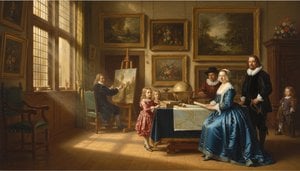
Embark on a journey through the Dutch Golden Age. Discover how masters like Rembrandt and Vermeer used chiaroscuro to manipulate light and shadow, creating timeless depth and spiritual resonance in art history's most captivating masterpieces.

Explore the dramatic mastery of Dutch Baroque art. Discover how chiaroscuro and light define the Golden Age, from Rembrandt's shadows to maritime grandeur. Perfect for classic art enthusiasts seeking deep historical insight and inspiration.

Explore the dramatic mastery of the Dutch Baroque era. Discover how masters like Rembrandt used chiaroscuro to manipulate light and shadow, creating profound emotional depth and timeless beauty in art history's most captivating masterpieces.

Embark on a sophisticated journey through the Dutch Golden Age. Unveil the dramatic brilliance of Rembrandt’s chiaroscuro and the expressive landscapes of 17th-century masters in this authoritative exploration of light, shadow, and enduring artistic legacy.


 미리보기
미리보기
 프린트 구매
 공유하기
공유하기 공유하기
공유하기
 상세 정보
상세 정보

 다운로드
다운로드
 유사 작품
유사 작품 X-레이
X-레이 슬라이드 쇼

 더 보기
더 보기









 유리 옵션은 110cm 미만 크기에서만 선택 가능합니다.


![Self-portrait [1640] — 렘브란트, Baroque](/media/artworks/images-thumb/4d/2c/4d2c017674d338c266f0d6b5df87d248.jpg)


