
x


빠른 제작과 다양한 마감 옵션을 제공하는 박물관 품질의 지클레이 또는 캔버스 프린트. ( 손으로 그린 그림 구매 이미지 구매)





























작품의 원본 비율을 유지하는 미리 설정된 크기 중에서 선택하세요.

특정 프레임이나 공간에 맞춰 직접 치수를 입력하실 수 있습니다. 선택하신 사이즈가 원본 이미지의 비율과 일치하지 않을 경우, 작품을 크롭(자르기)하거나 이미지를 대칭 또는 단색 채우기로 확장하여 제작합니다. 제작 시작 전, 최종 확인을 위해 디지털 목업이 전송됩니다.
화면상의 미리보기는 실제 크롭이나 확장 상태를 반영하지 않으므로, 최종 구도는 오직 목업을 통해서만 정확하게 확인하실 수 있습니다.
맞춤 사이즈 제작도 가능하지만, 원본 비율을 유지하기 위해서는 사전 정의된 목록에서 치수를 선택하시는 것을 권장합니다.

Jacob with Laban
복제본 크기
Rembrandt van Rijn's "Jacob with Laban," painted circa 1640-1642, isn’t merely a depiction of two men conversing; it’s a masterclass in psychological observation and the subtle dance between deception and trust. This remarkable work, now housed within the collection of WahooArt, offers a profound glimpse into the complexities of human interaction – a window into the anxieties and strategies that underpin our relationships. The painting immediately draws the eye with its carefully constructed composition: three figures occupy a modest outdoor setting, bathed in Rembrandt’s signature dramatic lighting. The scene unfolds against a nondescript building, suggesting a public space yet simultaneously isolating the subjects within their private negotiation.
Rembrandt's genius lies not just in his technical skill – evident in the masterful rendering of textures, from the rough fabric of the turban to the weathered faces of Jacob and Laban – but also in his ability to convey unspoken emotions. The central focus is undoubtedly on Jacob, a young man with an air of calculated confidence, subtly gesturing towards Laban, who appears older, more cautious, and perhaps slightly bewildered. The dog, positioned strategically near Laban’s feet, adds another layer of intrigue – a silent witness to the unfolding drama, hinting at loyalty or perhaps even complicity.
“Jacob with Laban” is based on a pivotal episode from the Book of Genesis. Jacob, disguised as his blind brother Esau, deceives Isaac into believing he’s receiving a blessing intended for Esau. Laban, Isaac's servant, becomes an unwitting participant in this elaborate scheme, ultimately benefiting from Jacob’s cunning. Rembrandt doesn’t offer a literal transcription of the biblical story; instead, he captures the *essence* of the encounter – the tension, the strategic maneuvering, and the underlying sense of moral ambiguity. The painting avoids explicit depiction of the deception itself, focusing instead on the immediate aftermath, the moment after the trickery has been played.
The historical context is crucial to understanding the work’s resonance. Rembrandt painted this during a period of significant social and economic upheaval in Amsterdam – a time of burgeoning wealth alongside widespread poverty and political instability. The themes of deception, loyalty, and the pursuit of advantage were particularly relevant within this environment. Furthermore, Rembrandt's own life was marked by financial struggles and personal challenges, adding another layer of complexity to his artistic explorations of human nature.
As with all of Rembrandt’s most celebrated works, “Jacob with Laban” is defined by his revolutionary use of *chiaroscuro* – the dramatic interplay of light and shadow. Rembrandt doesn't simply illuminate the scene; he sculpts it with light, creating a palpable sense of depth and atmosphere. The strong contrasts between dark shadows and bright highlights draw attention to key figures and gestures, while simultaneously obscuring details and fostering an air of mystery. Notice how the light falls across Jacob’s face, highlighting his youthful confidence, while Laban remains partially shrouded in shadow, suggesting vulnerability and perhaps a degree of suspicion.
The artist's technique is particularly noteworthy: he employs loose brushstrokes and a textured surface to create a sense of immediacy and spontaneity. This approach contrasts sharply with the smoother, more polished styles favored by many of his contemporaries, contributing significantly to the painting’s raw emotional power. Rembrandt’s use of impasto – applying paint thickly to the canvas – further enhances the tactile quality of the work, inviting viewers to engage with its surface on a visceral level.
Ultimately, “Jacob with Laban” transcends its biblical subject matter to become a profound meditation on human psychology. Rembrandt doesn’t offer easy answers or moral judgments; instead, he presents us with a complex and ambiguous portrait of two men caught in a web of deception and self-interest. The painting invites viewers to contemplate the motivations behind their actions, the nature of trust, and the enduring power of manipulation. It's a work that rewards repeated viewing, revealing new layers of meaning with each encounter. A reproduction by WahooArt allows you to bring this captivating masterpiece into your home or office, experiencing its timeless beauty and psychological depth firsthand.


1606 - 1669 , 네덜란드
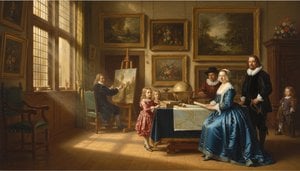
Embark on a journey through the Dutch Golden Age. Discover how masters like Rembrandt and Vermeer used chiaroscuro to manipulate light and shadow, creating timeless depth and spiritual resonance in art history's most captivating masterpieces.

Embark on a sophisticated journey through the Dutch Golden Age. Unveil the dramatic brilliance of Rembrandt’s chiaroscuro and the expressive landscapes of 17th-century masters in this authoritative exploration of light, shadow, and enduring artistic legacy.

Explore the profound mastery of light and shadow in Dutch Golden Age paintings. From Rembrandt's dramatic chiaroscuro to serene landscapes, discover the techniques that defined an era of art history and learn how these timeless masterpieces are preserved for modern collectors.


최신 미술 뉴스, 특별 혜택 및 인테리어 아이디어를 가장 먼저 만나보세요.
프로젝트에 대해 알려주시면 저희 미술 전문가들이 맞춤형 아트 제안 3가지를 전달해 드립니다.
당신만을 위한 맞춤형 옵션 3가지를 무료로 추천해 드립니다!


 미리보기
미리보기
 공유하기
공유하기 공유하기
공유하기
 상세 정보
상세 정보

 다운로드
다운로드
 유사 작품
유사 작품 X-레이
X-레이 슬라이드 쇼
 더 보기
더 보기









 유리 옵션은 110cm 미만 크기에서만 선택 가능합니다.


