Pyotr Konchalovsky's "Oranges": A Study in Impressionistic Still Life
- Artist: Pyotr Konchalovsky
- Year: 1908
- Dimensions: 68 x 72 cm
- Style: Post-Impressionism, influenced by Fauvism
Subject and Composition
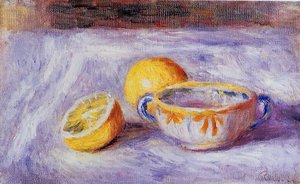
“Oranges,” painted in 1908 by Pyotr Konchalovsky, is a captivating still life that exemplifies the artist's embrace of Impressionistic techniques while subtly incorporating elements of Fauvism. The painting depicts a simple yet elegant arrangement of fruit on a table – two vibrant oranges and one lemon are the primary subjects. These fruits are positioned with deliberate care; the oranges occupy the central space, drawing the viewer’s eye, while the lemon is slightly offset, creating visual balance. A cup sits near the left edge, adding another layer to the composition's depth. The background remains relatively undefined, allowing the focus to remain squarely on the luminous fruits.
Style and Technique
Konchalovsky’s style in "Oranges" is characterized by bold brushstrokes and a vibrant color palette—hallmarks of Post-Impressionism. He moves beyond mere representation, employing thick, visible strokes that imbue the painting with a sense of energy and immediacy. The oranges are rendered with a rich, saturated orange hue, while the lemon provides a contrasting burst of yellow. It is believed Konchalovsky mixed his paints with clay to achieve this thickness and vibrancy. This technique creates texture and depth, giving the fruit a tangible quality. The influence of Fauvism—known for its expressive use of color—is evident in the painting’s bold and unconventional color choices.
Historical Context: Jack of Diamonds and Artistic Innovation
“Oranges” was created during a period of significant artistic ferment in Russia. Konchalovsky was a founding member of "Jack of Diamonds," an avant-garde group that challenged traditional academic art styles. This collective sought to break free from established norms, embracing influences from French Post-Impressionism and Fauvism. The painting reflects this spirit of innovation, rejecting grand historical narratives in favor of everyday subjects rendered with expressive freedom. The Jack of Diamonds aimed to introduce modern artistic trends to Russia, and "Oranges" stands as a testament to their efforts.
Symbolism and Emotional Impact
While seemingly simple, “Oranges” carries subtle symbolic weight. The fruit itself can be interpreted as symbols of abundance, vitality, and warmth. The vibrant colors evoke feelings of joy and optimism. Konchalovsky’s skillful rendering of light and shadow creates a sense of realism while simultaneously conveying an emotional resonance. The painting's overall effect is one of quiet contemplation—a celebration of the beauty found in ordinary objects. It invites viewers to appreciate the simple pleasures of life, rendered with artistic skill and passion.
질의응답
표트르 콘찰로프스키의 "Oranges"의 제작 연도와 화풍은 무엇인가요?
"Oranges"은(는) 1908년 Post-Impressionism 사조의 작품으로 제작되었습니다. 제작 연도와 미술 사조는 미술사적 맥락에서 이 작품의 위치를 확고히 해줍니다.
표트르 콘찰로프스키은(는) 몇 세에 "Oranges"을(를) 제작했을까요?
표트르 콘찰로프스키은(는) 32세에 "Oranges"을(를) 제작했습니다. 작가는 1876년에 태어났으며, 이 작품의 제작 연도는 1908년입니다.
표트르 콘찰로프스키의 "Oranges"은(는) 무엇을 묘사하고 있으며, 어떤 분위기를 자아내나요?
표트르 콘찰로프스키의 "Oranges"은(는) Calm한 분위기 속에서 still life, fruit, oranges, lemon, table, vase, composition을(를) 묘사합니다. 작품의 주제와 분위기가 어우러져 하나의 완성된 세계를 보여줍니다.