
 Acrylic On CanvasWallArtNeo-Plasticism
 108.0 x 86.0 cm
빠른 제작과 다양한 마감 옵션을 제공하는 박물관 품질의 지클레이 또는 캔버스 프린트. ( 손으로 그린 그림 구매 디지털 이미지로 전환)





























작품의 원본 비율을 유지하는 미리 설정된 크기 중에서 선택하세요.

특정 프레임이나 공간에 맞춰 직접 치수를 입력하실 수 있습니다. 선택하신 사이즈가 원본 이미지의 비율과 일치하지 않을 경우, 작품을 크롭(자르기)하거나 이미지를 대칭 또는 단색 채우기로 확장하여 제작합니다. 제작 시작 전, 최종 확인을 위해 디지털 목업이 전송됩니다.
화면상의 미리보기는 실제 크롭이나 확장 상태를 반영하지 않으므로, 최종 구도는 오직 목업을 통해서만 정확하게 확인하실 수 있습니다.
맞춤 사이즈 제작도 가능하지만, 원본 비율을 유지하기 위해서는 사전 정의된 목록에서 치수를 선택하시는 것을 권장합니다.

On the Lappenbrink
복제본 크기
Piet Mondrian's "On the Lappenbrink," painted in 1899, offers a poignant glimpse into the artist’s formative years and his nascent artistic explorations. Far removed from the stark geometric abstractions that would define his mature style, this work embodies a distinctly Post-Impressionist sensibility, rooted firmly in the landscapes of his Dutch homeland. The scene depicts a quiet moment along the Lappenbrink, a small stream near Winterswijk, a region largely untouched by grand artistic narratives at the time. Rather than striving for photographic realism, Mondrian captures an atmosphere—a sense of serene stillness and understated beauty – reminiscent of the Hague School painters who preceded him, alongside echoes of Dutch Impressionism’s focus on light and color. Note the careful observation of natural forms: the gently sloping bank, the reflections shimmering in the water, and the subtle variations in tone that suggest a fleeting moment captured on canvas. This early work reveals a young artist diligently studying nature, mastering technique, yet already hinting at a desire to distill its essence – a yearning that would ultimately lead him away from direct representation.
While “On the Lappenbrink” showcases Mondrian's early technical skill and his engagement with naturalistic painting, it also foreshadows a dramatic shift in his artistic trajectory. The influence of Pointillism and Fauvism is evident in the vibrant yet subdued palette – primarily reds, yellows, and blues – and the loose brushwork. However, these stylistic influences served as stepping stones toward his revolutionary concept of Neo-Plasticism. Mondrian’s increasing dissatisfaction with merely mirroring the world around him fueled a relentless pursuit of simplification. He sought to express fundamental geometric forms—straight lines, right angles, and primary colors—as the building blocks of a universal visual language, believing they could represent the underlying order of the cosmos. This painting represents an important stage in this evolution, demonstrating his initial experiments with reducing complex scenes to their essential elements.
Beyond its technical merits, “On the Lappenbrink” carries a subtle layer of symbolic meaning. The scene depicts an ordinary moment in rural life – a woman seated on the bank of a stream, seemingly lost in contemplation. Her posture and expression invite speculation: is she waiting for someone? Is she simply enjoying the tranquility of her surroundings? This ambiguity adds to the painting’s quiet power, transforming a commonplace vista into a meditation on human experience. The inclusion of several figures in the background – men walking, children playing – further enriches the scene, suggesting a community connected to its landscape. Mondrian's choice to portray this specific location—a relatively unvisited corner of the Netherlands—underscores his desire to capture authentic moments and experiences, moving beyond idealized representations of nature.
“On the Lappenbrink” is not merely a charming depiction of a Dutch landscape; it’s a crucial link in the chain that led to Mondrian's groundbreaking contributions to modern art. It represents a pivotal moment in his artistic development, demonstrating his early experimentation with abstraction and foreshadowing the principles of Neo-Plasticism. This work exemplifies his initial steps toward reducing visual complexity to its most essential elements – a journey culminating in the iconic compositions of *Composition with Red, Yellow and Blue* and other works that profoundly influenced 20th-century art and design. Today, “On the Lappenbrink” stands as a testament to Mondrian’s artistic vision—a beautiful reminder of his roots and a vital precursor to his revolutionary style.


1872 - 1944 , 네덜란드
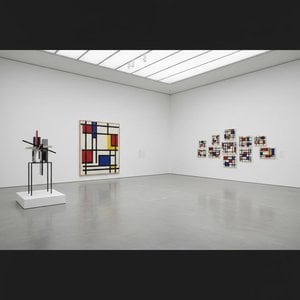
Explore the profound essence of Neoplasticism. Discover how Piet Mondrian and De Stijl masters used pure color and geometric form to redefine modern art. An essential guide for collectors seeking to understand the enduring power of abstract harmony and universal order.

Explore the profound elegance of De Stijl. Discover how Piet Mondrian and the masters of Neoplasticism utilized geometric harmony and primary colors to redefine modern abstraction. An authoritative guide for the discerning collector seeking timeless, structured beauty.


 미리보기
미리보기
 공유하기
공유하기 공유하기
공유하기
 상세 정보
상세 정보 가이드 보기

 다운로드
다운로드
 유사 작품
유사 작품 X-레이
X-레이 슬라이드 쇼
 통계 정보
통계 정보 더 보기
더 보기









 유리 옵션은 110cm 미만 크기에서만 선택 가능합니다.


