

작가가 직접 캔버스에 손으로 그린 유화 작품으로, 원하는 크기와 액자로 맞춤 제작해 드립니다. ( 프린트 판매로 전환 디지털 이미지 판매 채널로 전환)





























작품의 원본 비율을 그대로 유지하는 프리셋 사이즈 중에서 선택해 보세요.

특정 프레임이나 공간에 맞춰 원하는 크기를 직접 입력하실 수 있습니다. 선택하신 크기가 원본 이미지의 비율과 일치하지 않을 경우, 작품을 자르거나 추가적인 수작업 요소를 더해 그림을 확장하여 제작합니다. 제작 시작 전, 최종 확인을 위해 디지털 목업을 보내드립니다.
화면상의 미리 보기는 실제 크롭(자르기)이나 확장된 상태를 완벽히 반영하지 않을 수 있습니다. 최종 구도는 오직 목업을 통해서만 정확하게 확인하실 수 있습니다.
맞춤 크기 제작도 가능하지만, 원본의 비율을 그대로 유지하기 위해서는 미리 정의된 목록에서 크기를 선택하시는 것을 권장합니다.
Composition
복제본 규격
Piet Mondrian’s “Composition,” produced around 1925, stands as a cornerstone of Neo-Plasticism—a movement that fundamentally reshaped the landscape of early twentieth-century art. More than just aesthetically pleasing, it embodies a profound philosophical assertion: that abstraction represents a more truthful reflection of reality than representational imagery.
As Dr Stephanie Chadwick eloquently explains in Smarthistory (Smarthistory), Mondrian believed that pure abstract art emancipated itself from the constraints of naturalistic depiction, liberating it to explore universal harmonies and principles.
Considered alongside references like *The Red Mill*, Mondrian’s formative landscapes reveal a young artist diligently studying nature—a meticulous process aimed at mastering technique. Yet, even amidst this careful observation, he harbored an insistent desire for simplification. He wasn't merely replicating what he saw; he sought to distill its essence into its purest form.
The painting itself is deceptively simple. A grid of horizontal and vertical lines dominates the canvas—a deliberate rejection of curvilinear forms favored by Impressionism and Cubism. Within this geometric framework reside squares of primary colors – red, blue, and yellow – interspersed with rectangles of black and white.
The meticulous execution is characteristic of Mondrian’s approach. Each square is precisely delineated, its edges sharply defined, conveying a sense of stability and order. The color palette—though restrained—is carefully considered; the hues are chosen to create visual balance and contribute to the overall meditative atmosphere.
“Composition” emerged during a period of intense intellectual ferment in Europe, fueled by breakthroughs in physics (Einstein’s theory of relativity) and psychology. Artists like Mondrian were grappling with questions about perception and representation, rejecting traditional artistic conventions in favor of new expressive languages.
The painting aligns perfectly with the tenets of Neo-Plasticism—a movement championed by artists including Kazimir Malevich and Theo van Doesburg. These pioneers sought to create a universal aesthetic language based on geometric abstraction, mirroring the underlying structure of the cosmos.
Mondrian’s use of color isn't arbitrary; it carries symbolic significance rooted in his spiritual beliefs. He drew inspiration from Zendavesta—the Zoroastrian sacred text—which posits that the universe is comprised of four elemental forces: fire, air, water, and earth.
The squares represent these elements, while the horizontal and vertical lines symbolize the opposing forces of heaven and earth. By eliminating extraneous details and reducing forms to their fundamental geometric shapes, Mondrian aimed to transcend subjective experience and capture a glimpse of objective reality—a quest for spiritual harmony expressed through visual language.
Despite its austere appearance, “Composition” possesses an undeniable emotional resonance. The balanced grid and harmonious color scheme evoke feelings of serenity and contemplation. It invites viewers to engage in a dialogue with the artwork itself—to consider its underlying principles and appreciate its subtle beauty.
As showcased at The Metropolitan Museum of Art (The Metropolitan Museum of Art), this piece exemplifies the movement’s ambition to communicate profound ideas through visual form, demonstrating how Mondrian successfully translated philosophical concepts into a powerfully evocative aesthetic experience.
피에트 몬드리안의 "Composition"은(는) Calm 감성을 전달합니다.
"Composition"은(는) 피에트 몬드리안의 예술적 생애 중 Mature Period 시기에 해당합니다. 이 분류는 해당 작품을 작가의 예술적 발전 과정과 연결해 줍니다.
"Composition"의 슬라이드쇼는 작품의 슬라이드쇼 페이지에서 감상하실 수 있습니다.
피에트 몬드리안의 "Composition"은(는) geometric abstraction, color grid, urban landscape, primary colors, minimalism, balance harmony, early modern art와(과) Minimalist 분위기가 어우러진 작품입니다.
피에트 몬드리안의 "Composition"의 작품 형태(Portrait)와 추천 공간(Living Room)은 이 작품에 기록된 두 가지 배치 정보입니다.
피에트 몬드리안의 "Composition" 작품에 추천하는 공간은 Living Room입니다. 물론 이 제안은 고객님의 인테리어에 맞춰 자유롭게 조정하실 수 있습니다.
"Composition"은(는) 고해상도 디지털 이미지 다운로드로 이용 가능하며, 현재 페이지에서 직접 구매하실 수 있습니다.
피에트 몬드리안의 "Composition"의 전반적인 분위기는 Minimalist입니다. 이 분위기는 작품의 전반적인 공기를 설명합니다.


1872 - 1944 , 네덜란드

Explore the profound elegance of De Stijl. Discover how Piet Mondrian and the masters of Neoplasticism utilized geometric harmony and primary colors to redefine modern abstraction. An authoritative guide for the discerning collector seeking timeless, structured beauty.

Explore the profound evolution of Neo-Abstract art. Discover how bold geometric forms, vibrant chromatic depth, and tactile textures redefine modern expression for the discerning collector seeking sophisticated, high-impact masterpieces for contemporary interiors.
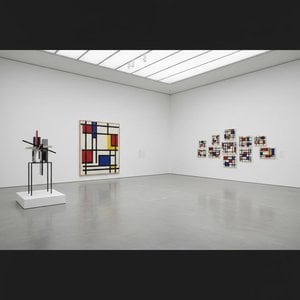
Explore the profound essence of Neoplasticism. Discover how Piet Mondrian and De Stijl masters used pure color and geometric form to redefine modern art. An essential guide for collectors seeking to understand the enduring power of abstract harmony and universal order.

Explore the profound spiritual depth of geometric abstraction. From Malevich's Suprematism to modern masters, our expert guide reveals how pure form and color command presence in fine art collections.

 실제 크기로 보기
 보내기
보내기 공유하기
공유하기
 상세 보기
상세 보기 가이드 보기

 이미지 다운로드
 유사 작품 더 보기
 X-레이
X-레이 슬라이드 쇼 보기
 통계 정보
통계 정보
 상세 보기
상세 보기









 유리 옵션은 110cm 미만 크기에서만 선택 가능합니다.


