

작가가 직접 캔버스에 손으로 그린 유화 작품으로, 원하는 크기와 액자로 맞춤 제작해 드립니다. ( 프린트 판매로 전환 디지털 이미지 판매 채널로 전환)





























작품의 원본 비율을 그대로 유지하는 프리셋 사이즈 중에서 선택해 보세요.

액자나 벽면 크기에 맞춰 필요한 가로와 세로 길이를 입력해 주세요. 본 작품은 수작업으로 제작되므로, 요청하신 비율에 따라 작가가 그림의 가장자리를 조금 더 넓게 그리거나 일부를 조정하여 작업할 수 있습니다. 작업 시작 전, 최종 확인을 위해 디지털 목업 이미지를 보내드립니다. 이 페이지에 표시된 이미지는 실제 결과물과 다를 수 있으며, 오직 목업 이미지만이 정확한 결과물을 보여줍니다.
Composition 1 A
복제본 규격
Piet Mondrian's Composition 1 A is not merely a painting; it is a visual manifesto, a distillation of artistic principles that would come to define an era. Emerging from the tumultuous currents of early 20th-century art, this work embodies the core tenets of Neoplasticism – a style Mondrian believed could express universal harmony through pure abstraction. To gaze upon its stark arrangement of black lines and rectangular planes is to encounter a world stripped bare of representational clutter, leaving only the essential elements of form and color. The painting’s power resides not in what it depicts, but in how it is depicted: a rigorous exploration of balance, tension, and the fundamental building blocks of visual experience.
Mondrian's path to this radical simplicity was far from direct. Born Pieter Cornelis Mondriaan in Amersfoort, Netherlands, he initially trained as a teacher while simultaneously pursuing his artistic passions. His early works reveal a fascination with naturalistic landscapes, echoing the traditions of the Hague School and Dutch Impressionism. However, a restless spirit drove him to experiment – Pointillism, Fauvism – always searching for an authentic visual language. The pivotal moment arrived with his move to Paris in 1912, where exposure to Cubism ignited a transformative process. He began deconstructing forms, dismantling traditional perspective, and gradually reducing his palette. This wasn’t merely stylistic experimentation; it was a philosophical quest. Mondrian sought to transcend the subjective and represent an underlying reality – a spiritual order accessible through pure abstraction.
Composition 1 A is deeply rooted in the principles of De Stijl (The Style), a Dutch artistic movement co-founded by Mondrian and Theo van Doesburg. This group envisioned art as a vehicle for social and spiritual renewal, believing that abstract forms could embody universal values. The painting’s limited palette – primarily black, white, and shades of gray – wasn't arbitrary. It represented a deliberate rejection of emotional expression in favor of clarity and objectivity. The bold, straight black lines aren’t simply outlines; they are dynamic forces creating structure and defining space. The asymmetrical arrangement of the rectangles introduces a subtle tension, preventing the composition from becoming static or predictable. This careful balance between order and dynamism is crucial to the work's enduring appeal. It evokes a sense of calm rationality, yet simultaneously engages the eye with its intricate interplay of shapes.
The impact of Composition 1 A extends far beyond the realm of painting. Mondrian’s Neoplasticism profoundly influenced graphic design, architecture, and fashion throughout the 20th century and continues to inspire contemporary artists today. His emphasis on geometric forms and primary colors became synonymous with modernism itself. The work invites contemplation – a quiet meditation on form, color, and the search for universal harmony. Owning a reproduction of this iconic piece is not simply acquiring an artwork; it’s embracing a legacy of artistic innovation and a vision of a more ordered, balanced world.
피에트 몬드리안의 "Composition 1 A"의 파스텔톤 색조는 성찰적인 분위기와 조화를 이룹니다. 색채는 작품이 감정을 전달하는 중요한 방식 중 하나입니다.
피에트 몬드리안의 "Composition 1 A"은(는) 근대 시대의 작품입니다. 이 시기는 해당 작품의 역사적 배경을 잘 보여줍니다.
피에트 몬드리안의 "Composition 1 A"의 복제본을 미리 보려면 작품의 미리보기 페이지를 열어주세요.

1872 - 1944 , 네덜란드
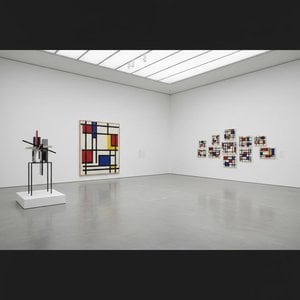
Explore the profound essence of Neoplasticism. Discover how Piet Mondrian and De Stijl masters used pure color and geometric form to redefine modern art. An essential guide for collectors seeking to understand the enduring power of abstract harmony and universal order.

Explore the profound elegance of De Stijl. Discover how Piet Mondrian and the masters of Neoplasticism utilized geometric harmony and primary colors to redefine modern abstraction. An authoritative guide for the discerning collector seeking timeless, structured beauty.

 실제 크기로 보기
 보내기
보내기 공유하기
공유하기
 상세 보기
상세 보기 가이드 보기

 이미지 다운로드
 유사 작품 더 보기
 X-레이
X-레이 슬라이드 쇼 보기
 통계 정보
통계 정보

 상세 보기
상세 보기









 유리 옵션은 110cm 미만 크기에서만 선택 가능합니다.


