

 PencilContemporary Realism
 1931Modern
 25.0 x 40.0 cm
 Shrine of Remembrance
작가가 직접 캔버스에 손으로 그린 유화 작품으로, 원하는 크기와 액자로 맞춤 제작해 드립니다. ( 프린트 판매로 전환 디지털 이미지 판매 채널로 전환)





























작품의 원본 비율을 그대로 유지하는 프리셋 사이즈 중에서 선택해 보세요.

특정 프레임이나 공간에 맞춰 원하는 크기를 직접 입력하실 수 있습니다. 선택하신 크기가 원본 이미지의 비율과 일치하지 않을 경우, 작품을 자르거나 추가적인 수작업 요소를 더해 그림을 확장하여 제작합니다. 제작 시작 전, 최종 확인을 위해 디지털 목업을 보내드립니다.
화면상의 미리 보기는 실제 크롭(자르기)이나 확장된 상태를 완벽히 반영하지 않을 수 있습니다. 최종 구도는 오직 목업을 통해서만 정확하게 확인하실 수 있습니다.
맞춤 크기 제작도 가능하지만, 원본의 비율을 그대로 유지하기 위해서는 미리 정의된 목록에서 크기를 선택하시는 것을 권장합니다.

Shrine under construction
복제본 규격
In the quiet, sepia-toned depths of Philip Martin Hudson’s 1931 sketch, Shrine under construction, we are invited to witness a monumental moment in architectural history. This is not merely a technical drawing; it is a poignant window into the birth of a landmark. The artwork captures the raw, industrious energy of the Shrine of Remembrance during its formative years, where the skeletal framework of scaffolding and the towering presence of cranes dance around the emerging pediment. Through Hudson’s precise hand, the viewer feels the immense weight of the stone and the rhythmic labor of the men—many of them returned soldiers—who were carving a legacy out of the earth. The composition draws the eye upward, following the linear progression from the heavy foundations to the soaring heights of the structure, creating a sense of profound architectural ambition.
The technique employed by Hudson reveals the soul of an artist trained in the discipline of architecture. Utilizing what appears to be the delicate yet decisive medium of pencil or charcoal on paper, he achieves a remarkable depth through the masterful use of hatching and cross-hatching. These fine, intersecting lines do more than define shape; they simulate the gritty texture of quarried stone and the weathered grain of wooden supports. The monochromatic palette, rich in sepia tones, lends the piece an archival, timeless quality, as if we are peering through a veil of history. There is a soft, diffused light that bathes the construction site, casting gentle shadows that lend three-dimensional volume to the geometric blocks and cylindrical cranes, making the entire scene feel tangible and alive.
Beyond its technical brilliance, the artwork resonates with deep symbolic power. It serves as a meditation on permanence, human endeavor, and the process of healing. The construction of the shrine, overseen by architects like Hudson and his contemporaries, represents a society rebuilding itself after the devastation of the Great War. Every stone laid and every beam hoisted is a testament to resilience and the collective will to honor the fallen. For the collector or interior designer, this piece offers more than just aesthetic beauty; it brings an atmosphere of strength, stability, and historical gravity to any space. It is a sophisticated choice for those who appreciate art that tells a story of progress, making it a captivating centerpiece for a gallery, a study, or a refined living area.

To encounter the work of Philip Martin Hudson is to step into a world where the precision of a draftsman meets the soul of a historian. Born in North Sydney in 1910, Hudson was a man whose life was defined by a remarkable duality: the disciplined rigor of a military officer and politician, and the sensitive, observant eye of an artist. Raised by Tom Johnstone Hudson and Edith Grace Dickison, his early years were steeped in an environment that valued meticulousness—a trait that would later become the hallmark of his artistic identity. His education at Melbourne Grammar School provided a classical foundation, yet it was his departure from the study of commerce at the University of Melbourne to serve in the Australian Infantry Force during the Second World War that truly forged his character. Through the harrowing landscapes of the Middle East, New Guinea, and Borneo, Hudson witnessed the raw, transformative power of human endurance, an experience that undoubtedly deepened the emotional resonance found within his later, more tranquil sketches.
The artistry of Hudson is perhaps most profoundly felt in his ability to capture the monumental through the minute. His most celebrated achievement, the 1931 sketch Shrine under construction, stands as a testament to his mastery of realism and architectural nuance. In this piece, we do not merely see a building; we witness a moment frozen in stone and scaffolding. Using what appears to be the delicate yet decisive medium of pencil or charcoal, Hudson employs intricate hatching and cross-hatching to simulate the gritty texture of quarried stone and the weathered grain of wooden supports. The work is bathed in a soft, sepia-toned light that lends an archival, timeless quality to the scene, inviting the viewer to contemplate the rhythmic labor of men—many of them returned soldiers—who were carving a lasting legacy out of the earth. His technique allows the skeletal framework of cranes and scaffolding to dance around the emerging pediment, creating a sense of profound architectural ambition and the heavy, palpable weight of history in the making.
Beyond the quiet intensity of his sketches, Hudson’s life was marked by an unwavering commitment to the structures of society, both literal and political. Following his military service, where he rose to the rank of Major, he transitioned into a successful entrepreneurial career, leading Hudson Industries and the Eno Box Company with the same discipline he applied to his art. This period of leadership naturally flowed into the realm of public service. In 1964, Hudson entered the Victorian Legislative Assembly as a member of the Liberal Party for Toorak. While his political tenure was relatively brief, it was characterized by a sincere dedication to fostering international friendship and community cohesion. His involvement with the Returned Services League, particularly his presidency of the Barwon Heads branch, further underscored his lifelong connection to the veterans of his era, bridging the gap between the lived experience of war and the peaceful reconstruction of a nation.
The historical significance of Philip Martin Hudson lies in this seamless integration of roles. He was not merely an observer of history, but an active participant in its construction—both through the political initiatives he championed and the visual records he left behind. His work serves as a meditation on permanence and human endeavor, capturing the transition from raw materials to enduring monuments. Through his eyes, we see the beauty in the process of building, the dignity in labor, and the profound connection between the individual and the grander architectural and social structures of the twentieth century. His legacy remains etched in the sepia tones of his sketches and the enduring spirit of the Australian landscapes he so lovingly documented.

1910 - 2002 , Australia

Explore the profound beauty of American art history. From the Hudson River School to iconic landscapes, discover a curated journey through the masterpieces that defined a nation's spirit and the enduring legacy of American Romanticism.
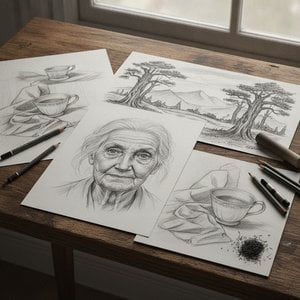
Explore the profound elegance of pencil and charcoal sketching. Discover how masters use line, shadow, and chiaroscuro to capture light and texture, bridging the gap between preparatory studies and timeless fine art masterpieces.

Explore the profound beauty of American Romanticism. Discover how the Hudson River School captured the wild frontier through masterful landscapes, exploring the legacy of legends like Thomas Cole and Asher Durand in this deep dive into art history.

Delve into the breathtaking world of the Hudson River School. Our expert guide explores how 19th-century masters captured the sublime majesty of the American wilderness through Romanticism and unparalleled landscape artistry. A must-read for fine art enthusiasts.

Explore the profound beauty of the sketch. Discover how masters use charcoal and graphite to capture raw emotion, anatomical precision, and fluid movement, bridging the gap between ephemeral marks and eternal oil masterpieces.

 실제 크기로 보기
 보내기
보내기 공유하기
공유하기
 상세 보기
상세 보기 가이드 보기

 이미지 다운로드
 유사 작품 더 보기
 X-레이
X-레이 슬라이드 쇼 보기
 통계 정보
통계 정보 상세 보기
상세 보기









 유리 옵션은 110cm 미만 크기에서만 선택 가능합니다.


