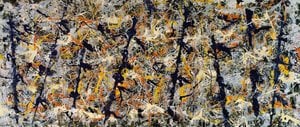
빠른 제작과 다양한 마감 옵션을 선택할 수 있는 박물관 수준의 지클레이 및 캔버스 프린트. ( 수작업 채색 복제본 주문하기 디지털 이미지 판매 채널로 전환)





























작품의 원본 비율을 그대로 유지하는 프리셋 사이즈 중에서 선택해 보세요.

액자나 벽면 크기에 맞춰 필요한 가로와 세로 길이를 입력해 주세요. 프린트는 원본 이미지보다 크게 제작할 수 없으며 오직 자르는 것만 가능하므로, 비율이 다른 사이즈를 선택할 경우 이미지의 일부가 잘려 나갈 수 있습니다. 인쇄 작업에 들어가기 전, 최종 확인을 위해 디지털 목업을 보내드립니다. 이 페이지에 표시된 이미지는 실제 잘리는 영역을 나타내지 않으며, 오직 목업을 통해서만 정확한 확인이 가능합니다.
Figure
복제본 규격
Jackson Pollock, a name synonymous with Abstract Expressionism and the revolutionary ‘drip’ technique, also harbored a period of intensely focused figuration that often goes unacknowledged. The work simply titled “Figure,” dating from an uncertain point in his career but demonstrably aligning with his explorations around 1942, offers a compelling glimpse into this transitional phase. It is not the Pollock of flung paint and boundless energy, but one grappling with form, space, and the legacy of Cubism – specifically echoing the fragmented perspectives pioneered by Pablo Picasso. This piece isn’t about depicting a body as it *is*, but rather how it is *perceived*—a deconstruction of anatomical reality into geometric planes and angular shapes. The monochromatic palette, restricted to shades of gray, white, and black, amplifies this sense of intellectual dissection, stripping away the warmth of flesh and focusing instead on structural analysis.
To understand “Figure,” one must consider Pollock’s artistic lineage. His early training included exposure to Regionalist painters like Thomas Hart Benton, but it was his encounter with the European avant-garde – particularly Picasso and Surrealism – that truly ignited his creative evolution. The influence of Cubism is undeniable here; the reclining figure isn't presented from a single viewpoint, but rather as if viewed simultaneously from multiple angles. Limbs are fractured, torsos reassembled, creating a dynamic instability that challenges traditional notions of representation. This wasn’t merely stylistic imitation, however. Pollock was actively engaging with the philosophical underpinnings of Cubism – its attempt to represent not just what is seen, but how it is known. The starkness of the composition and limited color scheme further emphasize this intellectual approach, creating a sense of mystery and introspection. The work feels less like an observation of the human form and more like an exploration of the very act of seeing.
While “Figure” predates Pollock’s signature drip paintings, it reveals his developing mastery of line and texture. The artwork is likely executed in charcoal or graphite on paper, with a dense layering of lines creating both definition and visual depth. These aren't delicate strokes; they are bold, assertive marks that define the edges of fragmented forms and build up a network of intersecting planes. The combination of straight and subtly curved lines adds complexity to the composition, preventing it from becoming overly rigid. The absence of traditional perspective flattens the space, forcing the viewer to confront the figure as a collection of shapes rather than an illusionistic representation. This flattening contributes to the artwork’s emotional impact – a sense of alienation, perhaps, or the fragmentation of modern experience. The dark background doesn't offer solace but instead intensifies the feeling of isolation and invites contemplation on the complexities of human perception.
“Figure” is not an endpoint in Pollock’s artistic journey; it’s a crucial stepping stone. It demonstrates his willingness to break from convention, to experiment with form and space, and to explore the psychological dimensions of representation. While he would eventually abandon figuration altogether in favor of pure abstraction, this work reveals the intellectual rigor and formal concerns that underpinned his later innovations. It's a reminder that even the most radical artists build upon the foundations laid by their predecessors, and that seemingly disparate styles can be connected by underlying principles of artistic inquiry. For collectors and interior designers, a reproduction of “Figure” offers not just an aesthetically compelling piece but also a window into the mind of one of the 20th century’s most influential artists—a testament to his restless spirit and unwavering commitment to pushing the boundaries of art.
1912년 미국 와이오밍주 코디에서 태어난 폴 잭슨 폴록은 시작부터 끊임없이 움직이는 자유로운 영혼이었습니다. 그의 어린 시절은 아버지가 미국 서부의 광활한 대지를 누비며 지형 측량사로 일함에 따라 빈번한 이주로 점철되었습니다. 이러한 유랑의 삶은 어린 폴록에게 자연 세계와의 깊은 유대감을 심어주었으며, 측량 여행 중 마주친 원주민 예술을 통해 다양한 문화를 접할 기회를 제공했습니다. 이러한 인상들은 훗날 그의 예술적 비전에 미묘하게 스며들었습니다. 비록 그가 원주민의 양식을 명시적으로 모방하지는 않았지만, 그 초기 경험들이 지닌 가공되지 않은 에너지와 영적인 울림은 의심할 여지 없이 그의 작품 세계에 흔적을 남겼습니다.
폴록의 본격적인 예술 교육은 로스앤젤레스의 매뉴얼 아츠 고등학교에서 시작되었고, 이후 뉴욕 아트 스튜던트 리그에서 토마스 하트 벤슨의 가르침 아래 수학했습니다. 지역주의 운동의 거물이었던 벤슨은 리듬감 있는 구성과 미국적 삶에 뿌리를 둔 서사적 주제를 강조했습니다. 폴록은 처음에 이러한 가르침을 흡수했으나, 그의 내면적인 성향은 더욱 추상적인 탐구 쪽으로 기울어 있었습니다. 또한 그는 호세 클레멘테 오로스코와 같은 멕시코 벽화가들에게 깊은 영향을 받았는데, 사회적 투쟁을 강력하게 묘사한 그들의 작품은 폴록의 마음속에 깊은 공명을 일으켰습니다. 이러한 초기 영향력들은 토대가 되었지만, 폴록의 예술적 잠재력을 진정으로 일깨운 것은 바로 태동하던 초현실주의의 세계였습니다.
1930년대에 폴록은 전통적인 붓질을 대체할 새로운 방법을 찾기 위해 다양한 기법을 실험했습니다. 그는 물감을 붓기 시작하며 그 유동성과 예측 불가능한 성질을 탐구했습니다. 그러나 그의 예술적 궤적이 근본적으로 변화한 것은 1m47년 무렵이었습니다. 이젤을 완전히 버린 채, 폴록은 캔버스를 바닥에 직접 깔아놓고 훗날 '드리핑 기법'으로 알려지게 될 작업을 시작했습니다. 그는 위에서 캔버스로 물감을 떨어뜨리고, 뿌리고, 끼얹으며 예술가와 매체, 그리고 표면 사이의 역동적인 춤을 연출해 나갔습니다.
이것은 단순히 물감을 바르는 행위가 아니었습니다. 그것은 창조 행위 그 자체를 구현하는 것이었습니다. 폴록의 캔버스는 신체적 표현의 무대가 되었으며, 그의 몸짓과 감정의 즉각성을 포착해냈습니다. 그 결과 탄생한 작품들은 '올오버(all-over)' 구성, 즉 중심점이 결여된 구성을 특징으로 하며, 이는 관람객이 캔버스 전체를 하나의 통일된 에너지 장으로 탐험하도록 유도합니다. 복잡하게 얽힌 선과 색채의 네트워크는 매혹적이면서도 도전적인 시각적 복잡성을 만들어냅니다. 그는 막대기, 칼, 심지어 주사기 같은 비전통적인 도구들을 사용하여 물감을 예측 불가능한 방식으로 다루었으며, 이는 그의 작업 과정이 지닌 즉흥성을 더욱 강조했습니다.
이러한 혁신적인 접근 방식은 제2차 세계대전 이후 뉴욕에서 부상하던 추상표현주의 운동의 중심 인물로 폴록을 자리매김하게 했습니다. 추상표현주의는 즉흥적인 몸짓, 거대한 규모, 그리고 비재현적 이미지를 우선시하며 전통적인 예술 관습으로부터 벗어난 광범위한 문화적 변화를 반영했습니다. 동료 예술가였던 리 크라스너와의 결혼 또한 결정적이었습니다. 그녀는 폴록의 작업이 가진 혁신성을 알아보고 변함없는 정서적 지지를 보내며 그의 예술적 발전을 적극적으로 독려했습니다.
Number 1, 1950 (라벤더 미스트), One: Number 31, 1950, Blue Poles: Number 11, 1952, 그리고 Convergence와 같은 폴록의 가장 유명한 작품들은 그의 혁신적인 기법을 증명하는 증거들입니다. 이 그림들은 단순한 이미지가 아닙니다. 그것은 예술가의 신체적 존재감과 정서적 강렬함이 깃든 하나의 퍼포먼스 기록입니다. 이 캔버스들에서 뿜어져 나오는 역동적인 에너지는 손에 잡힐 듯 생생하며, 관람객을 순수 추상의 세계로 끌어들입니다.
그의 스타일은 단순한 미학을 넘어 결과물보다 과정에 대한 탐구로 나아갑니다. 폴록은 전통적인 구성과 재현의 개념을 거부하고, 캔버스 위에 자신의 행동과 감정의 즉각성을 포착하고자 했습니다. 그는 융 심리학에 몰두하여 예술 속에서 원형과 무의식을 탐구했으며, 보편적인 상징과 원초적인 에너지를 끌어내고자 노력했습니다.
미술사에서 폴록이 남긴 영향은 헤아릴 수 없을 정도입니다. 그는 이젤 중심의 방식에서 벗어나 더욱 퍼포먼스적인 접근 방식을 수용함으로써 예술가들이 회화에 접근하는 방식을 근본적으로 바꾸어 놓았습니다. 그의 작업은 뉴욕이 현대 미술의 세계적 중심지로 자리 잡는 데 기여했으며, 유럽 중심의 흐름을 전환하는 역할을 했습니다. 그의 영향력은 컬러 필드 페인팅과 이후의 추상표천주의 양식과 관련된 수많은 후대 예술가들의 작품 속에서도 발견됩니다.
초기에는 일부 비평가들로부터 혼란스럽거나 기술이 부족하다는 부정적인 평가를 받기도 했지만, 1956년 44세의 나이로 요절한 이후 폴록의 명성은 꾸준히 높아졌습니다. 오늘날 그는 관습에 도전하고 예술적 표현의 경계를 재정의하려 했던 선구자로서, 20세기 가장 중요하고 영향력 있는 예술가 중 한 명으로 전 세계적인 인정을 받고 있습니다. 그의 혁신적인 기법과 표현력 넘치는 스타일은 지금도 끊임없이 영감을 주고 자극을 주며, 다음 세대를 향한 그의 영원한 유산을 보장하고 있습니다.

1912 - 1956 , 미국

Explore the profound spiritual depth of geometric abstraction. From Malevich's Suprematism to modern masters, our expert guide reveals how pure form and color command presence in fine art collections.

 실제 크기로 보기
 보내기
보내기 공유하기
공유하기
 상세 보기
상세 보기 가이드 보기

 이미지 다운로드
 유사 작품 더 보기
 X-레이
X-레이 슬라이드 쇼 보기
 통계 정보
통계 정보

 상세 보기
상세 보기









 유리 옵션은 110cm 미만 크기에서만 선택 가능합니다.